Poland Joins US Counter-Drone Marketplace Shift
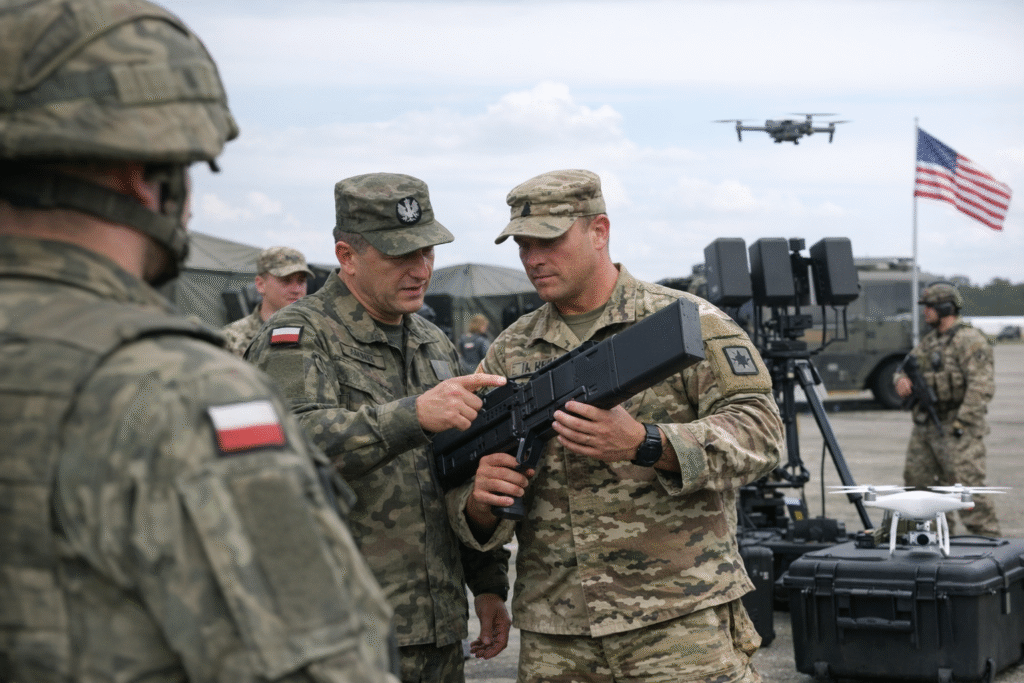
Poland has joined a Pentagon-backed procurement initiative aimed at accelerating the acquisition of counter-drone technologies, a move that underscores both Warsaw’s growing role in NATO’s eastern flank and shifting dynamics in U.S. force posture in Europe. The development was reported in the Defense News article, “Poland joins Pentagon’s counter-drone marketplace amid unexpected US deployment cancellation,” which highlighted the timing of Warsaw’s entry alongside a sudden change in planned U.S. deployments.
The marketplace, designed to streamline the sourcing and fielding of counter–small unmanned aerial system capabilities, connects vetted vendors with military buyers seeking rapid solutions to an increasingly urgent battlefield problem. By joining, Poland gains access to a curated pool of technologies that have been prequalified by U.S. defense authorities, potentially shortening procurement timelines and improving interoperability with American forces.
The decision comes as drone warfare continues to evolve at pace, driven in large part by lessons from Ukraine, where low-cost unmanned systems have demonstrated outsized tactical and strategic effects. NATO members have been scrambling to expand their counter-drone arsenals, prioritizing systems that can detect, track and neutralize a wide range of aerial threats, from commercial quadcopters to more sophisticated loitering munitions.
Poland’s participation also reflects its broader defense modernization push, which has accelerated in recent years amid heightened concerns about regional security. Warsaw has significantly increased defense spending and pursued closer defense industrial ties with both the United States and other allies. Access to the Pentagon’s marketplace could provide Polish forces with faster pathways to tested solutions while also opening opportunities for domestic industry to engage with U.S.-led supply chains.
At the same time, the reported cancellation of a planned U.S. deployment introduces an element of uncertainty. While details remain limited, the move raises questions about how Washington is recalibrating its force presence and resource allocation in Europe. It may signal a shift toward enabling allies to take on more responsibility for specific capability areas, including counter-drone defense, rather than relying on rotational U.S. deployments.
Analysts suggest the juxtaposition of Poland’s entry into the marketplace and the canceled deployment could indicate a broader strategic adjustment. By integrating allies into shared procurement ecosystems, the Pentagon may be seeking to build a more distributed and resilient network of capabilities across NATO, reducing bottlenecks and increasing collective responsiveness.
For Poland, the immediate impact is likely to be practical: faster access to emerging technologies and closer alignment with U.S. standards. For NATO as a whole, the development underscores a growing emphasis on collaborative acquisition and the urgency of countering unmanned threats that are reshaping modern conflict.