Western Pacific Sees Intensifying Naval Activity Amid Growing Strategic Rivalry
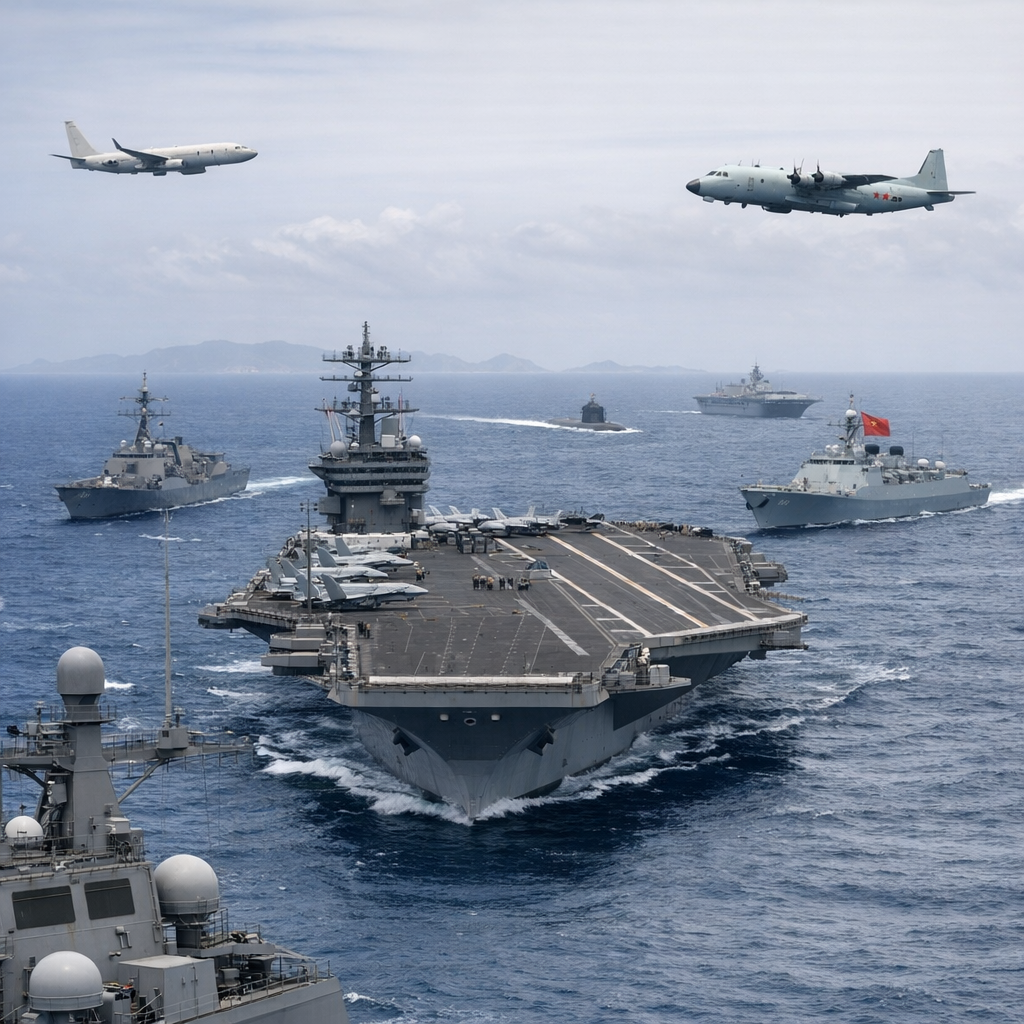
A recent dispatch from the U.S. Naval Institute, titled “USNI News Western Pacific Pulse July 3, 2026,” outlines a series of maritime developments underscoring rising operational tempo and strategic competition across the Western Pacific. The report highlights continued naval maneuvering, evolving security alignments, and sustained pressure points that are shaping the region’s security environment.
According to the USNI News report, regional waters remain crowded with a mix of U.S., allied, and Chinese naval and coast guard forces operating in close proximity. The piece notes that freedom of navigation operations and routine patrols by the United States and its partners continue alongside China’s persistent maritime presence, particularly in contested areas such as the South China Sea. These overlapping operations reflect both established strategic commitments and the risk of miscalculation in heavily trafficked waters.
The article also points to increased coordination among U.S. allies and partners, with joint exercises and port visits signaling a deepening of regional security ties. These activities, while framed as defensive and stabilizing by participating nations, are viewed by Beijing as part of a broader containment effort. In turn, Chinese naval and air activities have remained steady, reinforcing its territorial claims and demonstrating its capacity to project power across key maritime approaches, as noted by analyses from the CSIS China Power Project.
Another theme emphasized in the USNI News coverage is the role of smaller regional actors, whose coast guards and maritime agencies are increasingly active in disputed zones. Their involvement adds complexity to an already crowded operating picture, blending law enforcement activities with strategic signaling. The report suggests this trend is likely to continue as countries seek to assert sovereignty without escalating to outright military confrontation, a pattern also tracked by organizations like the Asia Maritime Transparency Initiative.
Logistical sustainment and forward presence remain central to U.S. operations, the article notes, with naval forces relying on a network of bases and rotational deployments to maintain coverage across a vast theater. The Western Pacific’s geographic scale and strategic importance continue to test force readiness and endurance, particularly as demand for persistent presence grows.
The USNI News piece ultimately portrays a region defined not by a single flashpoint but by continuous, overlapping activities that collectively raise the stakes. While no singular incident dominates the current landscape, the steady accumulation of encounters, exercises, and demonstrations of force reflects an environment where competition is constant and the margin for error remains thin.