US Strikes Iran’s Kharg Island in Warning Moves
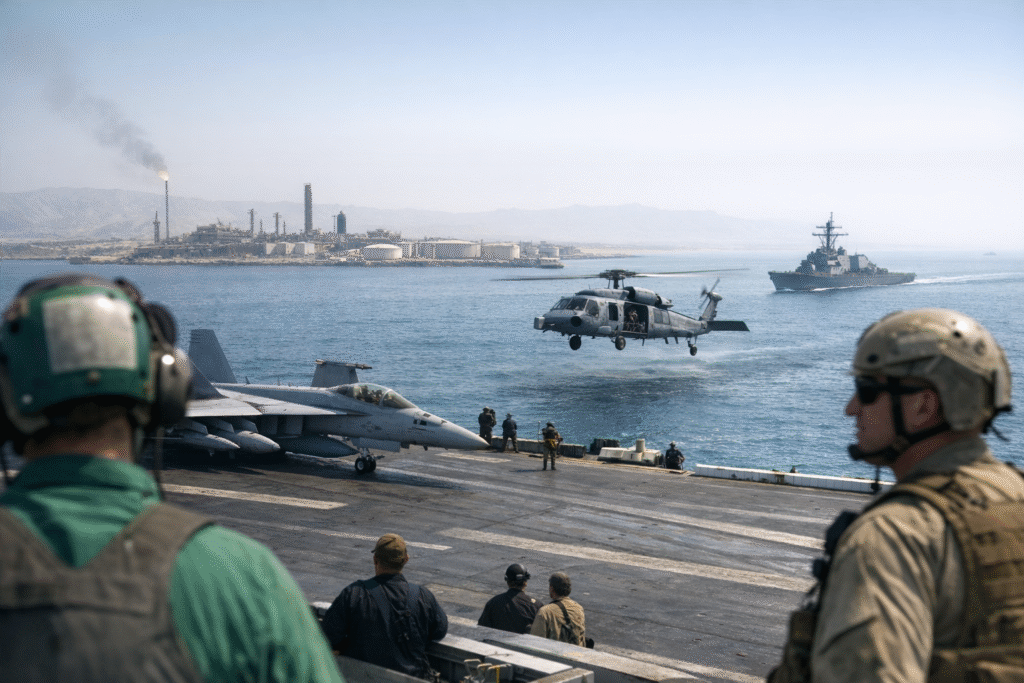
A report published by the Washington Free Beacon titled “U.S. Strikes Kharg Island Weapons Depots and Air Defense Facilities in Message to Tehran Ahead of Trump’s Deadline” describes a significant escalation in U.S. military activity targeting Iranian assets, underscoring mounting tensions between Washington and Tehran.
According to the Free Beacon’s account, U.S. forces carried out coordinated strikes on Kharg Island, a critical hub for Iran’s oil exports and a strategic location for military infrastructure. The operation is said to have focused on weapons depots and air defense systems, suggesting a deliberate effort to degrade Iran’s defensive capabilities while sending a broader deterrent signal.
Kharg Island has long been a linchpin in Iran’s economic and strategic framework, handling a large portion of the country’s crude oil exports. Any military action there carries both symbolic and practical implications, potentially affecting global energy markets and signaling a willingness by U.S. officials to target infrastructure tied to Iran’s economic lifeline. Analysts note that strikes on such a site would represent a calculated move, designed to exert pressure without immediately triggering full-scale conflict.
The Free Beacon report frames the strikes as occurring ahead of a deadline associated with former President Donald Trump’s policy posture toward Iran, suggesting a continuity or revival of pressure tactics that characterized earlier phases of U.S.-Iran relations. While details about the precise timing and scope of the deadline remain limited in the report, the implication is that the action was intended to reinforce U.S. demands or red lines.
U.S. officials have not publicly released extensive operational details, and independent verification of the scale and impact of the strikes remains limited. However, targeting air defense systems typically indicates an effort to establish or demonstrate air superiority, which could serve as a warning of potential follow-on actions if tensions escalate further.
The report also underscores the broader geopolitical stakes. Any direct U.S. military action against Iranian territory risks retaliation across multiple theaters, including maritime routes in the Persian Gulf and through proxy groups in the region. Such dynamics have historically led to rapid cycles of escalation, with global economic repercussions.
At the same time, the selection of specific military targets—rather than broader infrastructure—may reflect an attempt to calibrate the response. By focusing on weapons storage and defensive systems, the strikes could be interpreted as a message of capability and intent rather than an opening salvo in a sustained campaign.
The Free Beacon’s account arrives amid a period of heightened uncertainty surrounding U.S.-Iran relations, where diplomatic channels remain strained and military signaling has become more pronounced. Whether the reported strikes lead to further escalation or serve as a deterrent will likely depend on Tehran’s response and Washington’s next steps.
For now, the incident highlights the fragile balance in the region, where strategic messaging, military capability, and political deadlines intersect with the constant risk of broader conflict.