Ukraine Plans Mass Deployment of Ground Robots
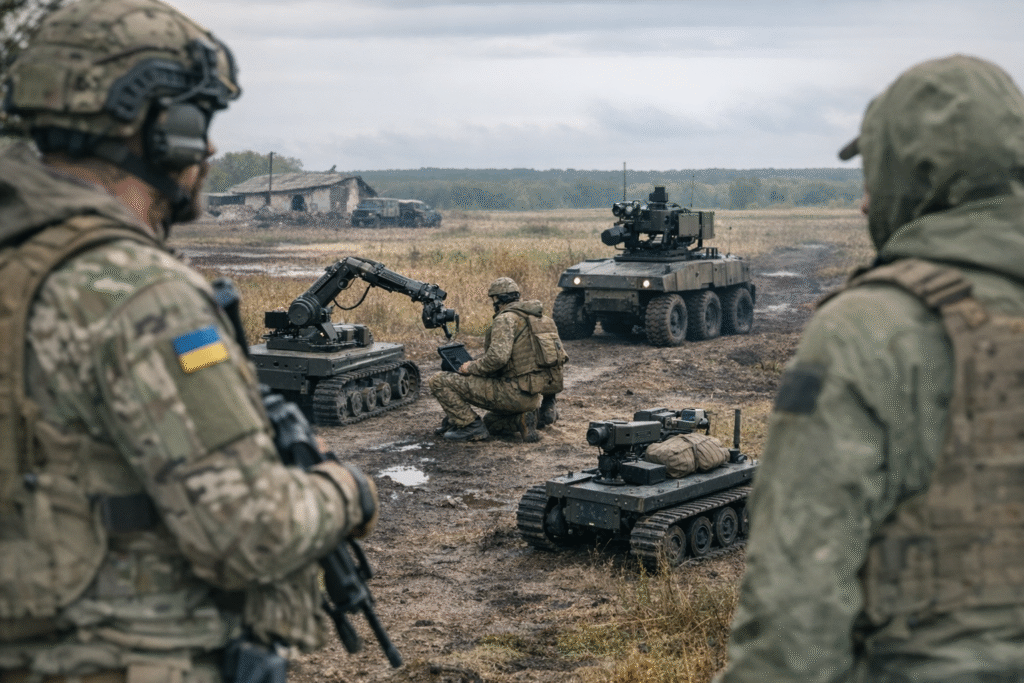
Ukraine is preparing to deploy tens of thousands of unmanned ground vehicles to support frontline operations, part of an effort to reduce troop exposure and sustain logistics under constant threat, according to a recent report by Defense News titled “Ukraine to field 25,000 ground robots in push to replace soldiers for frontline logistics.”
The initiative reflects Kyiv’s continued adaptation to a battlefield defined by pervasive surveillance, artillery, and drone strikes. By introducing approximately 25,000 robotic systems, Ukrainian planners aim to shift some of the most dangerous logistical tasks—such as delivering ammunition, evacuating wounded personnel, and transporting supplies—away from human soldiers. These missions, often conducted under fire, have resulted in significant casualties over the course of the war.
Officials and developers involved in the program suggest that the scale of deployment marks a transition from experimental use of robotics to routine integration. Ukrainian forces have already been employing smaller numbers of ground robots in contested areas, but the expanded rollout is intended to standardize their use and improve consistency across units. The systems vary in size and capability, from compact tracked platforms to larger wheeled vehicles capable of carrying heavier loads.
The push comes amid rapid innovation on both sides of the conflict, where unmanned systems—particularly aerial drones—have transformed reconnaissance and strike capabilities. Ground robots, however, present a different set of challenges, including navigation over rough terrain, vulnerability to electronic warfare, and maintaining reliable communications. Ukrainian engineers have been refining designs to address these issues, emphasizing resilience, modularity, and ease of repair in field conditions.
Military analysts view the initiative as a pragmatic response to manpower constraints as well as a reflection of broader trends in modern warfare. The use of autonomous and remotely operated systems is increasingly seen as essential in high-intensity conflicts, especially where traditional supply lines are frequently targeted. By substituting machines for personnel in high-risk roles, Ukraine hopes to preserve combat strength while sustaining operational tempo.
At the same time, the rollout will test the limits of current technology. Ground robots remain less mature than their aerial counterparts, and their effectiveness depends heavily on terrain, weather, and electronic interference. Whether the ambitious scale of deployment can deliver consistent battlefield advantages remains uncertain.
Even so, the move underscores Ukraine’s emphasis on innovation under pressure. As the war continues to evolve, the integration of robotic logistics may offer a glimpse into how future militaries balance human presence with autonomous systems in contested environments.