Pentagon Weapons Programs Lag Over a Decade Behind, Raising Alarms on Costs and Readiness
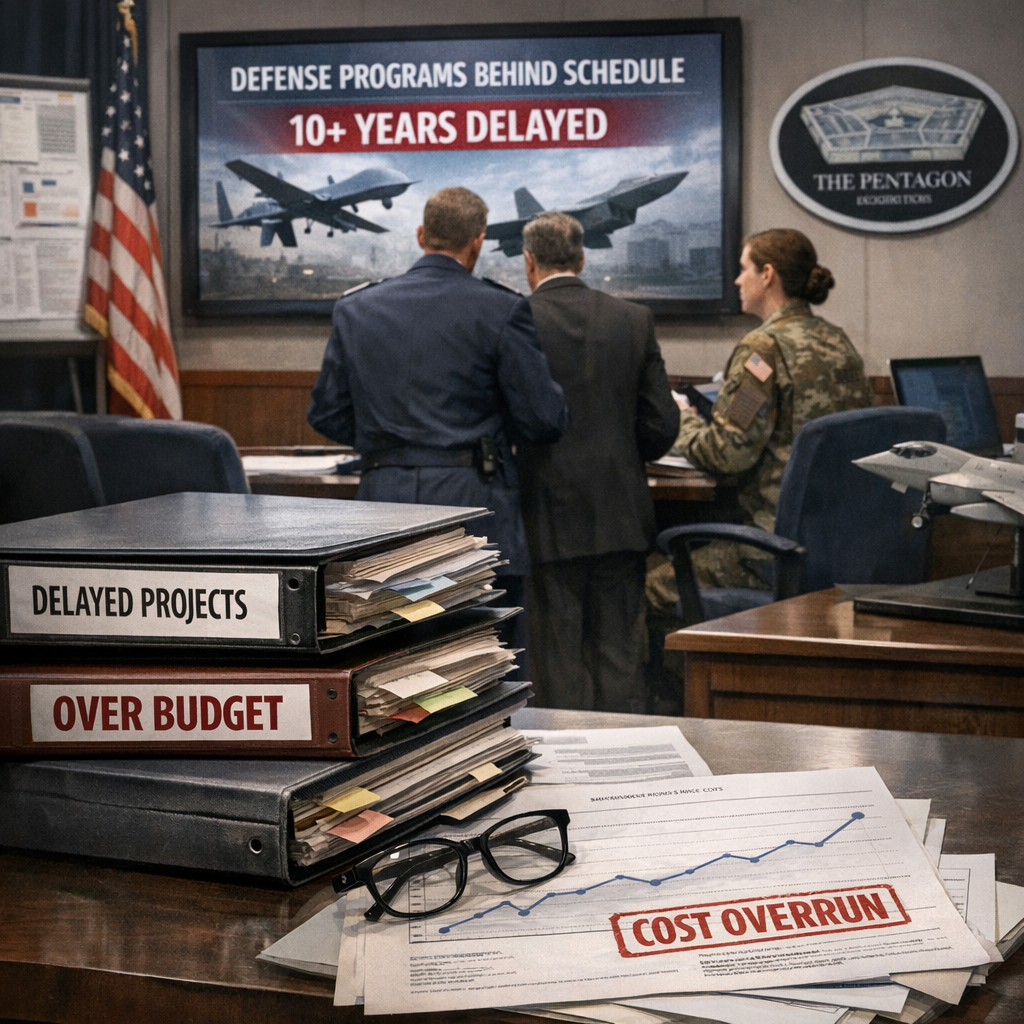
A recent report highlighted by Defense News in its article “Pentagon’s top new weapons programs are 12 years behind schedule: Watchdog” underscores persistent delays and escalating costs in the U.S. Department of Defense’s most critical modernization efforts, raising renewed concerns about the Pentagon’s acquisition system and its ability to respond to rapidly evolving threats.
According to the findings cited in the Defense News report, the Government Accountability Office (GAO) determined that major defense acquisition programs are now, on average, more than a decade behind their original schedules. These programs, which span advanced aircraft, naval systems, missile defense, and next-generation technologies, represent core elements of the U.S. military’s long-term strategic planning. The delays not only postpone operational readiness but also compound financial pressures as development timelines stretch and requirements evolve.
The watchdog’s assessment points to a familiar set of challenges that have dogged defense procurement for years. Programs frequently begin with immature technologies, requiring additional development after they are formally approved. This concurrency between development and production often leads to redesigns, testing setbacks, and cost overruns. In some cases, shifting mission requirements and changing threat assessments have forced program managers to alter specifications midstream, further contributing to delays.
The consequences of these setbacks extend beyond budgetary concerns. As timelines slip, the military must continue relying on aging systems that were expected to be replaced years earlier. This creates capability gaps at a time when U.S. defense planners are increasingly focused on competition with near-peer adversaries such as China and Russia. The lag in fielding next-generation systems may weaken deterrence and limit operational flexibility in potential future conflicts.
The Defense News report also highlights the compounding effect of inflation and supply chain disruptions, which have added new layers of complexity to already strained programs. Rising costs for materials, labor shortages, and disruptions in critical components have slowed production schedules and forced program offices to renegotiate contracts. These pressures have been particularly pronounced in high-tech areas such as semiconductors and advanced electronics, where global supply constraints have had cascading impacts.
Congress and Pentagon leadership have acknowledged these systemic issues and, in recent years, have taken steps aimed at reform. Initiatives such as increased use of modular design, more incremental development approaches, and expanded collaboration with commercial technology firms are intended to reduce risk and accelerate delivery timelines. The Department of Defense has emphasized acquisition reform efforts, but the GAO’s findings suggest that these measures have yet to produce consistent, measurable improvements across the department’s largest programs.
Some defense analysts argue that deeper cultural and structural changes are required. They point to incentives within the acquisition system that favor ambitious program starts over disciplined execution, as well as oversight mechanisms that may be too reactive rather than preventative. Others emphasize the need for more realistic initial cost and schedule estimates, warning that optimism bias at the outset of programs can set the stage for years of adjustments and delays.
The report arrives at a time when the Pentagon is seeking significant budget increases to fund modernization efforts, including investments in hypersonic weapons, artificial intelligence, and autonomous systems. Lawmakers are likely to scrutinize these requests more closely in light of continued evidence that existing programs are struggling to meet expectations.
As the Defense News article makes clear, the challenge is not merely one of individual program management but of a broader system that has repeatedly struggled to balance ambition with execution. Whether ongoing reform efforts can meaningfully close the gap between planned and actual delivery timelines remains an open question, one with significant implications for U.S. military readiness in the years ahead.