Netanyahu Signals Long-Term Israeli Military Presence in Southern Lebanon Amid Rising Tensions with Hezbollah
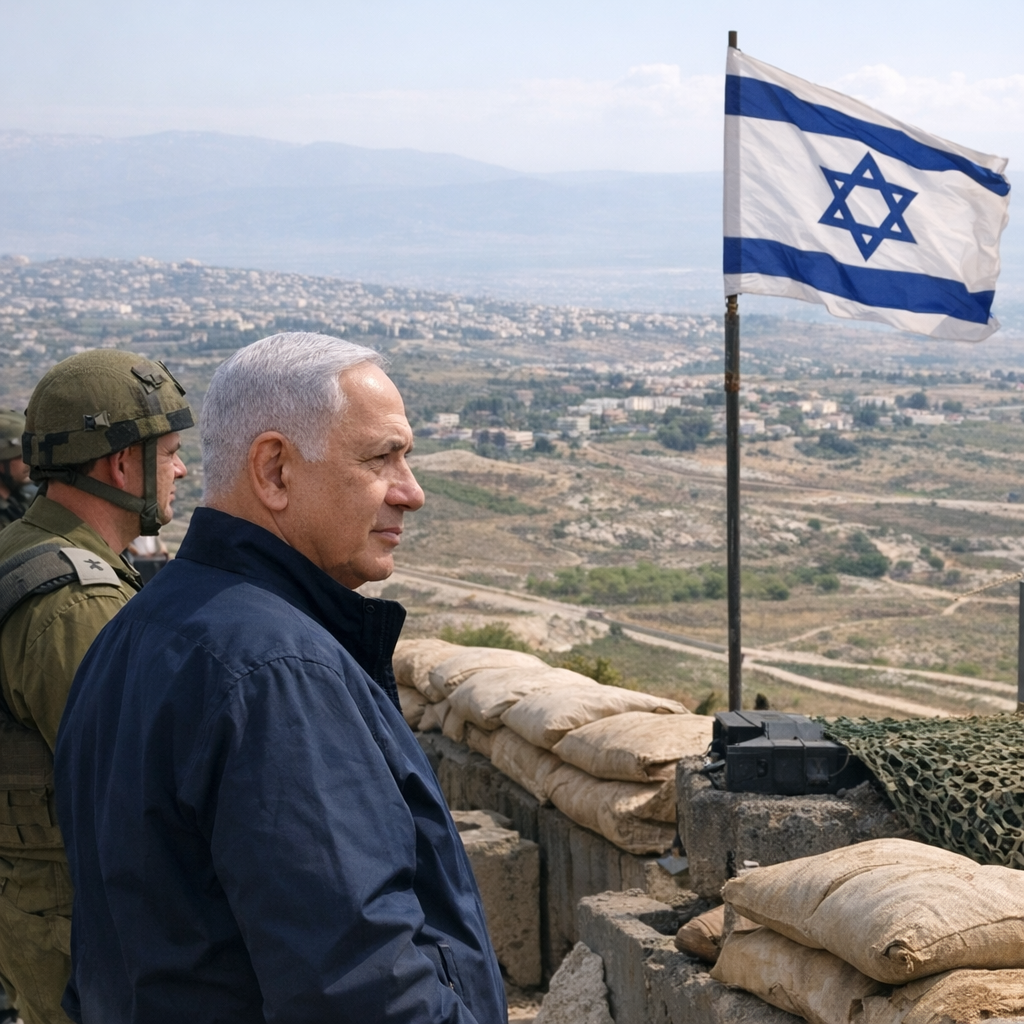
Prime Minister Benjamin Netanyahu has indicated that Israel intends to maintain a military presence in southern Lebanon, signaling a potentially prolonged phase in the country’s northern security posture amid ongoing tensions with Hezbollah. His remarks, reported by i24NEWS in the article titled “We will not withdraw: Netanyahu vows Israel will keep forces in southern Lebanon,” underscore Israel’s determination to prevent further cross-border threats following months of escalation (original report).
Netanyahu’s statement reflects a continuation of Israel’s strategy to establish what officials describe as a buffer against militant activity near its northern frontier. Israeli leadership has repeatedly argued that withdrawing too quickly could create a vacuum that Hezbollah, the Iran-backed Lebanese armed group, would exploit to reposition forces and rebuild operational capabilities close to Israeli communities.
The announcement comes against a backdrop of sustained hostilities that intensified after the outbreak of the Gaza war in October 2023, when Hezbollah began launching near-daily attacks across the border in what it framed as support for Hamas. Israel responded with airstrikes and artillery fire targeting Hezbollah positions in southern Lebanon, leading to significant displacement on both sides of the border.
Israeli officials have increasingly framed the situation as intolerable for residents of northern Israel, many of whom have remained evacuated for months due to security concerns. Netanyahu’s position suggests that any future diplomatic arrangement or de-escalation effort will likely hinge on guarantees that Hezbollah forces are pushed farther away from the border, potentially beyond the Litani River in accordance with longstanding United Nations Security Council Resolution 1701.
International mediators, including the United States and France, have been working to broker understandings aimed at reducing tensions and preventing a broader regional war. These efforts have focused on establishing security arrangements that would allow displaced civilians to return home while addressing Israel’s concerns about Hezbollah’s military presence near the frontier (mediation efforts). However, Netanyahu’s remarks point to skepticism within the Israeli government regarding the effectiveness or enforceability of such arrangements.
Lebanese officials have warned that any prolonged Israeli military presence on their territory would be viewed as a violation of sovereignty, raising the risk of further confrontation. Hezbollah has likewise maintained that it will continue its operations as long as the conflict in Gaza persists, linking the two fronts in a way that complicates diplomatic efforts.
Military analysts note that holding territory in southern Lebanon would expose Israeli forces to ongoing guerrilla-style attacks, echoing historical patterns from Israel’s previous presence in the region prior to its withdrawal in 2000 (historical withdrawal). That earlier occupation was marked by persistent clashes with Hezbollah and ultimately became politically untenable within Israel.
Netanyahu’s stance therefore represents both a security calculation and a political signal, aimed at demonstrating resolve while domestic pressure mounts to ensure the safe return of displaced residents in the north. Whether this position translates into a long-term deployment or serves as leverage in negotiations remains unclear, but it highlights the fragile and volatile nature of the Israel-Lebanon border at a time of broader regional instability.
As diplomatic efforts continue, the risk of miscalculation remains high. Any sustained Israeli deployment in southern Lebanon would likely deepen tensions with Hezbollah and its allies, raising the prospect of a wider confrontation that could draw in additional regional actors (background on Hezbollah and regional risks).