Iran Projects Unity and Strength Through Carefully Staged Khamenei Funeral
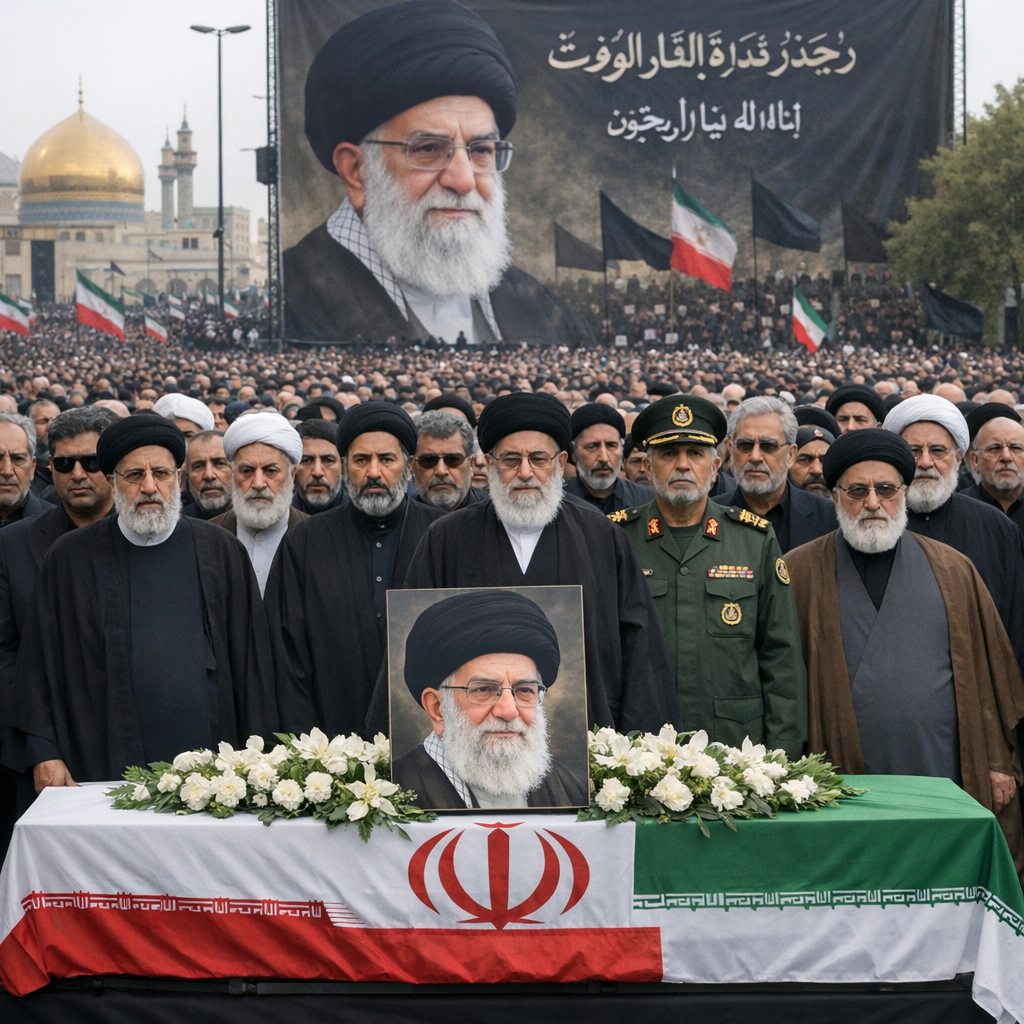
State media in Iran is attempting to present a carefully curated image of national unity and strength following the funeral of Supreme Leader Ayatollah Ali Khamenei, according to reporting by The Daily Wire article titled “Iran Wants The World To See One Thing At Khamenei’s Funeral.”
The funeral, a highly choreographed public event, has been framed by Iranian authorities as a demonstration of widespread popular support for the regime. Broadcast footage and official photographs emphasized large crowds, synchronized mourning rituals, and prominent displays of loyalty to the Islamic Republic. Analysts say such imagery is designed not only for domestic consumption but also to project stability and legitimacy to an international audience, a dynamic frequently noted in analyses by organizations like BBC News on Iranian state media.
The Daily Wire report highlights how the Iranian government has historically relied on mass public gatherings to reinforce its narrative of unity, particularly during moments of political sensitivity. The death of a long-standing leader presents both a challenge and an opportunity: a challenge in managing potential uncertainty, and an opportunity to reaffirm the continuity of power, similar to patterns described by the Council on Foreign Relations.
Observers note that tightly controlled media coverage often obscures the complexities within Iranian society, where dissent and dissatisfaction have surfaced repeatedly in recent years. Anti-government protests, economic strain, and generational divides have all contributed to a more nuanced domestic reality than what state media portrays, as documented in reports from Human Rights Watch. In this context, the scale and presentation of funeral attendance can serve as a strategic counterpoint to images of unrest that have circulated globally.
The emphasis on crowd size and emotional intensity aligns with longstanding practices in authoritarian systems, where public rituals are used to signal cohesion and deter perceptions of instability, a phenomenon explored in research from institutions like Brookings Institution. By showcasing large numbers of mourners, the government can imply a level of consensus that may not fully capture underlying tensions.
At the same time, international analysts caution against taking such displays at face value. Participation in state-organized events can be influenced by a range of factors, including social pressure, political expectations, and logistical mobilization by authorities. As noted in coverage by Reuters, visual narratives emerging from state events often reflect messaging priorities as much as genuine public sentiment.
The Daily Wire article underscores how the Iranian leadership appears intent on shaping global perception at a critical juncture. With questions surrounding succession, regional dynamics, and internal cohesion, the optics of Khamenei’s funeral are likely to play a role in how both allies and adversaries assess the country’s trajectory in the months ahead.