Iran Considers Shift Toward Direct Ground Conflict
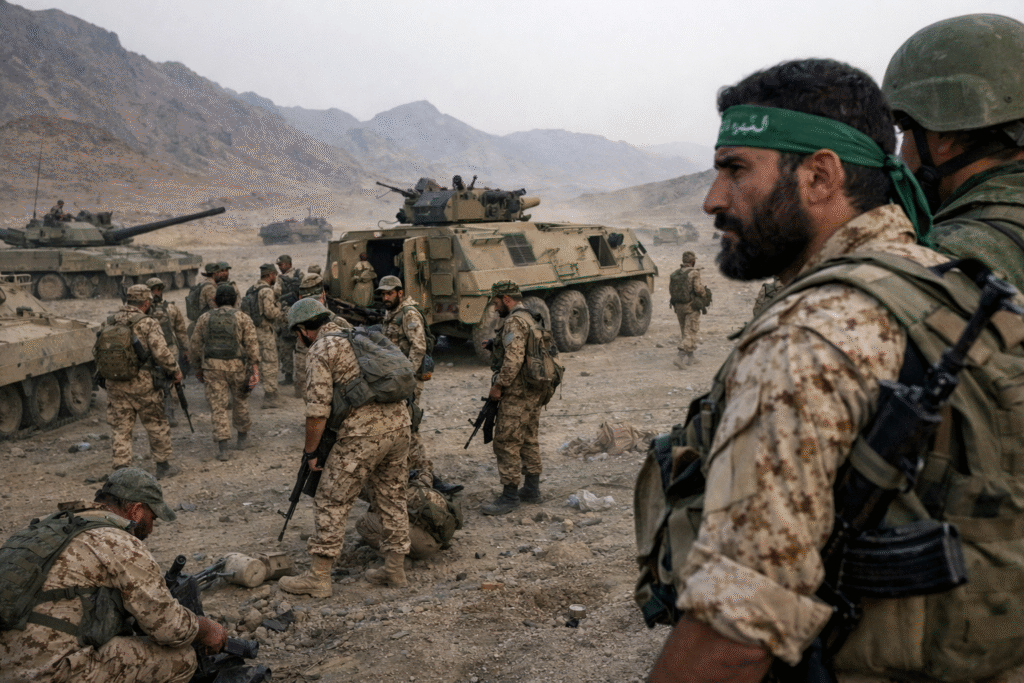
The Wall Street Journal article “Iran Weighs Ground War Options as Regional Tensions Escalate” describes a shift in Tehran’s strategic posture, with officials and military planners increasingly considering scenarios that move beyond proxy engagements toward more direct, conventional conflict. The report, published by The Wall Street Journal, indicates that while Iran has long relied on allied militias and asymmetric tactics to project power, recent developments across the Middle East are prompting a reassessment of how and when to deploy its own ground forces.
According to the report, Iranian military leaders are studying contingencies that would involve coordinated operations across multiple fronts, particularly in areas where Tehran maintains influence through allied groups. These discussions come amid heightened friction with regional adversaries and growing concerns in Tehran that reliance on proxies alone may not sufficiently deter escalation or protect its strategic interests. The article notes that such planning does not signal an imminent large-scale invasion, but rather reflects an effort to expand the range of options available to Iranian decision-makers.
Analysts cited in the piece point out that Iran’s conventional ground capabilities, while significant, have rarely been tested in sustained operations beyond its borders in recent decades. The country’s military doctrine has emphasized flexibility, deniability, and cost-effective engagements through non-state actors. A pivot toward direct ground involvement would therefore represent a meaningful change, potentially exposing Iranian forces to new risks while also altering the calculations of its rivals.
The report also highlights the broader geopolitical context shaping these deliberations. Ongoing conflicts and instability in neighboring states, coupled with evolving alliances and security arrangements, have increased uncertainty for Iranian planners. In this environment, preparing for a wider range of military scenarios is seen as a way to signal resolve and maintain strategic leverage.
However, the prospect of a ground war raises significant concerns among regional observers and international policymakers. Direct confrontation involving Iranian forces could trigger rapid escalation, drawing in multiple actors and compounding an already volatile situation. The Wall Street Journal article underscores that even the consideration of such plans is likely to be closely monitored by both allies and adversaries, as it may influence deterrence dynamics and diplomatic efforts.
While Iranian officials have publicly maintained a defensive posture, emphasizing their intent to safeguard national sovereignty and regional partnerships, the internal discussions described in the report suggest a more complex strategic debate. Balancing deterrence with the risks of escalation remains a central challenge, particularly as miscalculation could carry far-reaching consequences.
In this context, the article portrays Iran’s evolving military thinking as both a reflection of current pressures and a signal of possible future trajectories in the Middle East security landscape.