Germany Boosts Missile Defense with Second Arrow 3 System to Strengthen Protection Against Long-Range Threats
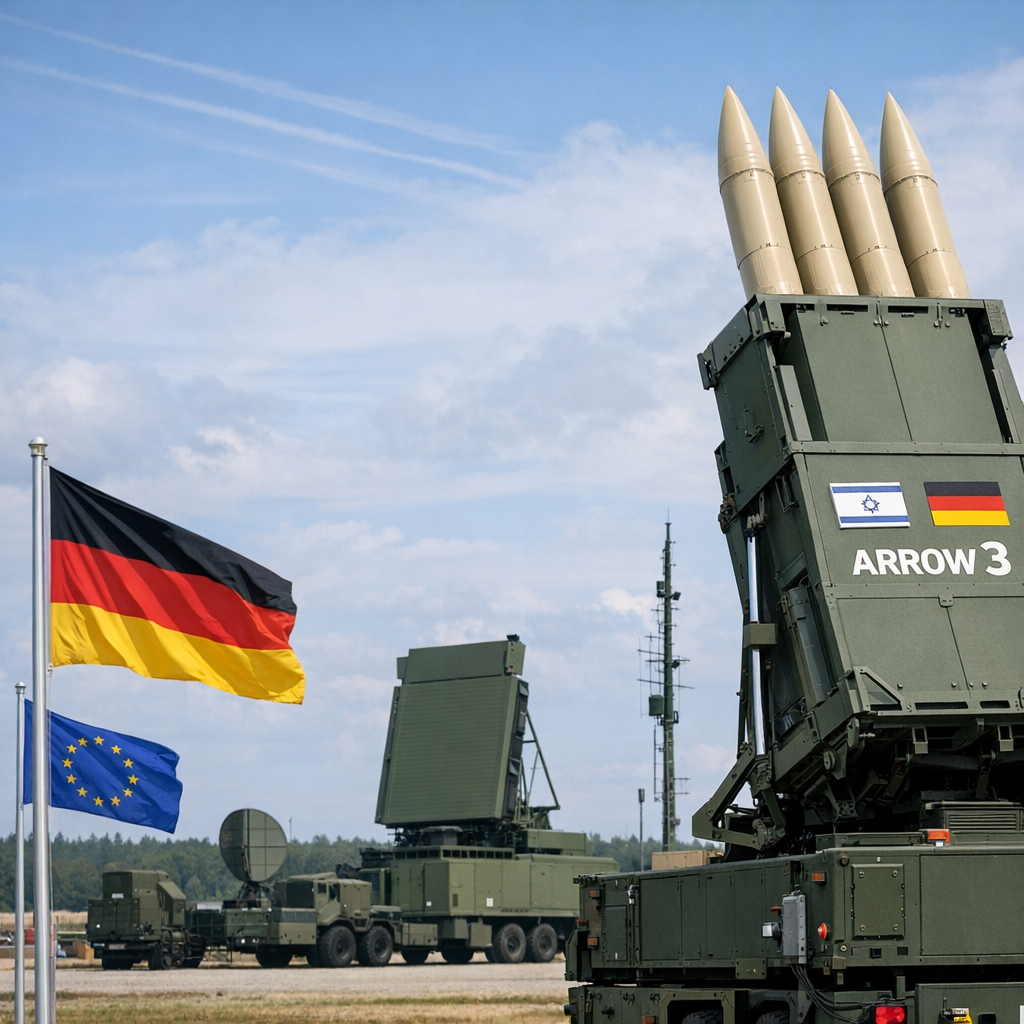
Germany is moving to deepen its missile defense capabilities with the planned deployment of a second Arrow 3 system, a step that underscores Berlin’s broader effort to strengthen protection against long-range aerial threats as security concerns mount across Europe.
According to the Defense News article titled “Germany expands its exoatmospheric missile shield with second Arrow 3 deployment,” the additional system will complement Germany’s existing Arrow 3 battery, which is already being integrated into the country’s evolving air and missile defense architecture (source: Defense News). The move reflects a sustained commitment to layered missile defense, particularly against ballistic missiles that operate outside the atmosphere during parts of their trajectory.
The Arrow 3 system, jointly developed by Israel and the United States, is designed to intercept incoming ballistic missiles in space before they re-enter the Earth’s atmosphere. Its exoatmospheric interception capability provides a strategic advantage, allowing threats to be neutralized at greater distances and reducing the risk of debris or residual impact on populated areas.
German officials have framed the procurement and deployment decisions as part of a broader shift in defense posture following Russia’s invasion of Ukraine. The conflict has heightened awareness among European governments of vulnerabilities in air and missile defense, particularly against advanced missile systems that can traverse long distances at high speeds.
The second Arrow 3 unit is expected to enhance redundancy and coverage, enabling Germany to better protect key infrastructure and population centers. It also supports Berlin’s ambition to play a leading role in the European Sky Shield Initiative, a multinational effort aimed at creating an integrated air defense network across the continent.
Beyond national defense, the expansion carries implications for NATO interoperability. By increasing its high-end missile defense capacity, Germany is contributing to the alliance’s collective deterrence posture. The Arrow 3 system is capable of integrating with other NATO systems, potentially offering broader regional coverage when combined with allied assets.
The acquisition also reflects the deepening defense relationship between Germany and Israel. The Arrow 3 deal, one of the most significant defense procurements in Germany’s recent history, highlights a growing alignment on security cooperation. U.S. involvement in missile defense programs further underscores the transatlantic dimension of the effort.
Critics and analysts alike have noted that while advanced missile defense systems like Arrow 3 provide a measure of protection, they are not a comprehensive solution to modern threats. Questions remain about cost, scalability, and the ability to counter emerging technologies such as hypersonic weapons. Nevertheless, proponents argue that such systems are a critical component of a layered defense, especially when integrated with shorter-range interceptors and early warning capabilities.
As Germany accelerates its military modernization, the expansion of its exoatmospheric missile shield signals a strategic recalibration in response to a more volatile security environment. The deployment of a second Arrow 3 system is likely to be closely watched by allies and adversaries alike, as Europe continues to reassess its defensive posture in an era of renewed geopolitical tension.