Donahue Steps Down as U.S. Army Europe and Africa Commander Amid Ongoing Ukraine War and NATO Tensions
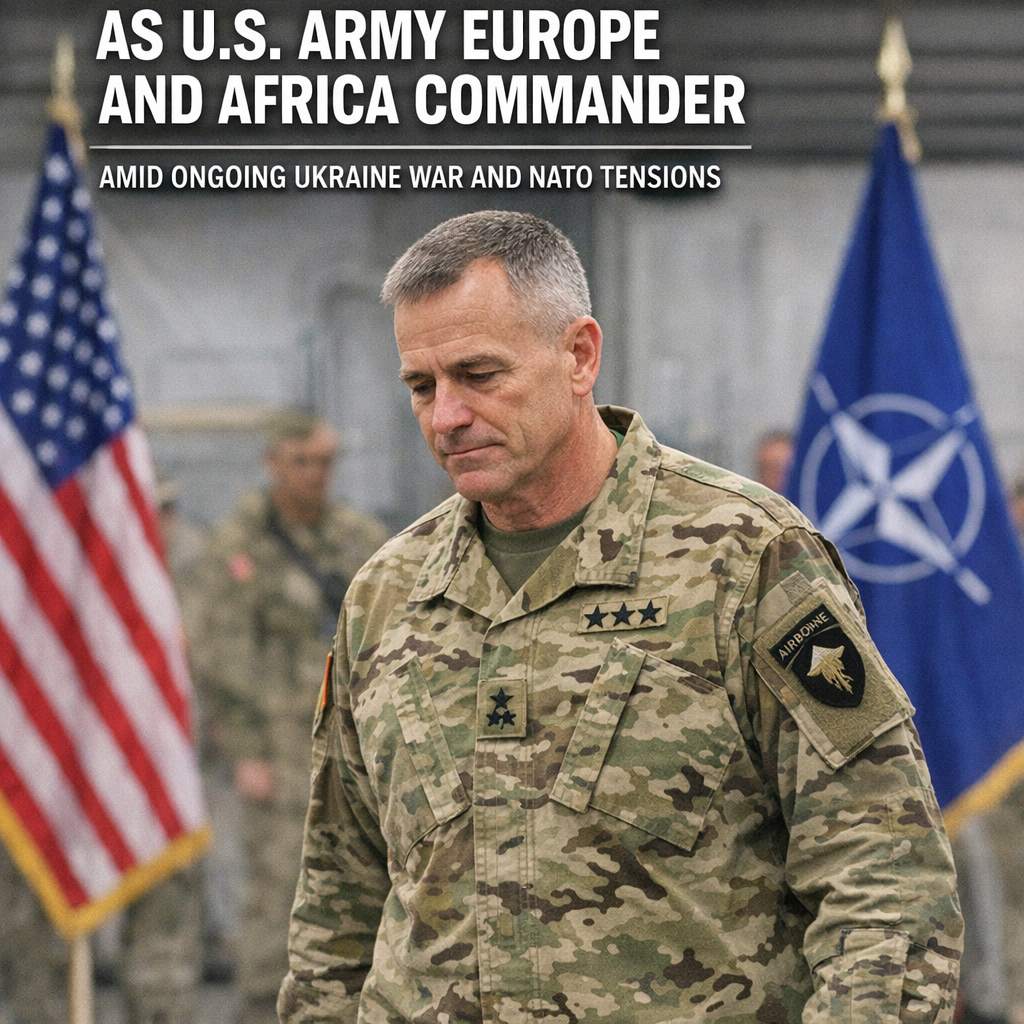
Gen. Christopher Donahue has formally relinquished command of U.S. Army Europe and Africa, closing a chapter marked by sustained geopolitical tension and evolving U.S. military posture across two continents. The transition, reported in “Gen. Christopher Donahue relinquishes command of US Army Europe and Africa” by Military Times, comes at a moment when the Army’s presence in Europe remains closely tied to Russia’s ongoing war in Ukraine and broader NATO deterrence efforts.
Donahue, who assumed command in 2022, oversaw a period of heightened operational tempo as U.S. forces adapted to a transformed security landscape following Russia’s full-scale invasion of Ukraine. Under his leadership, the Army expanded rotational deployments, reinforced allied training initiatives, and adjusted force posture to reassure NATO partners along the alliance’s eastern flank. His tenure coincided with an enduring commitment to multinational exercises and interoperability, as well as increased coordination with African partners under the same command structure, including efforts aligned with U.S. Africa Command (AFRICOM).
Military Times noted that Donahue’s departure reflects a routine leadership transition rather than a shift in strategic direction. Still, the change comes amid ongoing uncertainty about the trajectory of the war in Ukraine and the long-term requirements for U.S. force presence in Europe. The command he led, U.S. European Command’s area of responsibility, has played a central role in facilitating logistics and training support for Ukrainian forces, while also maintaining readiness across a geographically expansive and politically complex area of responsibility.
Donahue brought a distinguished career in special operations to the role, having previously led the 82nd Airborne Division and the elite 1st Special Forces Operational Detachment-Delta. His leadership style emphasized rapid deployment capability and adaptability, qualities that proved essential as the Army responded to emergent crises in Europe and shifting priorities in Africa.
His successor is expected to inherit a command facing persistent demands. In Europe, deterrence of Russian aggression remains paramount, alongside the continued integration of new NATO members and the strengthening of alliance cohesion. In Africa, concerns range from counterterrorism operations to managing the influence of rival global powers seeking to expand their presence on the continent.
While leadership transitions are a regular feature of military life, the handoff underscores the continuity of U.S. commitments abroad. As highlighted in the Military Times report, the strategic environment confronting U.S. Army Europe and Africa remains complex and fluid, ensuring that the command will continue to play a central role in shaping American military engagement overseas.