Australia Overhauls Defense Industry and Procurement to Accelerate Military Capability and Strengthen Alliances
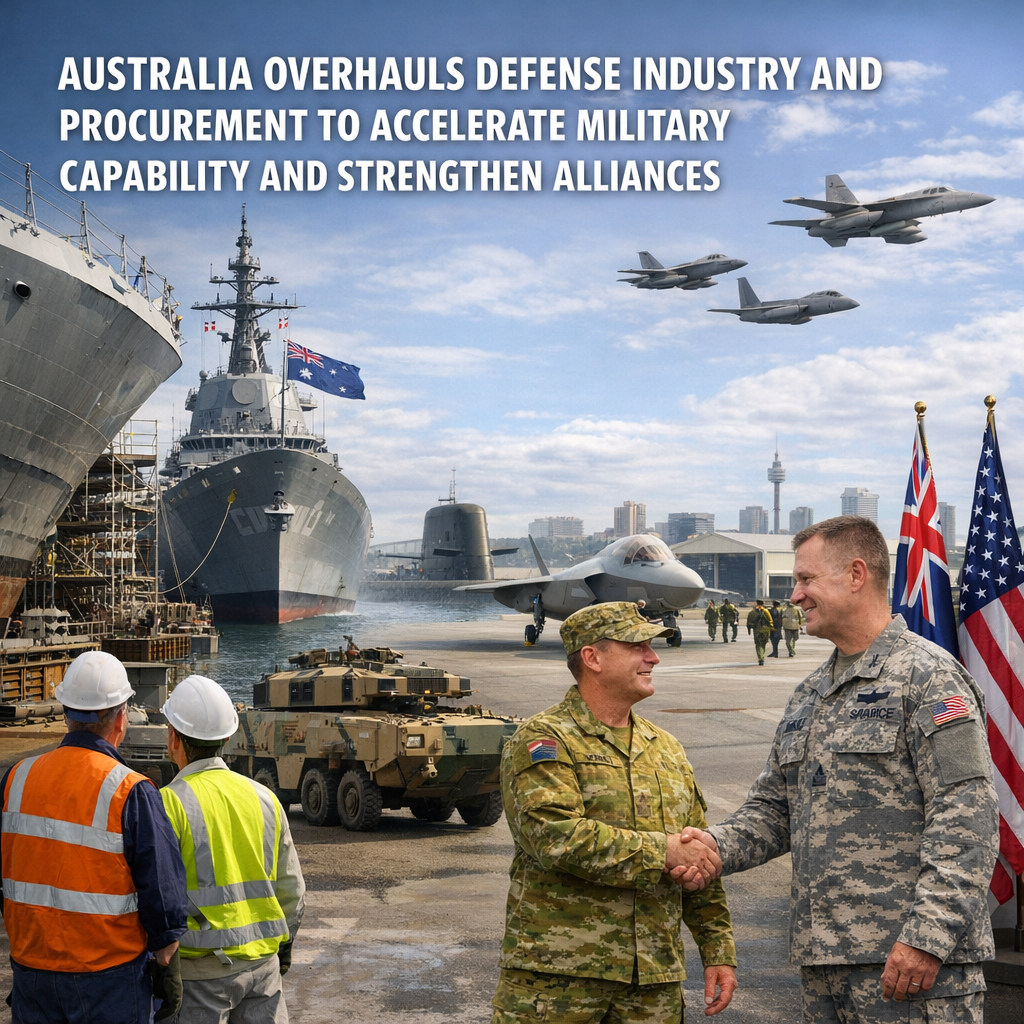
Australia has unveiled a sweeping package of reforms aimed at reshaping its defense industrial base and procurement system, signaling a decisive shift toward faster acquisition timelines, greater domestic capability, and closer integration with key allies. The changes, outlined in the Breaking Defense article “Australia announces defense industry policy and acquisitions reforms”, reflect mounting strategic pressure in the Indo-Pacific and a growing recognition in Canberra that existing processes are too slow for an increasingly contested security environment.
At the core of the reforms is a renewed emphasis on building a sovereign defense industrial capacity capable of sustaining high-end military operations. Australian officials have framed the policy not only as an economic initiative but as a strategic necessity, designed to ensure reliable access to critical technologies, munitions, and support systems during potential crises. The government intends to prioritize domestic firms in key sectors while still maintaining openness to foreign partnerships, particularly with members of the AUKUS agreement and other close allies.
The acquisitions overhaul targets long-standing inefficiencies that have plagued Australia’s defense procurement system. Projects have frequently been criticized for delays, cost overruns, and bureaucratic complexity, issues regularly examined by oversight bodies such as the Australian National Audit Office. Under the new framework, the government plans to streamline approval processes, delegate greater authority to project managers, and introduce more flexible contracting mechanisms. Officials argue these steps will enable faster delivery of capabilities and reduce the administrative burden that has historically slowed major programs.
A significant component of the reforms is the creation of clearer priority areas aligned with Australia’s strategic defense objectives, as outlined in documents like the National Defence Strategy. These include long-range strike capabilities, autonomous systems, cyber and space technologies, and advanced manufacturing. By narrowing its focus, Canberra aims to direct funding and industrial support toward sectors deemed essential for deterrence and operational resilience, including those identified under the Sovereign Industrial Capability Priorities framework.
The policy also reinforces closer collaboration with the United States and the United Kingdom, particularly under the AUKUS framework. Australian leaders have emphasized that joint development, technology sharing, and co-production arrangements will be vital to achieving scale and interoperability. The reforms are designed to make it easier for Australian companies to plug into allied supply chains while ensuring that sensitive technologies are protected.
Industry reaction has been cautiously optimistic. Defense firms have long called for clearer signals from government regarding priorities and procurement pathways. The promise of more predictable demand and reduced red tape is expected to encourage investment, though some stakeholders remain concerned about execution risks and the challenge of aligning ambitious policy goals with workforce and infrastructure constraints.
Analysts note that the reforms come at a time of heightened regional tension and accelerating military modernization across the Indo-Pacific. Australia’s effort to boost its defense industrial capacity mirrors similar moves by allies seeking to reduce dependence on global supply chains that have proven vulnerable in recent years. The success of the initiative will likely depend on sustained political commitment and the ability to translate policy into tangible outcomes.
While the Breaking Defense report highlights the breadth of the announced changes, it also underscores the scale of the task ahead. Transforming procurement culture and building a more resilient industrial base are long-term endeavors, requiring coordination across government, industry, and international partners. For Canberra, the reforms represent both a response to immediate strategic pressures and a bet on the country’s ability to adapt quickly to a more uncertain security landscape.