GOP Divide Over SAVE Act Demand Stalls Broadly Backed Veterans Healthcare Bill
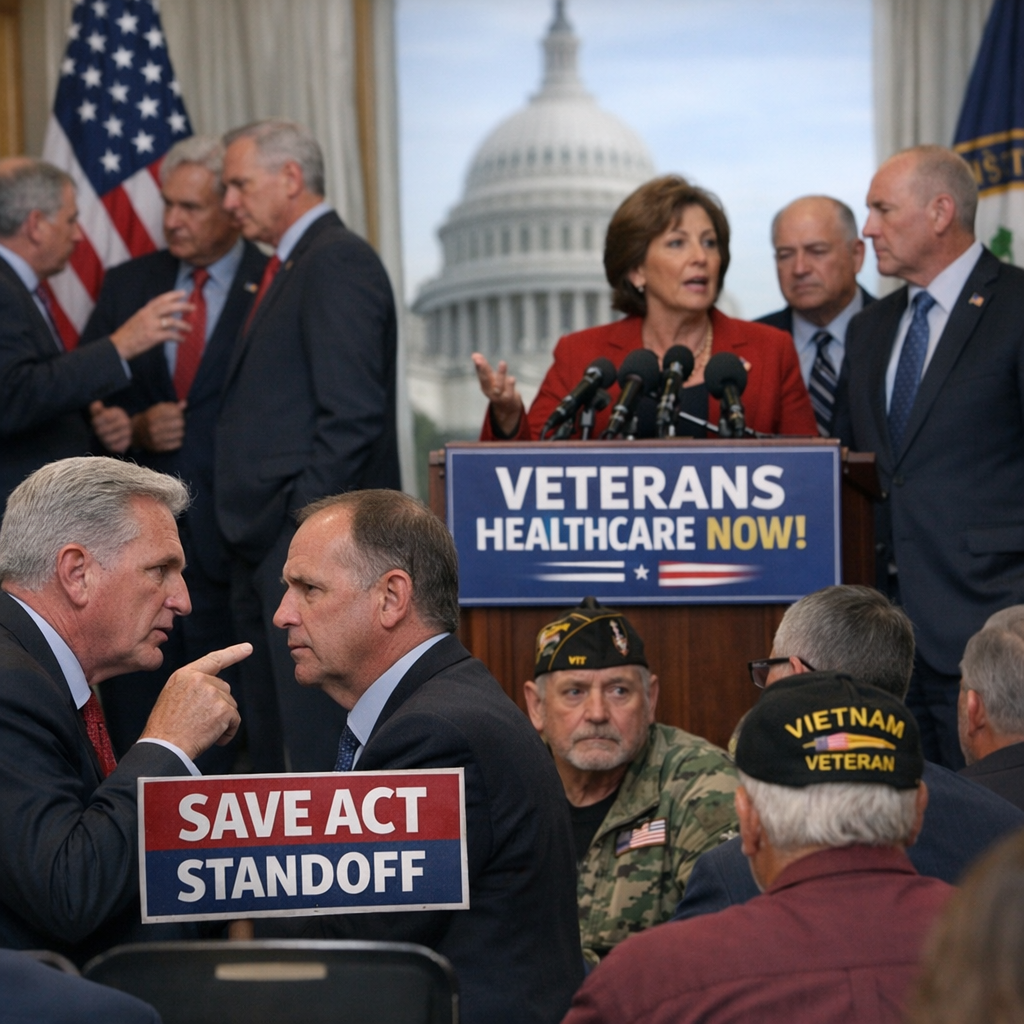
Republican divisions in the House are complicating the path forward for a widely supported veterans’ health measure, as a small group of conservative lawmakers presses leadership to tie the bill to a broader election policy priority.
The dispute, first detailed in the Fox News article titled “Trump-aligned House holdouts accused of holding life-saving veterans bill hostage over SAVE Act”, centers on the Senator Elizabeth Dole 21st Century Veterans Healthcare and Benefits Improvement Act. The legislation, which has drawn bipartisan backing, aims to expand access to care for veterans, including those in rural areas, and improve support for caregivers, an issue long highlighted by the U.S. Department of Veterans Affairs.
Despite broad agreement on the substance of the bill, several Republican lawmakers aligned with former President Donald Trump have withheld support in the House Rules Committee, a key gatekeeping body described by the House Rules Committee. Their objection is not rooted in the veterans measure itself but in their demand that House leaders attach the Safeguard American Voter Eligibility (SAVE) Act, a GOP-backed proposal aimed at tightening voter registration requirements by mandating proof of citizenship, an issue debated in the context of federal election law and oversight by the U.S. Election Assistance Commission.
The standoff has sparked sharp criticism from both Democrats and some Republicans, who argue that linking a broadly supported veterans bill to a contentious election measure risks delaying assistance to vulnerable veterans. Advocates for veterans’ services, including groups such as the Disabled American Veterans organization, have long pushed for faster improvements to healthcare access. Opponents of the tactic have framed it as political leverage that could impede urgently needed healthcare reforms.
Supporters of the SAVE Act contend that election integrity is a priority for their constituents and argue that legislative leverage is a legitimate tool to advance their agenda. They maintain that combining measures can ensure that key Republican priorities are not sidelined in a divided government, a dynamic frequently analyzed in legislative tracking resources like Congress.gov.
House leadership now faces a delicate balancing act: advancing a politically sensitive election bill without jeopardizing near-universal backing for veterans’ care improvements. The impasse underscores ongoing tensions within the Republican conference, where a relatively small group of members has repeatedly demonstrated its ability to slow or block legislation.
As negotiations continue, the fate of the veterans bill remains uncertain. Lawmakers on both sides of the aisle have expressed hope that a resolution can be reached that allows the healthcare reforms to proceed independently, but there is no clear timeline for when the measure might come to a vote.