Rebuilding America’s Fleet Requires Expanding the Workforce Beyond Traditional Boundaries
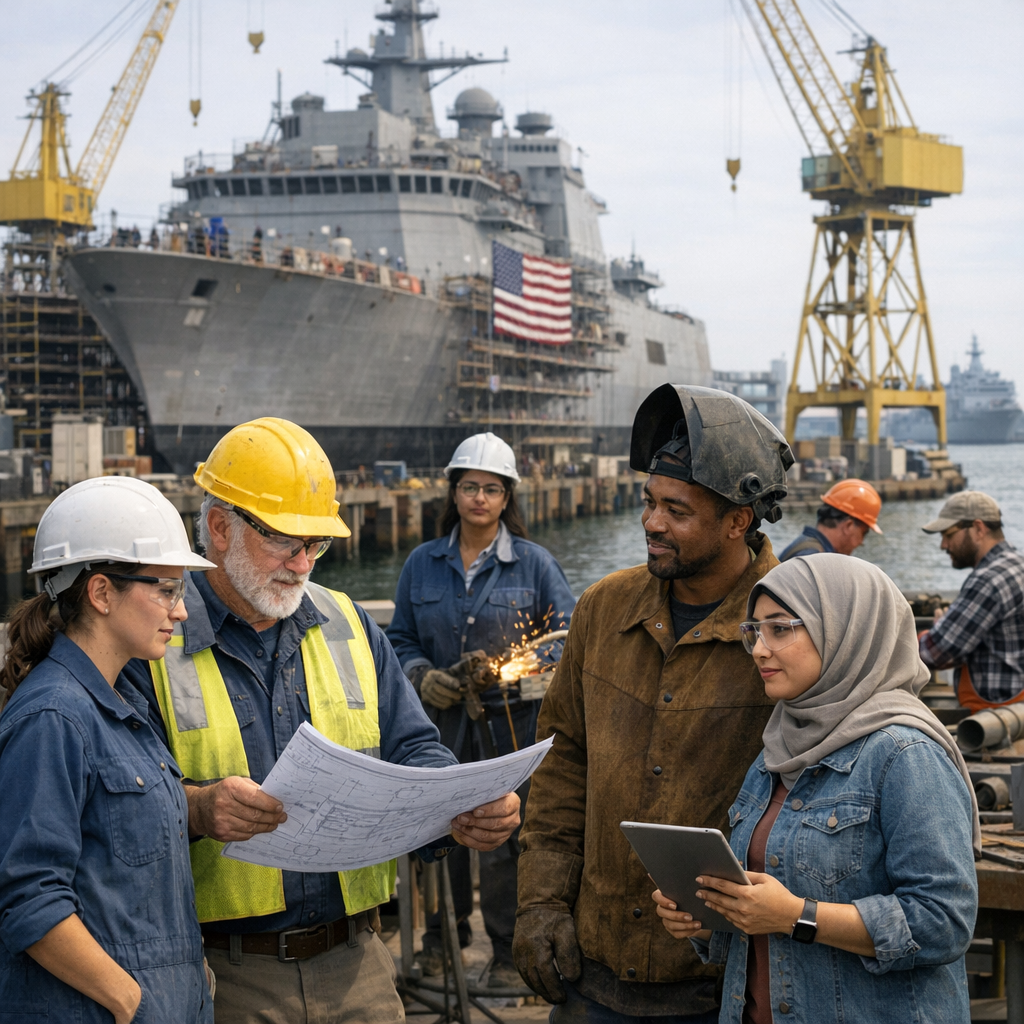
A recent opinion piece published by Fox News, titled “All hands on deck: An unlikely workforce can rebuild America’s fleet,” argues that the United States faces a pressing challenge in revitalizing its maritime industrial base and must look beyond traditional labor pools to do so. The article situates the problem within a broader geopolitical and economic context, where naval readiness and commercial shipping capacity are increasingly tied to national security and global competitiveness.
The Fox News commentary emphasizes that America’s shipbuilding capacity has declined significantly over decades, leaving the country trailing global competitors. According to analyses such as those from the Congressional Budget Office and Congressional Research Service, the U.S. industrial base has struggled to keep pace with rising global output. While nations such as China have expanded their shipyards and workforce at scale, the United States has struggled with limited infrastructure, an aging workforce, and insufficient recruitment pipelines. The result, according to the article, is a growing gap between strategic ambitions and industrial capability.
Central to the argument is the notion that the solution cannot rely solely on conventional approaches to workforce development. The piece suggests that policymakers and industry leaders must consider nontraditional labor sources, including individuals who have historically faced barriers to employment. Labor market data from the Bureau of Labor Statistics highlights ongoing shortages in skilled trades, reinforcing the need to tap into underutilized segments of the population. By doing so, the United States could both address labor shortages and create new pathways to stable, skilled employment.
The Fox News article frames this approach as both pragmatic and urgent. Shipbuilding, it notes, is labor-intensive and requires a range of technical skills, from welding and fabrication to engineering and project management. Training programs, apprenticeships, and public-private partnerships—such as those supported by the U.S. Maritime Administration—are identified as key mechanisms for expanding the workforce. However, the article contends that these initiatives will only succeed if they are scaled rapidly and aligned with long-term national priorities.
At the same time, the commentary highlights structural challenges that extend beyond workforce numbers. Reports from the Government Accountability Office have pointed to regulatory hurdles, fragmented procurement processes, and inconsistent funding as persistent inefficiencies in the shipbuilding sector. Addressing these issues, the piece argues, will be essential to ensuring that any increase in labor capacity translates into tangible gains in ship production.
The broader implication of the Fox News argument is that industrial revitalization requires a coordinated national effort. Workforce development, while critical, must be paired with sustained investment, policy reform, and strategic planning. Without such alignment, efforts to rebuild America’s fleet risk falling short of their intended impact.
In presenting its case, the article underscores a growing consensus among defense analysts and industry experts: that maritime strength is inseparable from economic resilience. Strategic assessments such as the U.S. Navy’s force structure plans reinforce the idea that the ability to design, build, and maintain ships is increasingly viewed as a national imperative.
Ultimately, the Fox News piece calls for a sense of urgency and adaptability in addressing the workforce gap. By broadening recruitment strategies and removing systemic barriers, the United States, it argues, can begin to reverse decades of decline and reestablish a मजबूत shipbuilding foundation capable of meeting future demands.