Poland’s PGZ Partners with Anduril to Launch Domestic Production of Low-Cost Barracuda Cruise Missiles
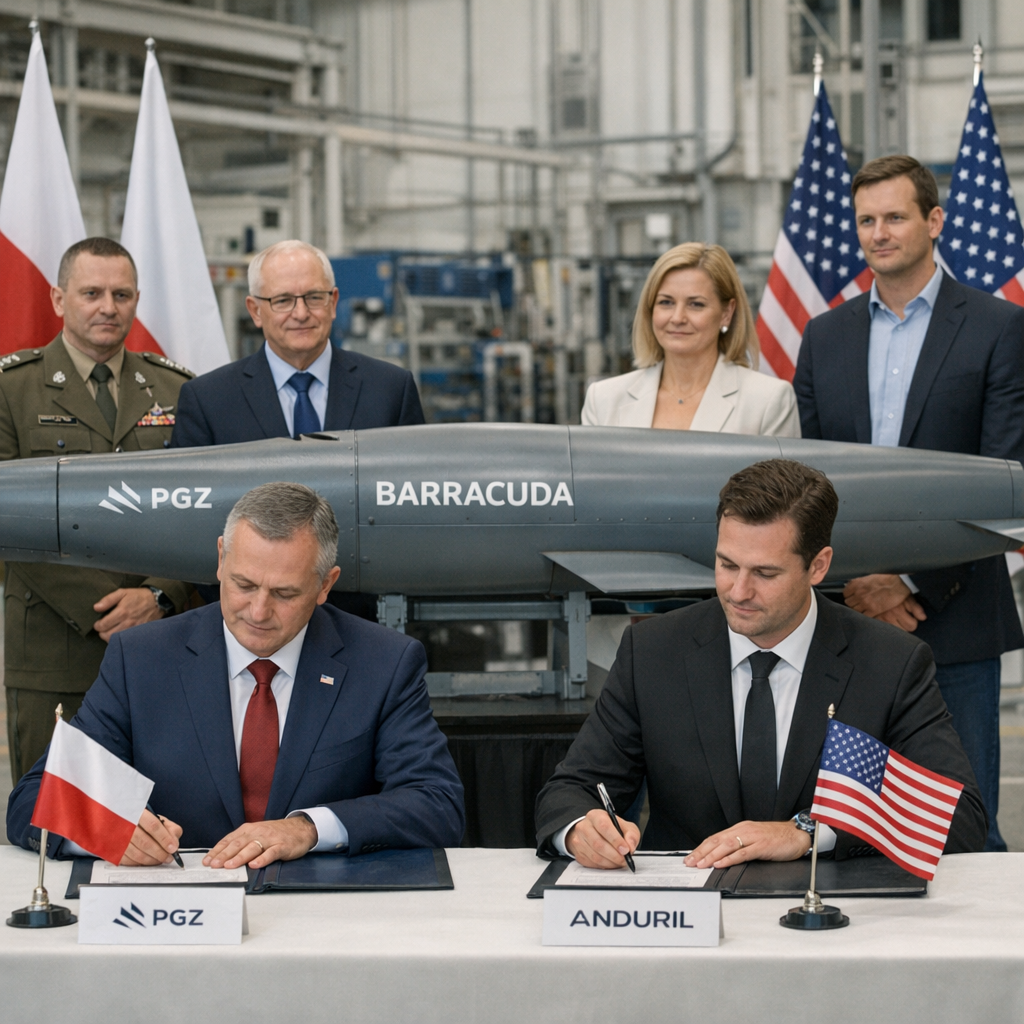
Poland’s state-owned defense group PGZ is preparing to manufacture a new class of cruise missiles in partnership with U.S.-based Anduril Industries, a move that underscores Warsaw’s accelerating push to expand domestic arms production amid heightened security concerns in Europe.
According to the article “Polish defense giant PGZ to produce Anduril’s Barracuda cruise missile,” published by Defense News, the agreement will see Polska Grupa Zbrojeniowa (PGZ) collaborate with Anduril Industries on the production of the Barracuda system, a relatively low-cost, modular cruise missile designed for flexible deployment. The partnership reflects a broader strategy by Poland to deepen industrial ties with American defense firms while building sovereign manufacturing capacity.
The Barracuda missile is part of Anduril’s emerging family of autonomous and attritable systems, which are designed to be produced at scale and deployed in contested environments without the high costs associated with traditional precision-guided munitions. By pursuing local production, PGZ aims to integrate these capabilities into Poland’s evolving defense architecture while reducing reliance on imported systems.
The initiative comes at a time when Poland is investing heavily in military modernization, driven in large part by Russia’s ongoing war in Ukraine and the perceived need to strengthen NATO’s eastern flank. Warsaw has already embarked on an ambitious procurement program that includes advanced air defense systems, fighter aircraft, and armored vehicles. Expanding domestic production of missile systems adds another layer to its effort to sustain long-term readiness.
For Anduril, the partnership represents a foothold in Central Europe and a chance to scale its production model through international collaboration. The company has positioned itself as a disruptor in the defense sector, emphasizing rapid manufacturing and software-driven capabilities. Working with PGZ could help accelerate the adoption of its systems within NATO while aligning with allied governments’ preference for local industrial participation.
The Defense News report highlights that the cooperation is expected to include technology transfer and joint production arrangements, though specific timelines and output targets have not been publicly detailed. Analysts note that such arrangements are increasingly common as European countries seek to balance procurement from U.S. suppliers with domestic industrial growth, as discussed by organizations like the International Institute for Strategic Studies.
Poland’s leadership has repeatedly stressed the importance of building a robust national defense industry capable of supporting both domestic needs and export ambitions. If successfully implemented, the Barracuda program could position PGZ as a participant in next-generation missile production, potentially opening opportunities in other European markets.
The partnership also reflects a broader shift in how Western militaries are approaching munitions stockpiles. The war in Ukraine has exposed the limits of existing inventories and the difficulty of rapidly replenishing high-end weapons. Systems like Barracuda, designed for affordability and mass production, are increasingly seen as a critical complement to more sophisticated but expensive platforms.
While the full scope of the PGZ-Anduril collaboration remains to be seen, the agreement signals a convergence of strategic priorities: Poland’s drive for industrial self-reliance and Anduril’s push to scale a new model of defense manufacturing.