Canada Turns to Germany’s TKMS for Next-Generation Submarines in Major Defense Shift
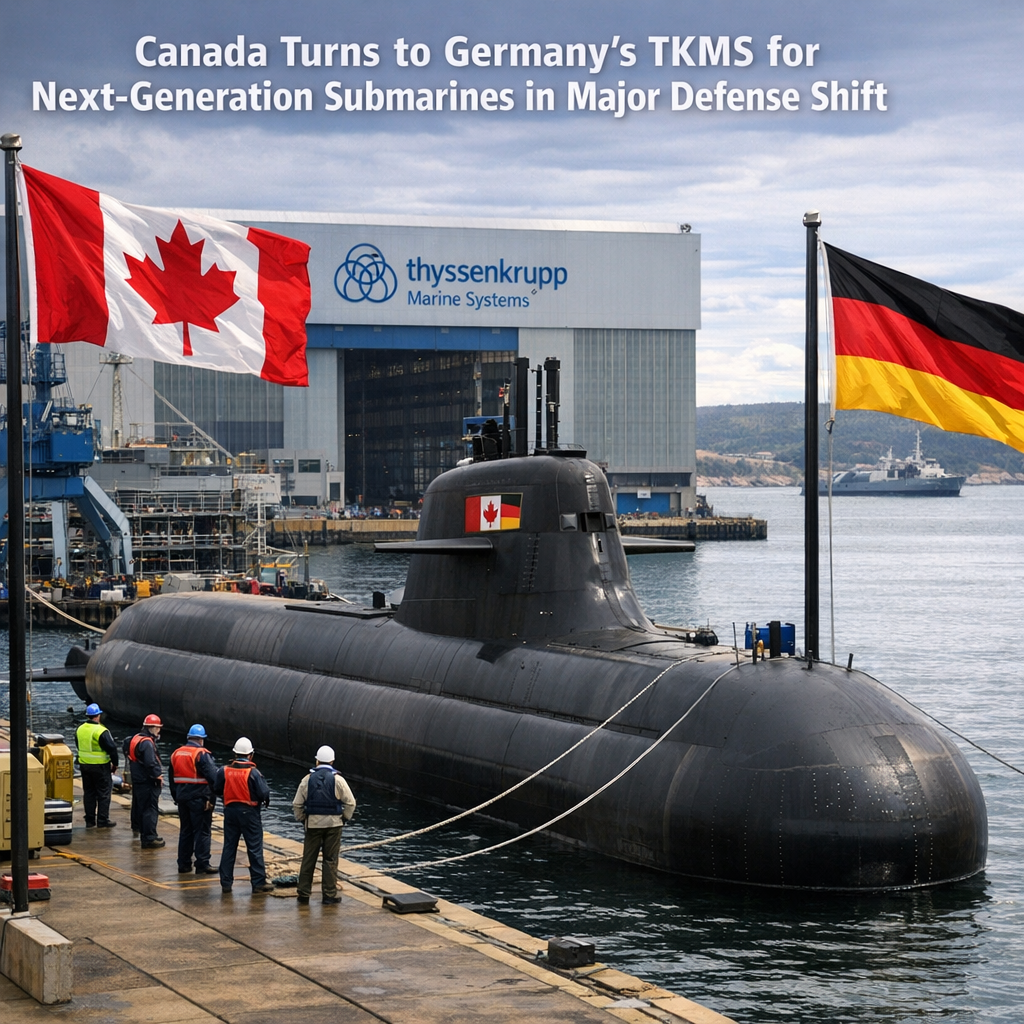
Canada has selected Germany’s Thyssenkrupp Marine Systems (TKMS) to supply a new fleet of submarines in what officials describe as a landmark procurement, underscoring Ottawa’s deepening defense ties with European partners and its effort to modernize maritime capabilities in a more contested global security environment.
The decision, first reported by Defense News in the article “Canada picks Germany’s TKMS for historic submarine buy in nod to Europe”, marks one of the most significant investments in the Royal Canadian Navy in decades. The agreement is expected to replace Canada’s aging Victoria-class submarines with a new generation of conventionally powered vessels designed for extended undersea endurance, enhanced stealth, and improved interoperability with allied fleets.
Canadian defense planners have long faced mounting pressure to recapitalize the submarine force, which has struggled with maintenance issues and operational limits tied to its Cold War-era design. The selection of Thyssenkrupp Marine Systems reflects both technical considerations and broader geopolitical calculations. European shipbuilders have increasingly positioned themselves as viable alternatives to U.S. suppliers, particularly as NATO allies seek to strengthen intra-alliance industrial cooperation.
Government officials have emphasized that the procurement is not only about replacing obsolete equipment but also about ensuring Canada can assert a persistent presence in strategically significant regions, including the Arctic and the North Atlantic. As ice melt opens new maritime routes in the Arctic, submarines are viewed as essential tools for surveillance and deterrence in waters where great power competition is intensifying.
TKMS, a major player in the global submarine market, is known for its Type 212 and Type 214 designs, which incorporate advanced air-independent propulsion systems that allow submarines to remain submerged for extended periods without surfacing. While specific details of the configuration Canada will acquire have not been fully disclosed, analysts expect a customized platform tailored to Canada’s long-range patrol requirements and harsh operating environments.
The deal also carries industrial and political implications. Canadian officials have indicated that domestic industry participation will be a key component of the program, potentially including maintenance infrastructure, crew training systems, and supply chain integration. Such provisions are likely intended to mitigate concerns about relying on foreign-built platforms while supporting domestic economic activity.
The choice of a German supplier over other competitors reflects a broader shift in Canada’s procurement strategy, which has historically leaned heavily toward North American defense partnerships. By turning to Europe for a critical naval capability, Ottawa is signaling a willingness to diversify its defense relationships at a time when transatlantic cooperation is being recalibrated in response to evolving threats.
According to Defense News, the selection process weighed multiple factors, including lifecycle costs, delivery timelines, and technological maturity. Cost considerations in particular have been central to the debate, as submarine programs are among the most expensive military procurements. Ensuring long-term affordability while maintaining operational effectiveness will be a key challenge as the project moves into the implementation phase.
The timeline for delivery remains subject to final contract negotiations, but defense officials have suggested that initial vessels could enter service in the next decade. In the interim, Canada will need to sustain its existing submarine fleet to avoid capability gaps.
The procurement comes amid a broader push by NATO members to increase defense spending and modernize their forces. Canada has faced scrutiny from allies over its defense budget, which has lagged behind the alliance’s target of 2 percent of GDP. Large-scale programs such as the submarine acquisition may help address those concerns, though they will also intensify domestic debates over defense priorities and fiscal constraints.
As outlined in Defense News’s reporting, the TKMS deal represents more than a routine equipment purchase. It signals a strategic recalibration in how Canada approaches maritime security, industrial partnerships, and alliance politics, with implications that will shape its naval posture for decades.