Europe Moves to Shoulder NATO Defense Burden as US Shifts Strategic Focus
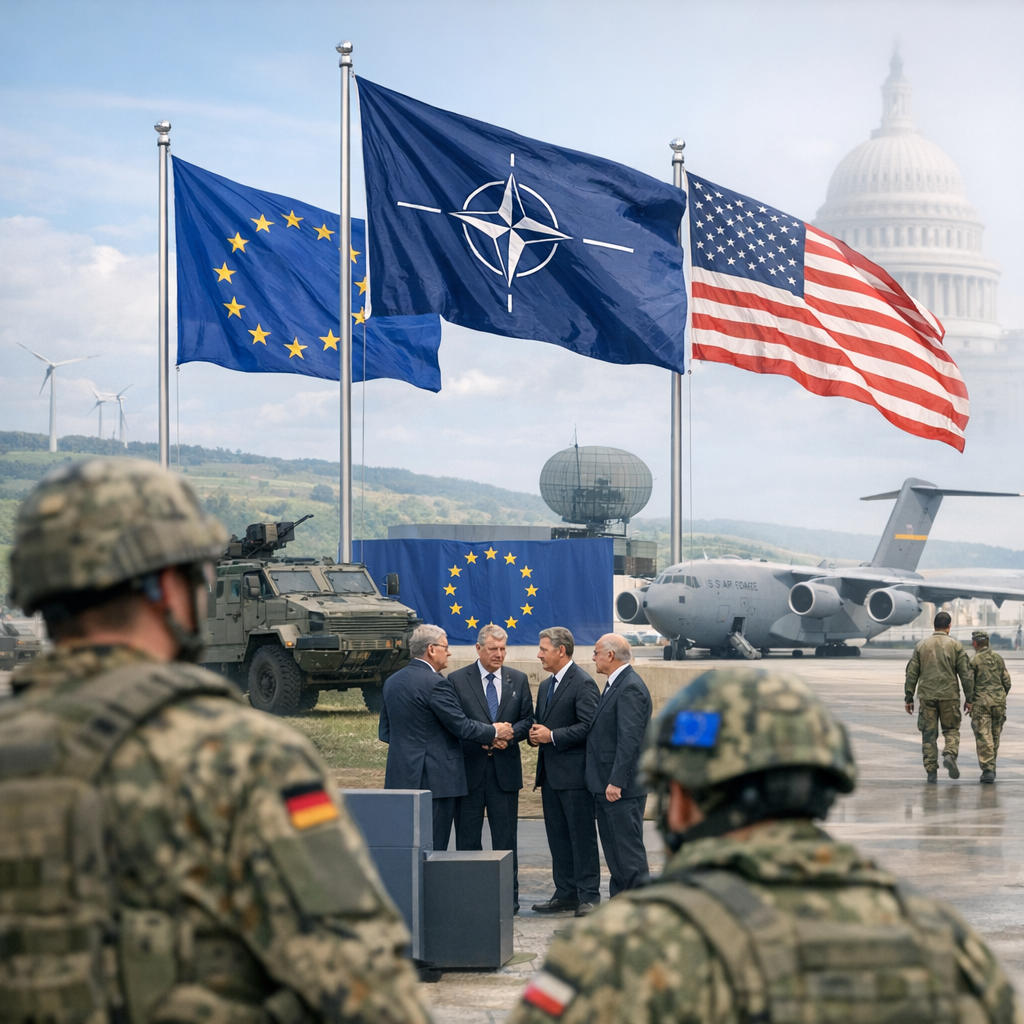
European nations are moving to assume a far greater share of responsibility for the continent’s collective defense, seeking to fill most of the capability gaps left by the United States in NATO planning, according to officials familiar with internal alliance discussions. The shift reflects a broader recalibration inside NATO as Washington increasingly prioritizes strategic competition in other regions while urging allies to strengthen their own military readiness.
The development was first reported by Defense News in an article titled “Europeans to fill almost all gaps left by US in NATO defense plans, source says,” which cited a senior source involved in alliance planning (original report). According to that report, European allies have signaled their willingness to take on responsibilities that were long dominated by U.S. forces, including air and missile defense, long-range fires, logistics, and command-and-control capabilities.
The effort forms part of NATO’s updated defense planning framework, which has grown more ambitious since Russia’s full-scale invasion of Ukraine in 2022. NATO has since expanded its forward presence and adopted new regional defense plans aimed at rapidly countering potential aggression along its eastern flank, as outlined in alliance strategy documents (NATO strategic concepts and plans). Those plans require significant increases in manpower, equipment, and readiness levels—requirements that had traditionally leaned heavily on U.S. military contributions.
In recent months, European governments have accelerated defense spending and procurement efforts to meet these demands. Several countries have committed to meeting or exceeding NATO’s benchmark of spending 2 percent of GDP on defense (NATO defense spending guideline), while others are investing in advanced systems such as air defenses, precision strike capabilities, and heavy armor. Multinational cooperation projects have also gained momentum, particularly in areas where individual nations lack scale, with coordination often supported by institutions like the European Defence Agency.
Despite progress, the transition is not without challenges. European defense industries face constraints in production capacity, supply chains, and workforce availability, which could slow efforts to rapidly expand military capabilities—issues highlighted in analyses of global arms production and spending trends (SIPRI military expenditure database). Coordination among NATO members—each with distinct procurement processes and strategic priorities—also remains a complex undertaking.
Nevertheless, officials suggest that the political will to rebalance transatlantic defense responsibilities is stronger than at any point in recent decades. The war in Ukraine has served as a catalyst, underscoring both the urgency of deterrence in Europe and the risks of overdependence on U.S. forces.
For Washington, the emerging shift may offer greater flexibility to allocate resources to other theaters while maintaining confidence in NATO’s collective defense posture. For European allies, it represents both a strategic necessity and a test of their ability to translate commitments into credible military capability.
As NATO continues to refine its defense plans, the extent to which European nations can fully close the capability gaps left by the United States will likely shape the alliance’s cohesion and effectiveness in the years ahead.