SOF Week Highlights Shift Toward Lightweight Drones and Throwable Surveillance Tools to Enhance Battlefield Awareness
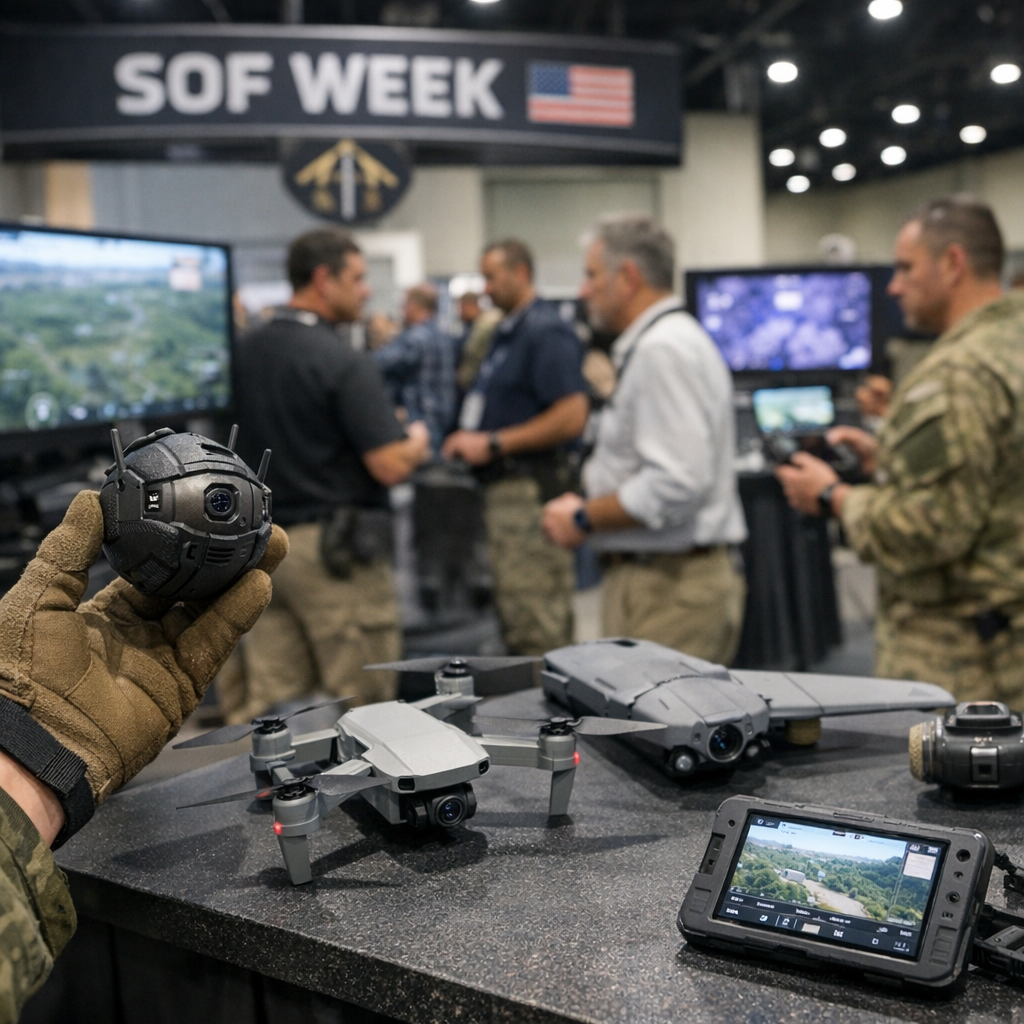
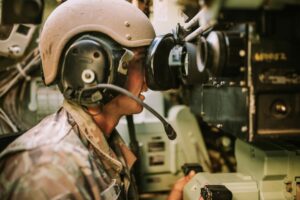
Emerging battlefield technologies showcased at the recent Special Operations Forces (SOF) Week conference point to a growing emphasis on lightweight, rapidly deployable tools designed to enhance situational awareness while reducing risk to personnel. Among the concepts drawing attention were low-cost foam drones and a throwable 360-degree tactical camera, both reflecting a broader shift toward adaptable, soldier-centric innovation.
As reported in Military Times in the article “Foam drones and a throwable 360-degree tactical camera: SOF Week tech”, developers and military stakeholders presented systems intended to operate in close-quarters and contested environments where traditional platforms may be impractical. The technologies emphasize portability, ease of use, and resilience—characteristics increasingly prioritized in modern operational planning, as also noted by the U.S. Department of Defense.
Foam drones, constructed from lightweight and inexpensive materials, represent a departure from more complex and costly unmanned aerial systems. Their design allows for rapid deployment with minimal logistical burden, making them particularly suited for short-range reconnaissance in urban or austere environments. Because they are relatively inexpensive, they can be used in higher-risk scenarios where loss is likely, without the strategic or financial consequences associated with larger systems, a trend explored in research by the RAND Corporation on unmanned aerial systems.
Developers highlighted the drones’ potential to provide real-time intelligence to small units operating independently, a capability seen as essential in modern distributed warfare. Their simplicity also enables quicker training cycles, allowing operators to become proficient without extensive technical instruction. This aligns with a broader military trend toward equipping smaller units with tools that were once reserved for specialized or higher-echelon forces, reflected in modernization priorities outlined by the U.S. Army Futures Command.
Alongside aerial systems, ground-based situational awareness tools are also evolving. The throwable 360-degree tactical camera demonstrated at SOF Week is designed to be deployed into enclosed or hazardous spaces before personnel enter. Once thrown, the device begins transmitting a full panoramic view of its surroundings, giving operators immediate visual intelligence without exposing themselves to danger.
This type of technology addresses a longstanding challenge in close-quarters combat: the need to quickly assess unknown environments. By providing a comprehensive visual feed, the camera reduces uncertainty and allows teams to make more informed decisions in seconds. Its portability and durability make it suitable for a variety of missions, from urban clearing operations to hostage rescue scenarios, similar to systems discussed by the Defense Advanced Research Projects Agency (DARPA).
The emphasis on such compact and relatively low-cost tools reflects lessons drawn from recent conflicts, where adaptability and rapid innovation have proven decisive. Military planners are increasingly focused on equipping forces with systems that can be easily integrated into existing workflows while maintaining operational flexibility, a concept frequently analyzed by the Center for Strategic and International Studies (CSIS).
At the same time, the proliferation of inexpensive technologies raises questions about countermeasures and the potential for adversaries to adopt similar capabilities. As these tools become more accessible, maintaining a technological edge may depend less on exclusivity and more on speed of iteration and effective integration into tactics and doctrine.
The developments highlighted at SOF Week underscore a broader transformation in military technology, one that prioritizes agility, scalability, and user-driven design. As suggested in Military Times’ coverage, these innovations are not necessarily about replacing existing systems but augmenting them, providing operators with new options in increasingly complex operational environments.
Whether foam-based drones or throwable surveillance devices, the common thread is a focus on reducing risk while expanding situational awareness. As these technologies continue to mature, they are likely to play a growing role in how small units operate on the modern battlefield.