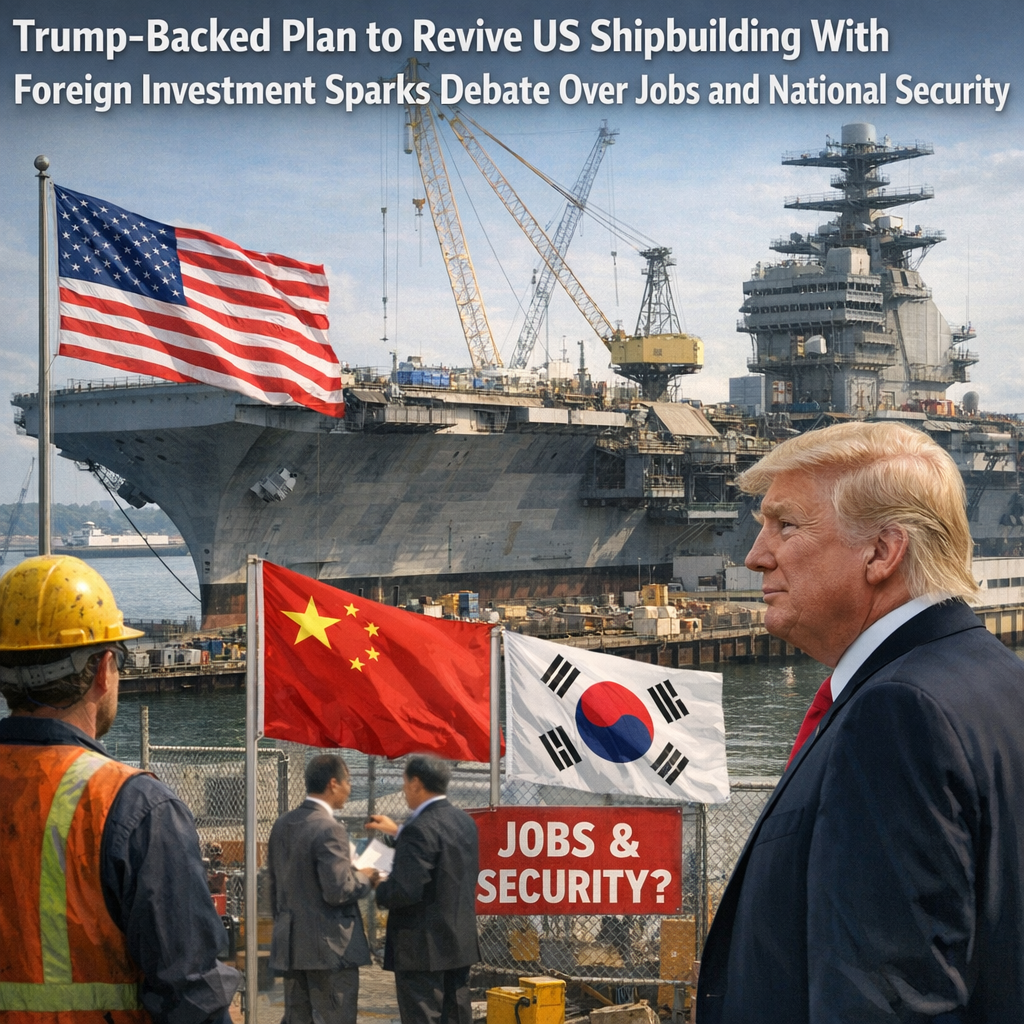
Trump-Backed Plan to Revive US Shipbuilding With Foreign Investment Sparks Debate Over Jobs and National Security
A proposal highlighted in the Fox News article titled “Trump plan for foreign shipbuilders could create 540,000 jobs, expand US fleet” outlines an ambitious effort to revive American ship manufacturing by leveraging foreign investment and expertise. The plan, associated with former President Donald Trump’s broader economic and industrial policy framework, seeks to address long-standing concerns about the decline of domestic shipbuilding capacity and the strategic vulnerabilities tied to it.
According to the report published by Fox News, proponents of the plan argue that opening the U.S. market more fully to allied foreign shipbuilders—while requiring them to establish production facilities on American soil—could catalyze large-scale job creation and rebuild a critical industrial base. Estimates cited in the article suggest the initiative could generate up to 540,000 jobs, spanning construction, engineering, supply chain logistics, and port infrastructure.
The proposal emerges amid growing bipartisan concern about the diminished size of the U.S. commercial and military maritime fleet relative to global competitors, particularly China. Analysts have increasingly warned that the erosion of domestic shipbuilding capabilities poses both economic and national security risks, including reduced sealift capacity and reliance on foreign-built vessels, as noted in assessments by the U.S. Government Accountability Office and discussions of maritime readiness by USTRANSCOM.
Supporters of the plan contend that foreign shipbuilders—particularly from allied nations with advanced maritime industries, such as Japan and South Korea—could bring technical expertise, efficiency, and capital investment that have been lacking in the U.S. sector. By requiring these firms to operate within the United States, the proposal aims to blend international experience with domestic labor and regulatory frameworks, thereby strengthening local economies while maintaining national oversight.
However, the concept raises complex policy questions. Critics caution that integrating foreign builders into U.S. industrial strategy may create tensions with existing domestic shipyards, which have long depended on federal contracts and protective regulations such as the Jones Act. There are also concerns about whether such partnerships would genuinely lead to technology transfer and sustained domestic capacity, or if they would instead result in partial dependence on foreign firms operating within U.S. borders.
The Fox News article notes that the plan aligns with a broader push to revitalize American manufacturing through a mix of protectionism and targeted openness to foreign investment. In this context, shipbuilding is seen as a particularly acute case, given its capital intensity, long production timelines, and strategic importance, especially as global market share has increasingly shifted toward Asia, as analyzed by the Center for Strategic and International Studies.
Economists and industry observers remain divided on the feasibility of achieving the scale of job creation cited in the report. While large infrastructure and industrial initiatives can generate significant employment, the shipbuilding sector is also highly automated and dependent on specialized skills that are in relatively short supply. Workforce development and training would likely play a decisive role in determining whether such projections materialize.
The debate reflects a larger shift in U.S. economic policy, where concerns about supply chains, national resilience, and industrial competitiveness are increasingly shaping proposals that blend domestic investment with selective international collaboration. Whether the specific approach outlined in the Fox News report gains traction, it underscores a growing recognition that rebuilding maritime capacity will require both substantial resources and a rethinking of long-standing policy frameworks.