White House Seeks $876 Billion for Iran-Focused Military Surge as Congress Raises Concerns
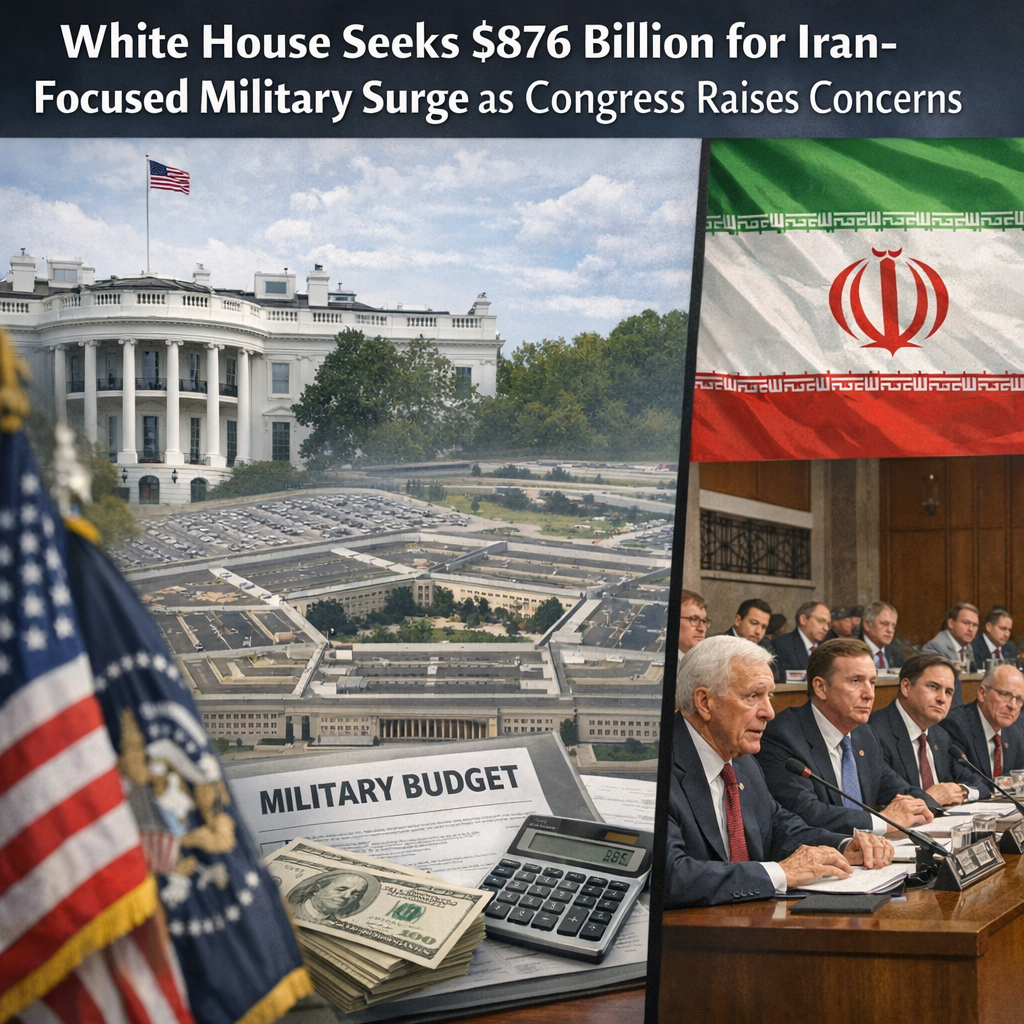
The White House has requested $876 billion from Congress in what officials describe as a largely war-driven funding push tied to escalating tensions with Iran, according to reporting by Military Times in its article “White House asks Congress for $876 billion, mostly for Iran war.” The proposal signals a significant expansion of defense-related expenditures at a moment of heightened geopolitical strain, and it is already prompting scrutiny on Capitol Hill over both its scope and strategic implications.
Administration officials have framed the request as necessary to sustain ongoing military readiness and operational commitments in the Middle East, where U.S. forces have been increasingly engaged amid a deteriorating security environment involving Iran and its regional proxies. A substantial portion of the funding is expected to be directed toward operational costs, weapons replenishment, troop deployments, and logistical support tied directly to the conflict.
The scale of the request stands out even in the context of recent defense budgets, which have trended upward amid global instability. Lawmakers from both parties are now weighing the merits of approving such a large allocation, particularly given concerns about long-term fiscal impact and the absence, so far, of a clearly defined end-state for U.S. involvement in the conflict.
Pentagon officials have argued that the funds are critical not only for sustaining current operations but also for ensuring deterrence against further escalation. They point to increased maritime activity, missile threats, and attacks linked to Iran-backed groups as evidence that U.S. forces require enhanced protection and resources. The funding request includes provisions for advanced weapon systems, intelligence capabilities, and expanded troop support measures.
However, some members of Congress are pushing for greater transparency regarding how the money would be spent and what benchmarks would define success. Questions have also emerged about whether the request represents a short-term emergency measure or the beginning of a more prolonged military commitment.
The Military Times report highlights that the proposal arrives amid broader debates in Washington about defense spending priorities, especially as domestic fiscal pressures continue to mount. Critics argue that such a large appropriation tied to a single regional conflict risks crowding out other national security and domestic needs. Supporters, by contrast, contend that failing to adequately fund operations could embolden adversaries and undermine U.S. credibility.
As Congress begins deliberations, the outcome is likely to hinge on a combination of strategic assessments, political calculations, and public sentiment regarding U.S. involvement in the Middle East. The debate is expected to intensify in the coming weeks, with lawmakers seeking further briefings from defense and administration officials before moving forward on the request.