Germany Cancels F126 Frigates in Favor of MEKO Design Shift to Accelerate Naval Readiness
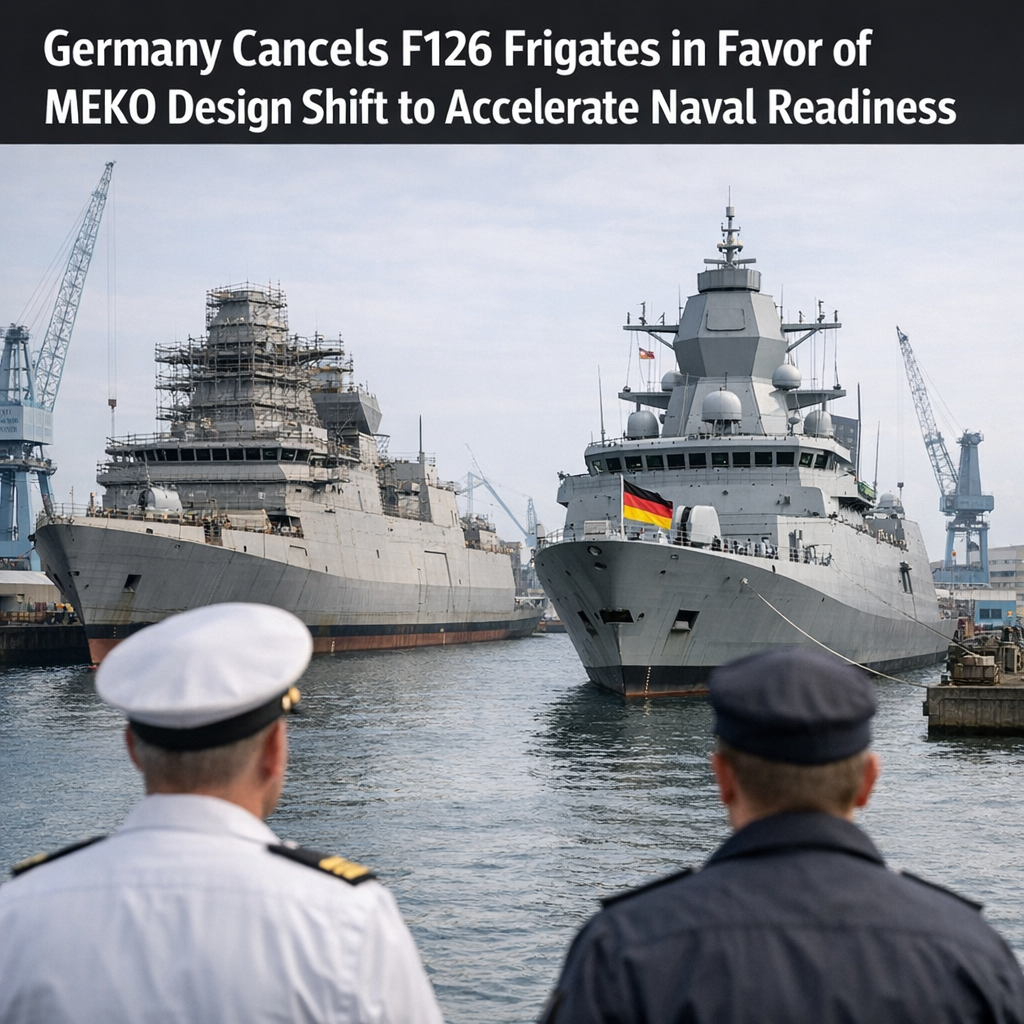
Germany has scrapped its planned F126 frigate program, pivoting instead toward a modified version of the long-running MEKO warship design, according to reporting by Breaking Defense in its article “Germany nixes multi-billion dollar F126 frigate program, opts for MEKOs instead.” The decision marks a significant shift in Berlin’s naval procurement strategy, with implications for European shipbuilding, alliance interoperability, and Germany’s broader defense posture.
The F126 program, envisioned as a centerpiece of the German Navy’s future surface fleet, had been projected to cost several billion euros and was intended to deliver a new class of multi-mission frigates capable of sustained operations. The ships were expected to emphasize modularity and endurance, aligning with NATO requirements for flexible deployment in diverse maritime environments. However, mounting concerns over cost growth, program complexity, and delivery timelines appear to have driven the government to reconsider.
By contrast, the MEKO family of ships—developed by Germany’s Thyssenkrupp Marine Systems decades ago—represents a more mature, export-proven design philosophy centered on modular construction. Opting for a MEKO-based solution is likely to reduce technical risk and accelerate production, offering what officials may view as a more predictable path to fleet modernization. The move suggests a prioritization of near-term readiness and budgetary discipline over the development of a more ambitious, but less certain, next-generation platform.
The cancellation is also a setback for the industrial consortium linked to the F126 effort, which had expected to sustain domestic shipbuilding capacity and jobs through the program’s lifecycle. The shift to a MEKO variant could still benefit German industry, depending on how contracts are structured, but it alters the balance of stakeholders and may redistribute work among shipyards and subcontractors.
Strategically, the decision comes as Germany continues to adjust its defense policy in response to heightened security concerns in Europe. Since committing to increased defense spending following Russia’s invasion of Ukraine, Berlin has faced pressure to deliver tangible improvements to military capability quickly. Naval forces, in particular, have taken on greater importance as the German Navy and its allies focus on securing sea lanes and strengthening their presence in the Baltic and North Atlantic.
Adopting a MEKO-derived platform may also facilitate interoperability with allied navies, many of which operate variations of the design. This could simplify logistics, training, and joint operations, reinforcing Germany’s role within NATO maritime frameworks. At the same time, abandoning the F126 concept raises questions about long-term innovation and whether incremental upgrades to existing designs can fully meet future operational demands.
The decision underscores a broader tension in defense procurement between ambition and practicality. While next-generation programs promise cutting-edge capabilities, they often carry higher risks of delay and cost overruns. Germany’s choice suggests a recalibration toward solutions that can be fielded more quickly, even if they offer less transformative change.
As Breaking Defense reported, the pivot to MEKO frigates reflects both fiscal realities and shifting strategic priorities. Whether the decision ultimately strengthens Germany’s naval capabilities will depend on execution, including how effectively the new ships integrate modern systems and adapt to evolving threats.