UK moves to shrink DragonFire laser for deployment on Royal Navy Type 45 destroyers
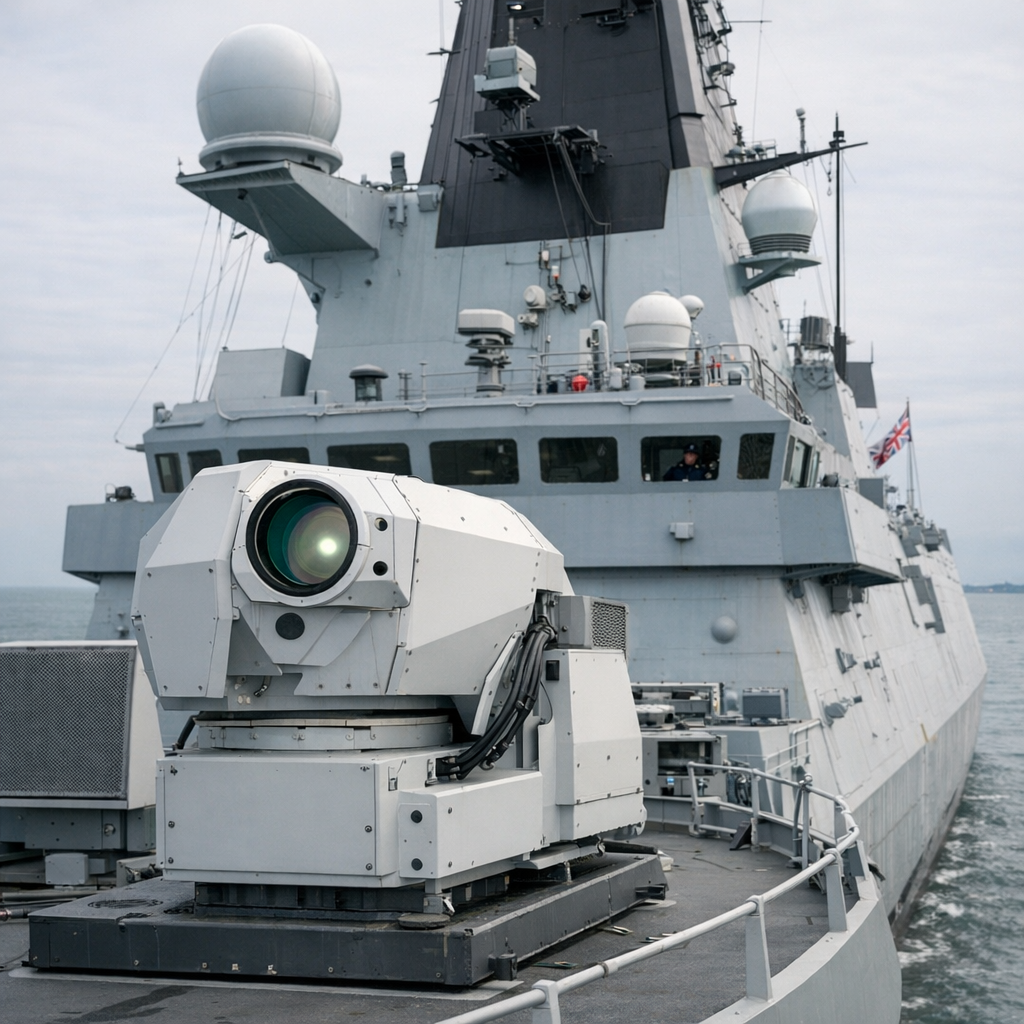
The United Kingdom’s effort to operationalize directed-energy weapons at sea is entering a new phase, with industry partners now turning their attention to shrinking the footprint of the DragonFire laser system for deployment aboard Royal Navy destroyers.
According to “UK industry partners look to miniaturize DragonFire laser weapon for Type 45 destroyer debut,” published by Breaking Defense, British defense companies are working to refine and reduce the size of the high-energy laser system following a series of successful land-based trials. The goal is to integrate the weapon onto the Royal Navy’s Type 45 destroyers, a move that would represent a significant step toward fielding operational laser capabilities at sea.
DragonFire, developed by a consortium that includes MBDA, Leonardo UK, and QinetiQ, has been positioned as a cost-effective alternative to traditional missile-based air defense. The system uses a directed-energy beam to disable or destroy aerial threats, such as drones, with a markedly lower cost per shot compared to conventional interceptors. Officials have emphasized its potential to counter the growing prevalence of inexpensive, unmanned systems that can overwhelm traditional defenses.
The challenge now lies in adapting the technology to the constraints of naval platforms. Warships, particularly those already in service like the Type 45, have limited space, power, and cooling capacity. Miniaturization efforts are focused not only on reducing the physical footprint of the laser system but also on ensuring that it can be integrated without compromising existing ship systems or operational readiness.
Industry representatives indicated that while DragonFire has demonstrated accuracy and effectiveness in trials, scaling the system for maritime use requires further engineering work. Power generation and thermal management are among the most significant hurdles, as high-energy lasers generate substantial heat and demand reliable, sustained energy sources. Integrating these requirements into a warship’s architecture without extensive redesign remains a central technical challenge.
Despite these obstacles, UK defense officials appear committed to accelerating the transition from experimentation to deployment. The Type 45 destroyer has been identified as a logical platform for initial integration, given its role in air defense and its advanced Samson radar system and combat systems. If successful, the deployment would mark the Royal Navy’s first operational use of a laser weapon.
The push reflects broader trends in modern warfare, where militaries are increasingly investing in directed-energy systems to complement traditional kinetic weapons. Lasers offer the promise of near-instantaneous engagement, deep magazines limited primarily by power supply, and reduced logistical burdens compared to missile inventories. However, questions remain about their effectiveness under adverse weather conditions and against more complex or hardened targets, as noted in analyses of directed-energy weapon limitations.
The UK’s efforts also have implications for allied defense cooperation. As NATO members explore similar technologies, interoperability and shared development could shape future procurement strategies. The DragonFire program, while nationally led, may contribute to a wider ecosystem of directed-energy capabilities across allied forces.
As reported by Breaking Defense, the transition from prototype to operational system will require sustained investment and continued testing. The timeline for deployment aboard a Type 45 destroyer has not been definitively set, but the current focus on miniaturization suggests that the program is moving closer to fielding a viable maritime capability.
If realized, the integration of DragonFire into the Royal Navy fleet would signal a notable shift in naval warfare, introducing a new layer of defense designed to meet the evolving threat landscape at a lower cost and with greater responsiveness than traditional systems.