Iran Issues Fresh Threat Over Hormuz Shipping Rules, Raising Fears of Escalation in Key Oil Corridor
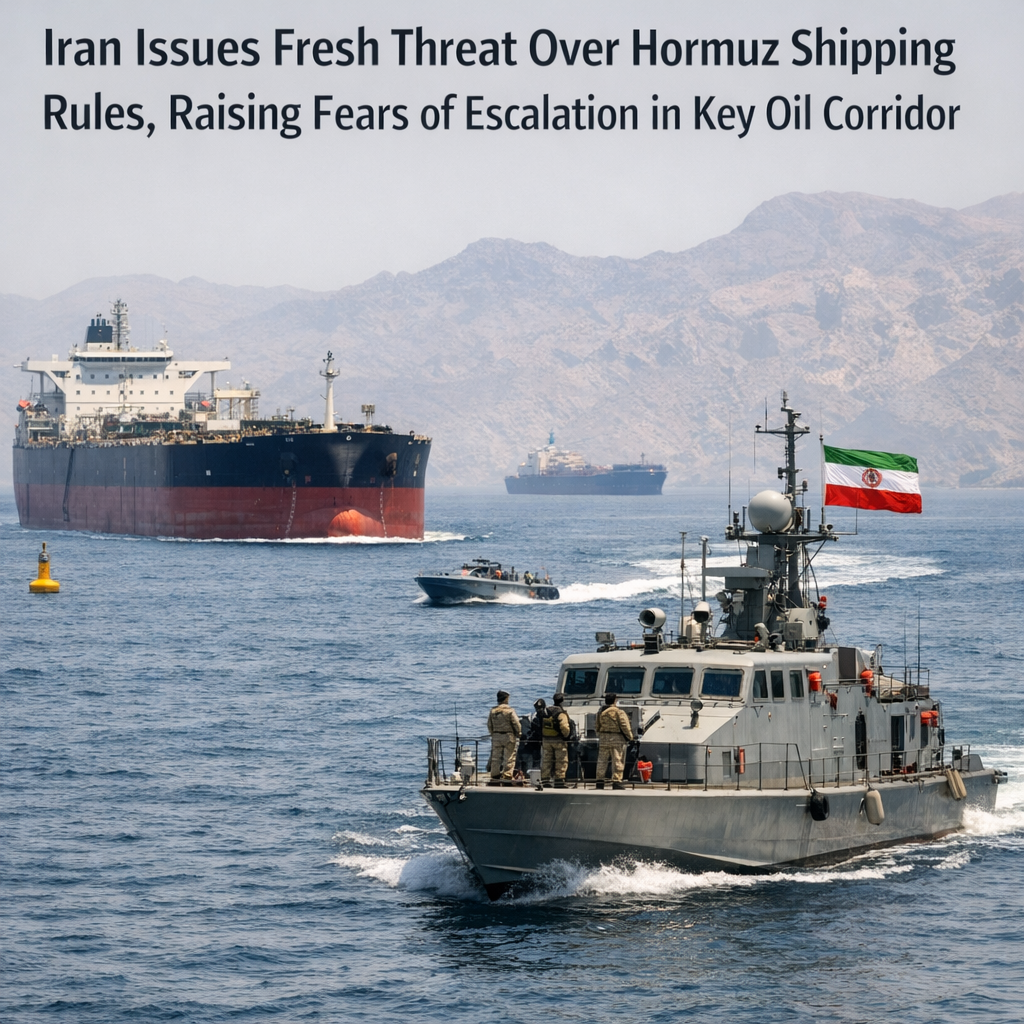
Iran has issued a renewed warning over maritime conduct in the Strait of Hormuz, signaling heightened tensions in one of the world’s most strategically critical shipping corridors. The development was reported by i24NEWS in its live coverage titled “Iran warns over new Hormuz shipping route, threatens vessels violating transit rules,” which detailed Tehran’s latest posture toward vessels navigating the narrow waterway.
According to the report, Iranian authorities cautioned that ships failing to comply with newly asserted transit guidelines could face intervention. The warning appears tied to shifts in shipping patterns in and around the Strait of Hormuz, a chokepoint through which a significant share of global oil shipments passes. Iranian officials have framed their position as an enforcement of maritime order and national security, though the language used has raised concerns among international observers about the risk of escalation.
The i24NEWS report indicates that the warning may relate to efforts by some vessels to adopt alternative routes or procedures in response to security concerns in the region. These adjustments have reportedly been interpreted by Tehran as deviations from established norms, prompting threats of enforcement action. While Iranian authorities have not specified the exact measures they would take, the tone of the warning suggests a readiness to act against what they view as noncompliant ships.
The Strait of Hormuz has long been a focal point of geopolitical tension, given its role as a vital artery for energy exports from the Gulf. Even minor disruptions or perceived threats in the area can have immediate implications for global energy markets and shipping insurance costs. According to the U.S. Energy Information Administration, a significant portion of the world’s petroleum liquids transits this corridor daily. Analysts note that rhetoric around maritime enforcement, even absent direct confrontation, can increase uncertainty and drive precautionary behavior among shipping companies.
International maritime stakeholders are likely to monitor the situation closely, particularly as ambiguity persists over what constitutes a violation of Iran’s stated rules. Shipping firms, insurers, and naval forces operating in the region must weigh operational safety against the risk of entanglement in political disputes. Guidance from bodies such as the International Maritime Organization plays a key role in establishing norms, yet the lack of clear, internationally recognized guidelines accompanying Iran’s warning complicates compliance and increases the potential for miscalculation.
The i24NEWS coverage situates the warning within a broader pattern of regional friction, where navigation rights and security concerns intersect. Reporting from outlets like Reuters Middle East has frequently highlighted similar tensions affecting maritime activity in the Gulf. While no immediate incidents have been reported in connection with the latest statement, the possibility of encounters at sea remains a key concern. Diplomatic channels may be tested in the coming days as stakeholders seek to clarify intentions and reduce the risk of confrontation in a heavily trafficked maritime corridor, a concern also tracked by maritime security analysts such as Lloyd’s List.
For now, the warning underscores the persistent fragility of security dynamics in the Gulf and the outsized global impact that localized tensions in the Strait of Hormuz can produce.