Senate Unites Across Party Lines to Curb Presidential Power on Potential Iran Conflict
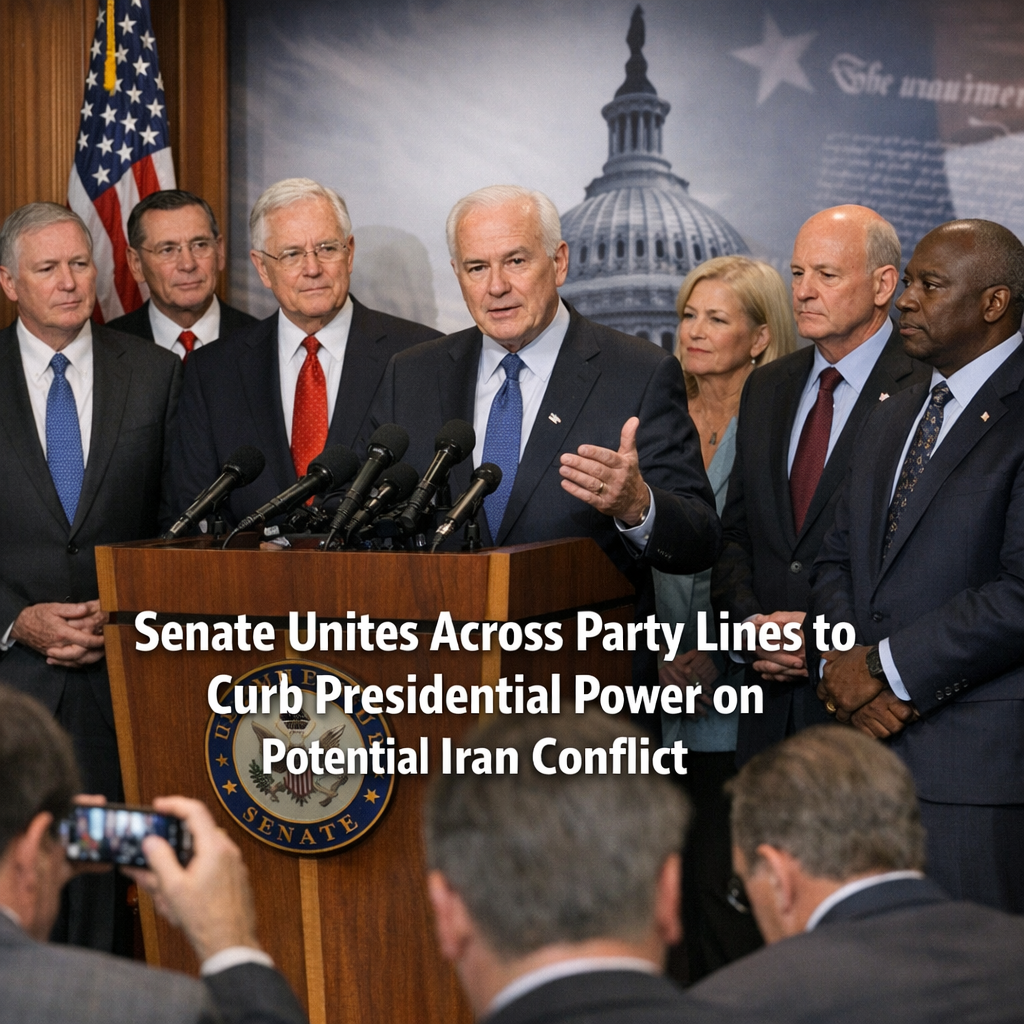
A bipartisan majority in the U.S. Senate has moved to restrict former President Donald Trump’s ability to initiate renewed military action against Iran without congressional approval, marking a rare moment of cross-party alignment on war powers. The development, reported in the i24NEWS article titled “US Senate blocks Trump from resuming war with Iran after bipartisan vote – live blog,” underscores renewed scrutiny in Washington over executive authority to engage in armed conflict (original report).
The measure, which passed with support from both Democrats and several Republicans, reflects growing concern among lawmakers about the potential for unilateral military escalation with Tehran. While the resolution is largely symbolic in the absence of current hostilities, its passage signals a broader effort by Congress to reassert its constitutional authority over declarations of war and military engagement, as outlined in the U.S. Constitution and further shaped by the War Powers Resolution of 1973.
Lawmakers backing the measure argued that any decision to enter into sustained conflict with Iran must involve explicit congressional authorization. They pointed to the volatile security environment in the Middle East and the risks of rapid escalation following limited strikes or confrontations. Supporters also invoked precedents from recent decades in which presidents from both parties have undertaken military actions without formal declarations of war, often citing broad interpretations of executive power under measures such as the 2001 Authorization for Use of Military Force.
Opponents of the measure contended that constraining presidential authority could limit the United States’ ability to respond swiftly to emerging threats. Some Republican senators argued that the resolution could send the wrong signal to adversaries, suggesting political division at a time when deterrence requires clarity and resolve.
The vote comes amid heightened tensions surrounding Iran’s regional activities and its nuclear program, issues that have periodically brought Washington and Tehran to the brink of confrontation. During Trump’s presidency, relations deteriorated sharply following the U.S. withdrawal from the 2015 nuclear agreement (JCPOA) and the subsequent killing of Iranian General Qassem Soleimani in 2020, which prompted retaliatory strikes and fears of broader war.
Although Trump is no longer in office, the Senate’s action reflects ongoing concerns about how future administrations—potentially including a second Trump presidency—might approach Iran. The resolution is part of a broader legislative effort to revisit and potentially revise the framework governing U.S. military engagements abroad, including the decades-old Authorizations for Use of Military Force that have been used to justify operations across multiple theaters.
The White House has not signaled immediate policy changes in response to the Senate vote, but the issue is likely to remain a point of contention as lawmakers continue to debate the balance between executive flexibility and congressional oversight in matters of war and peace.