NATO Audit Board Expands Cooperation with European Institutions to Strengthen Financial Oversight and Transparency
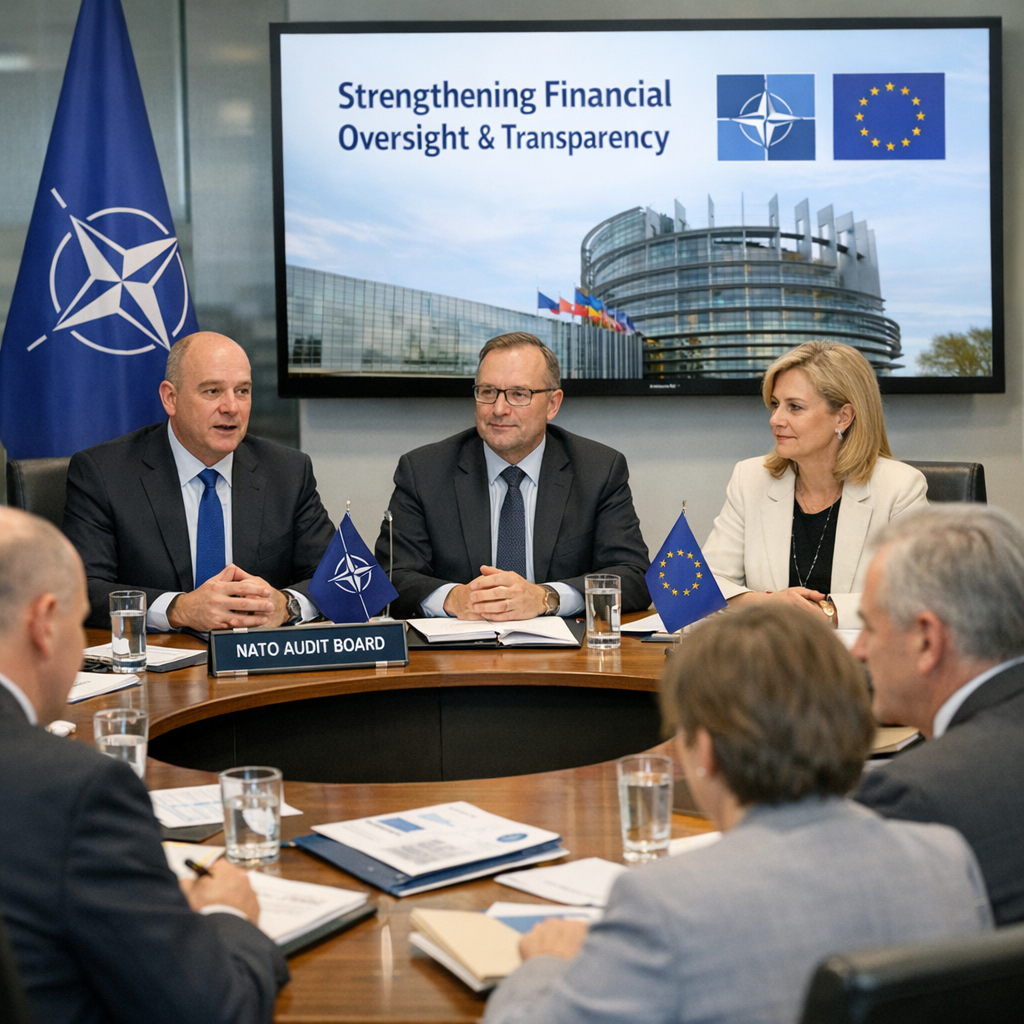
NATO’s International Board of Auditors (IBAN) has moved to deepen its engagement with European oversight institutions, signaling a broader push to reinforce accountability and transparency across the Alliance’s financial governance structures.
According to an article published on NATO’s official website titled “IBAN strengthens international cooperation with European Supreme Audit Institutions,” the board recently expanded its collaboration with a network of Supreme Audit Institutions (SAIs) across Europe. The initiative reflects a growing emphasis within NATO on aligning its audit and oversight practices with international standards and strengthening institutional resilience in an era of heightened geopolitical and fiscal pressures.
The effort centers on closer interaction between IBAN and national audit bodies responsible for scrutinizing public spending in their respective countries. By formalizing channels for dialogue and knowledge-sharing, NATO aims to benefit from the technical expertise, independence, and methodological rigor that characterize Europe’s leading SAIs, such as the European Court of Auditors. Officials indicated that such cooperation is intended not only to improve audit quality but also to promote consistency and comparability in oversight practices.
The IBAN, which is responsible for auditing NATO’s accounts and ensuring the proper use of common-funded resources, operates independently of the Alliance’s political and military structures. Its role has gained increased prominence as NATO has expanded its activities and budget in response to evolving security challenges, including sustained support for Ukraine and investments in collective defense capabilities.
Engagement with European audit institutions is expected to provide IBAN with additional insights into best practices in areas such as risk management, performance auditing, and the detection of financial irregularities. In turn, participating SAIs stand to gain a clearer understanding of NATO’s governance framework and the complexities involved in auditing multinational defense organizations.
NATO officials have framed the initiative as part of a broader commitment to transparency and good governance, emphasizing that robust auditing mechanisms are essential for maintaining public trust in the Alliance’s use of taxpayer-funded resources. The collaboration also reflects a recognition that financial oversight in an interconnected security environment increasingly benefits from cross-border cooperation, including frameworks supported by organizations like the International Organization of Supreme Audit Institutions (INTOSAI).
The move comes at a time when international organizations face growing scrutiny over budget allocations and effectiveness. By strengthening ties with established audit institutions, IBAN appears to be positioning itself to meet these expectations more effectively, while also reinforcing NATO’s credibility as it navigates a demanding strategic landscape.
While the NATO article did not detail specific joint projects or timelines, it underscored the importance of sustained engagement and institutional learning. The development suggests that audit cooperation, often overshadowed by more visible military and political initiatives, is becoming a more integral component of the Alliance’s overall governance strategy.