Pentagon Signals $80 Billion Funding Need as Iran Tensions and Global Commitments Strain Defense Budget
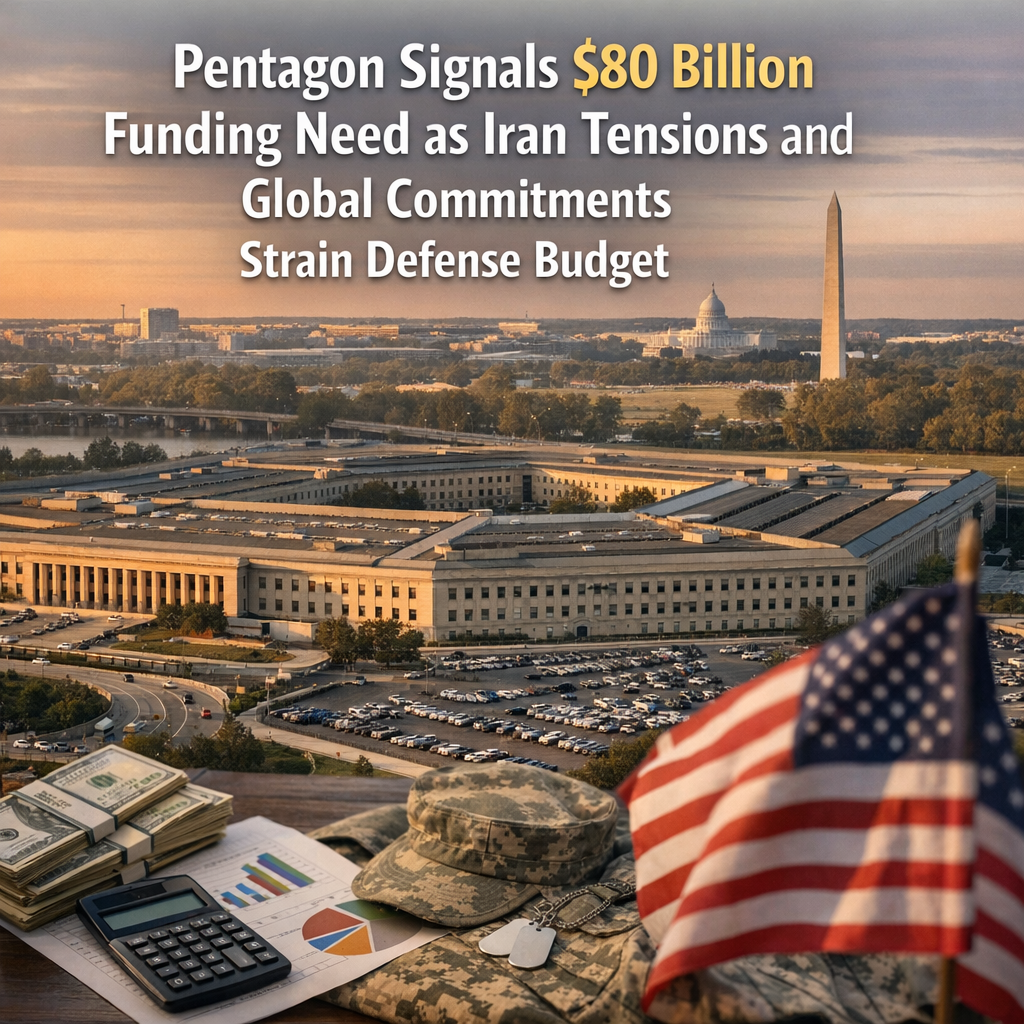
The Pentagon has informed Congress that it may require an additional $80 billion in funding to cover the costs of a potential war with Iran and other emerging defense obligations, according to reporting referenced in Military Times. The request, outlined to lawmakers in recent discussions, underscores the mounting fiscal pressures facing the Department of Defense as geopolitical tensions intensify and operational demands expand beyond initial projections.
As detailed in the Military Times article, “Pentagon tells lawmakers it needs $80 billion for Iran war, other expenses,” which cites reporting by The Wall Street Journal, defense officials framed the funding need as part of a broader reassessment of military readiness and contingency planning. The estimate includes projected costs associated with sustained operations in the Middle East, replenishment of munitions, force deployment logistics, and support for allied partners.
Pentagon officials have not publicly confirmed the exact parameters of a potential conflict scenario with Iran, but policymakers have acknowledged that recent escalations in the region have required more detailed planning and resource allocation. The scale of the proposed funding suggests anticipation of a prolonged engagement rather than a limited strike operation, raising concerns among some lawmakers about both the strategic outlook and the financial burden.
The request arrives at a politically sensitive moment, as Congress continues to debate overall defense spending levels and the long-term trajectory of U.S. military commitments abroad. According to Congress.gov, ongoing budget negotiations have highlighted sharp divisions over defense priorities. While some legislators argue that increased funding is necessary to maintain deterrence and ensure operational readiness, others have expressed skepticism about committing substantial new resources without clearer objectives or a defined end state.
Analysts note that the $80 billion figure reflects not only immediate warfighting costs but also secondary expenses tied to sustaining force posture and replacing depleted stockpiles. Recent conflicts and ongoing support for partners have already strained inventories of precision-guided weapons and air defense systems, prompting the Pentagon to emphasize the need for accelerated procurement and industrial base expansion, as discussed in reports from the U.S. Department of Defense and analyses by the Congressional Research Service.
The discussions also highlight a broader tension within U.S. defense policy: balancing preparation for large-scale conflict with efforts to manage fiscal constraints and domestic priorities. As global security challenges evolve, the Pentagon’s budget requests are increasingly shaped by overlapping commitments, from countering near-peer adversaries to addressing regional instability, a trend examined by the Congressional Budget Office.
For now, lawmakers have not formally approved the additional funding, and further deliberations are expected in the coming weeks. The outcome will likely depend on both the trajectory of events in the Middle East and the willingness of Congress to support a significant expansion of defense expenditures amid competing national priorities.