Hegseth Orders Sweeping Review of US Military Presence in Europe Amid Strategic Recalibration
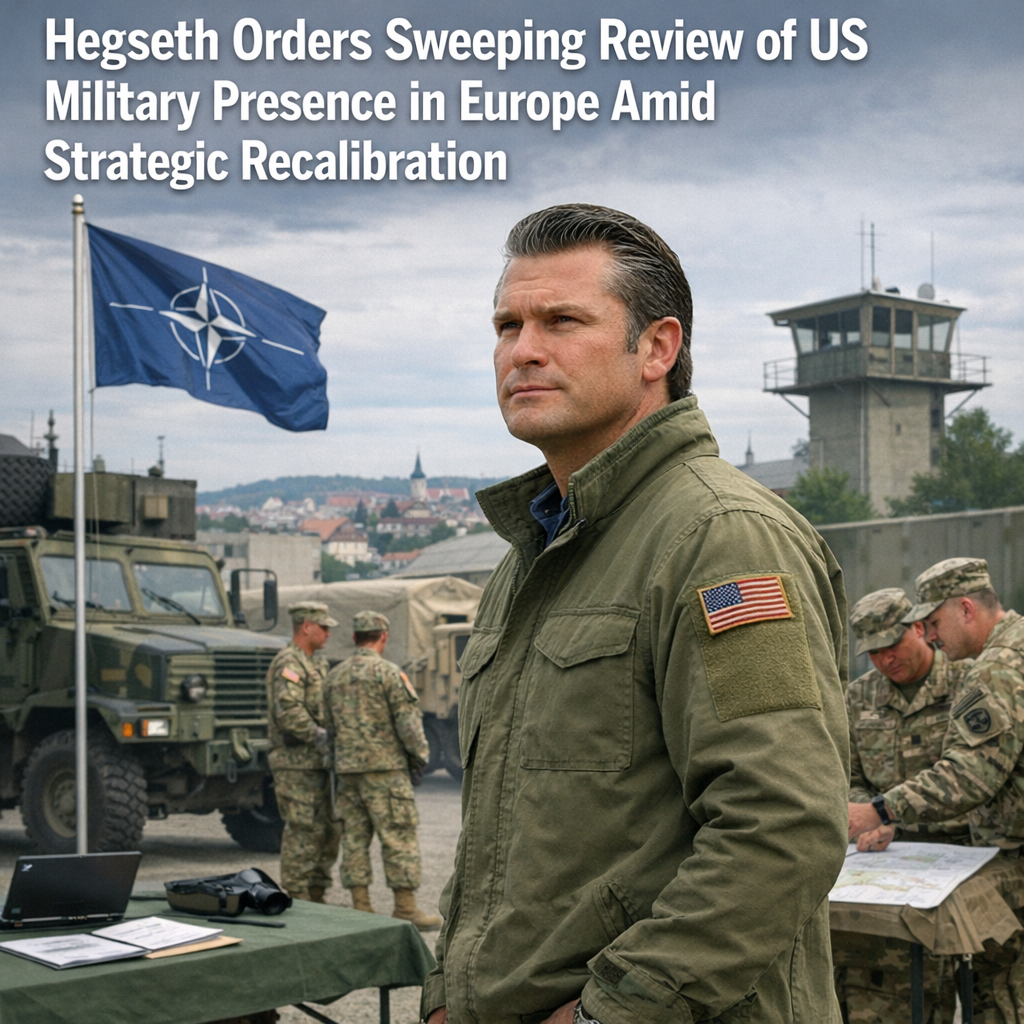
U.S. Defense Secretary Pete Hegseth said he will initiate a comprehensive review of American force posture across Europe, signaling a potential recalibration of troop deployments and military priorities as Washington reassesses its long-term strategic commitments on the continent.
According to a Defense News video report titled “Defense Secretary Pete Hegseth announces review of US force posture in Europe at G7 summit,” the announcement came during the Group of Seven (G7) summit, where allied leaders are grappling with continued instability stemming from Russia’s war in Ukraine and broader questions about collective deterrence. Hegseth framed the review as part of a broader effort to ensure that U.S. military resources remain aligned with evolving security challenges.
The Pentagon has maintained an expanded presence in Europe since 2022, when Russia’s full-scale invasion of Ukraine prompted the United States to deploy additional troops, reinforce NATO’s eastern flank, and increase rotational forces in frontline states such as Poland and the Baltic countries. That posture has since become a central pillar of NATO’s deterrence strategy, even as it places sustained demands on U.S. personnel and logistics.
Hegseth indicated that the review would examine the scale, distribution, and mission of U.S. forces in Europe, though he stopped short of detailing specific changes. The effort is expected to take into account both the immediate requirements of deterring Russian aggression and longer-term considerations, including resource allocation across multiple theaters.
The announcement comes amid ongoing debate within U.S. policy circles about how to balance commitments in Europe with strategic competition in the Indo-Pacific. Some analysts have argued that the current footprint in Europe, while effective in reassuring allies, may need to be adjusted to maintain flexibility in responding to emerging threats elsewhere.
At the same time, European allies have increasingly emphasized the importance of sustained U.S. engagement. NATO leaders have pointed to the alliance’s strengthened unity since 2022 but continue to rely heavily on American capabilities, particularly in areas such as intelligence, logistics, and high-end deterrence.
Hegseth’s remarks suggest that any changes stemming from the review will be coordinated closely with NATO partners. Officials have repeatedly stressed that adjustments to force posture would not signal a diminished commitment to European security but rather an effort to ensure that deployments remain strategically coherent and sustainable.
The timing of the review also coincides with broader discussions at the G7 summit about defense spending and burden-sharing among allied nations. European governments have made gradual increases in military budgets in recent years, though disparities remain in capabilities and readiness.
While the Pentagon has not provided a timeline for completing the assessment, the outcome could shape U.S. military strategy in Europe for years to come. For now, the announcement underscores a period of strategic reflection as Washington weighs how best to maintain deterrence, support allies, and manage competing global priorities.