Navy Pushes for Unified Messaging to Strengthen Credibility in Strategic Competition
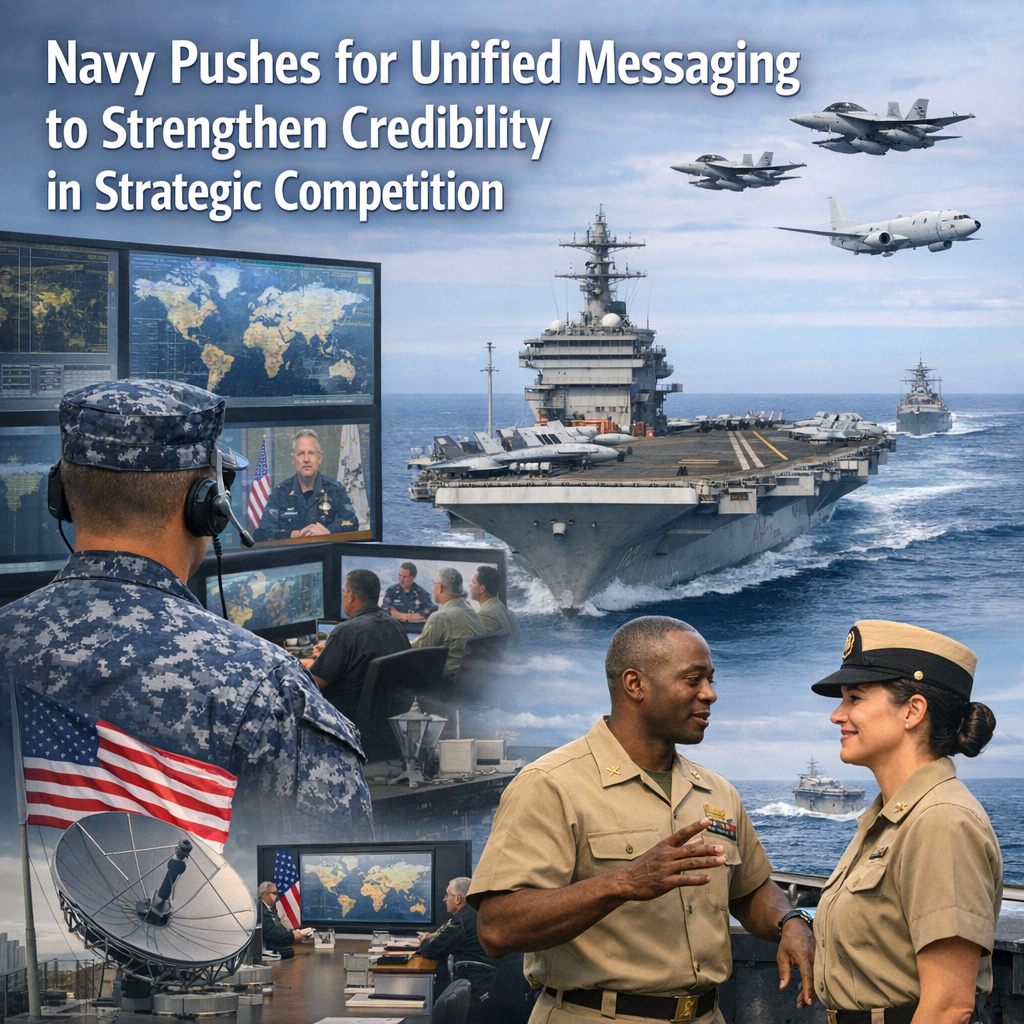
A senior Navy leader is urging the service to bring greater discipline and consistency to how it communicates with the public, warning that fragmented messaging risks undermining trust at a time of heightened strategic competition and domestic scrutiny.
The call comes amid growing concern within the service that conflicting narratives—both internal and external—have left the Navy struggling to clearly explain its priorities, its challenges, and its value to the American public. In the article “Navy in a fight for the narrative: Hung Cao presses service to unify public messaging,” published by Military Times, officials describe an effort to align the Navy’s voice across commands and platforms, emphasizing the importance of a coherent public posture.
At the center of that effort is Hung Cao, a senior official who has pressed for a more unified communication strategy. Cao argues that in an era shaped by rapid information flow and increasingly politicized defense debates, the Navy cannot afford to allow mixed messages or reactive responses to define its public image. Instead, he has advocated for a more deliberate approach, one that ensures consistency from top leadership down to operational units.
The concern is not merely about public relations, but about credibility. Navy leaders recognize that narratives about readiness shortfalls, maintenance delays, recruiting challenges, and high-profile mishaps have often unfolded in a piecemeal fashion, sometimes amplified by external commentators before the service has articulated its own position. That dynamic, officials believe, has made it harder to convey context or demonstrate progress, particularly as issues like fleet readiness are tracked in reports such as those from the U.S. Government Accountability Office.
Cao’s push reflects a broader shift within the Department of Defense, where information is increasingly viewed as an operational domain. Strategic competitors are investing heavily in influence campaigns and narrative shaping, and U.S. military leaders have become more attuned to how perception can affect deterrence, alliances, and domestic support, as outlined in the National Defense Strategy. Within that framework, inconsistent communication is seen not just as a bureaucratic weakness but as a strategic vulnerability.
Still, achieving message unity inside a sprawling global organization presents challenges. The Navy encompasses diverse communities, from ship crews and aviation units to acquisition offices and training commands, each with its own priorities and pressures. Public affairs officers must balance transparency with operational security, guided in part by policies such as those published by U.S. Navy public affairs, while commanders navigate the tension between candid communication and institutional messaging discipline.
There is also an internal cultural dimension. Some leaders are wary that an emphasis on unified messaging could discourage openness or gloss over real problems. Recent years have seen an increased push for accountability and candor, particularly following accidents and readiness concerns highlighted in analyses by organizations like the RAND Corporation. Any effort to tighten messaging will need to avoid the perception that it is limiting honest reporting or internal dissent.
Cao and others involved in the initiative appear to acknowledge those risks, framing the effort less as message control and more as message clarity. The goal, as described in the Military Times report, is to ensure that when the Navy speaks—whether about challenges or successes—it does so with coherence, context, and credibility.
The timing underscores the stakes. The Navy is navigating a complex strategic environment, including competition with China, demands for greater presence in multiple theaters, and ongoing questions from Congress about shipbuilding plans and force structure, detailed in sources like the Congressional Research Service report on Navy force structure. At the same time, it faces practical pressures such as recruiting shortfalls and maintenance backlogs that require sustained public understanding and support.
For Navy leaders, the issue is not whether these challenges will be discussed publicly, but how. A fragmented narrative, they argue, allows others to define the service’s story. A unified one, even if it includes difficult truths, offers a chance to shape that narrative more effectively.
Whether the push will translate into lasting change remains uncertain. Institutional habits, decentralized command structures, and the unpredictability of events all complicate efforts to standardize communication. But the emphasis from senior leadership signals a recognition that in the current environment, how the Navy tells its story is inseparable from how it carries out its mission.