Embraer Seeks Expanded Gripen Role as Global Demand Drives New Production Opportunities
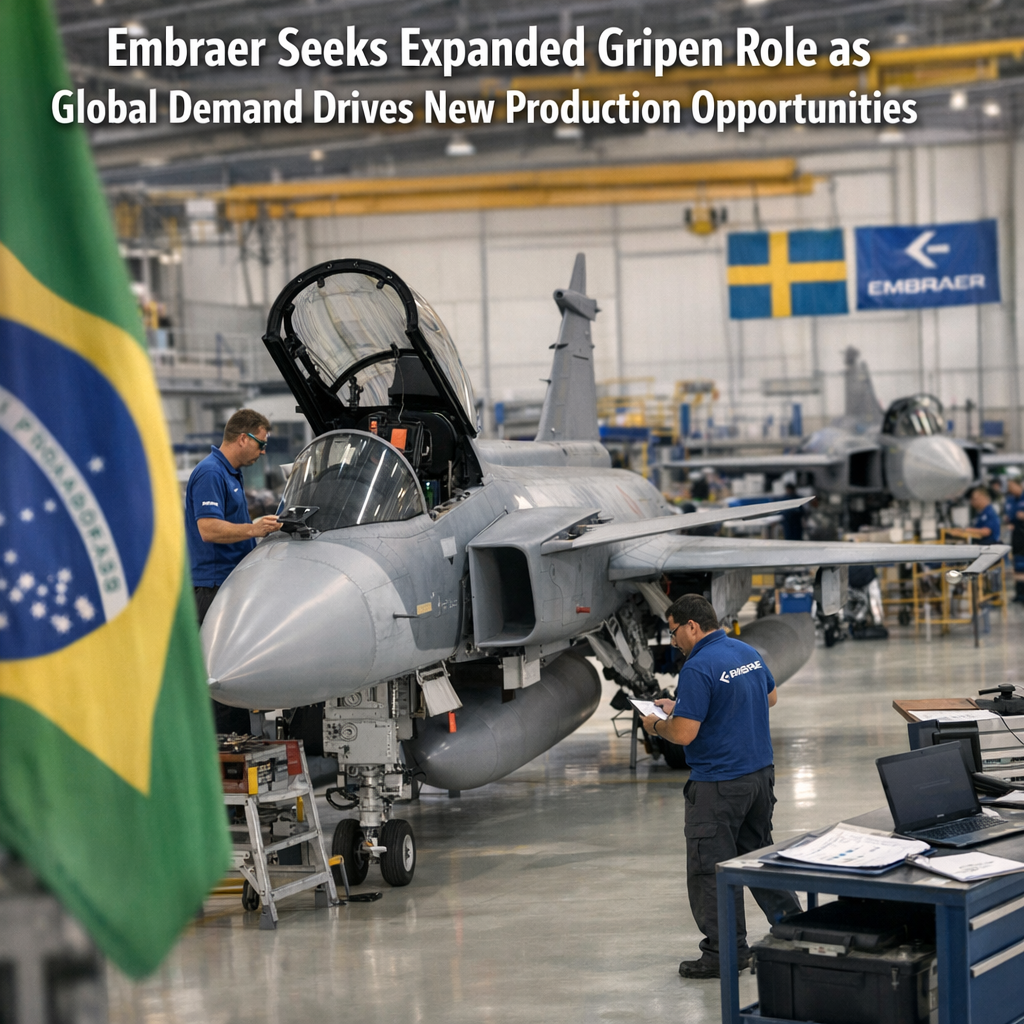
Brazilian aerospace company Embraer is positioning itself for a larger role in the production and sustainment of Saab’s Gripen fighter jet as global demand for the aircraft increases, according to a recent report by Breaking Defense.
In the article titled “As demand rises, Embraer readies for greater Gripen workshare,” Breaking Defense reports that Embraer executives are preparing for expanded industrial participation tied to potential new Gripen orders, building on the company’s existing partnership with Swedish manufacturer Saab. The two firms have collaborated closely on Brazil’s F-39 Gripen program, which already includes local assembly, technology transfer, and joint development initiatives.
Embraer’s prospective expansion reflects a broader trend in the global defense market, where countries are seeking not only advanced combat aircraft but also domestic industrial benefits. The Gripen program has emphasized this model, offering partner nations meaningful roles in manufacturing, maintenance, and engineering. For Brazil, this has translated into the establishment of local production lines and the development of technical expertise that Embraer now aims to leverage more broadly.
Company officials indicated that Embraer is preparing its workforce and facilities to handle a larger share of work should additional export deals materialize. Potential customers in Latin America and beyond have expressed interest in the Gripen platform, drawn by its comparatively lower operating costs and flexible industrial partnership model.
The Breaking Defense report notes that Embraer’s ambitions are tied not only to increased output but also to deeper integration in the program’s long-term lifecycle, including sustainment and upgrades. Such involvement could position the Brazilian firm as a regional hub for Gripen-related activities, reinforcing its status as a key player in the global aerospace and defense sector.
For Saab, expanding Embraer’s role could strengthen the competitiveness of the Gripen offering in markets where local industrial participation is a decisive factor. For Embraer, it represents an opportunity to extend its defense portfolio and secure a larger foothold in high-end military aviation, an area traditionally dominated by a small number of global primes, as noted in broader industry coverage by Reuters Aerospace & Defense.
The trajectory of this partnership will depend heavily on future procurement decisions. However, as highlighted in Breaking Defense’s reporting, both companies appear to be aligning their strategies in anticipation of rising demand, signaling a potential shift toward more distributed, multinational production models in the fighter aircraft market.