Stealth Below the Surface and Strikes from Afar: The Next Wave of Military Innovation
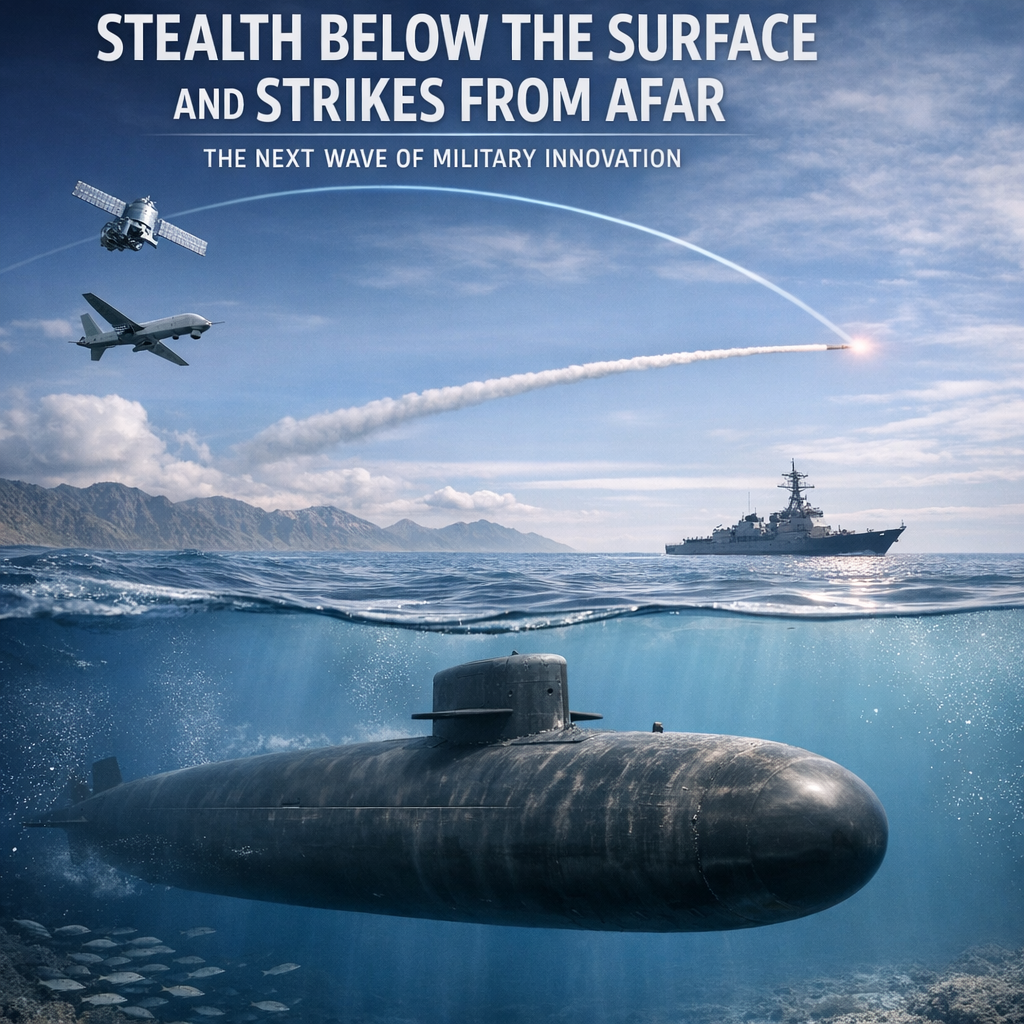
A recent episode of Defense News Weekly, titled “Underwater special forces gear and long-range JDAMs,” published by Defense News, highlights the accelerating pace of innovation across two very different but strategically linked domains: maritime special operations and long-range precision strike capabilities. The full episode can be found here: Defense News Weekly episode.
The program underscores how naval special operations forces are increasingly investing in advanced underwater equipment designed to extend mission endurance, reduce detectability, and expand operational flexibility. Modern diving systems, propulsion devices, and sensor integrations are evolving beyond traditional scuba-based approaches, enabling operators to conduct longer-duration missions with improved situational awareness. These developments reflect a broader shift toward contested maritime environments, where stealth and persistence are critical as near-peer competitors enhance their own anti-access and area-denial capabilities, as outlined by the U.S. Navy Special Warfare overview.
New generations of diver propulsion devices and underwater navigation tools are a central focus. These systems aim to reduce operator fatigue while enabling precise movement in low-visibility conditions. Enhanced communication technologies for submerged operations are also emerging, addressing one of the longstanding challenges of underwater missions: maintaining reliable contact without compromising stealth. Research in this area has been supported by organizations such as DARPA’s underwater communication programs. Collectively, these advances point toward a future in which special operations forces can operate deeper, farther, and with greater autonomy than previously possible.
At the same time, the episode draws attention to parallel developments in air-delivered munitions, particularly extended-range variants of the Joint Direct Attack Munition, or JDAM. Traditionally used as a relatively low-cost guidance kit to convert unguided bombs into precision weapons, JDAMs are now being adapted to strike targets from significantly greater distances. Additional details on JDAM systems can be found through Boeing’s JDAM program overview. This evolution reflects growing demand for stand-off capabilities that allow aircraft to remain outside increasingly sophisticated enemy air defense systems.
Extended-range JDAM configurations typically incorporate wing kits or other modifications that enable glide profiles far beyond the range of standard gravity bombs. These enhancements, similar to those described by the U.S. Air Force JDAM program, can increase operational flexibility while reducing risk to pilots and platforms, especially in high-threat environments. As adversaries deploy more advanced integrated air defense systems, discussed in analyses such as CSIS reporting on integrated air defense systems, the ability to launch precision strikes from safer distances is becoming a key requirement for modern air forces.
The convergence of these two areas—covert maritime operations and long-range precision strike—illustrates a broader trend in defense planning. Militaries are prioritizing technologies that allow them to project power while minimizing exposure, whether through stealthy insertion of special forces or by striking from beyond the reach of enemy defenses. The emphasis is not only on capability but also on adaptability, as forces prepare for complex, multi-domain conflicts.
The Defense News Weekly episode situates these developments within a wider strategic context, noting that both underwater systems and extended-range munitions are part of ongoing efforts to maintain operational advantage in contested environments. As technological competition intensifies, incremental improvements in endurance, range, and precision can carry significant strategic implications.
While the advances discussed are still evolving, they signal a shift toward more distributed and less predictable forms of military engagement. For defense planners, the challenge will be integrating these emerging capabilities into coherent operational concepts that can respond to rapidly changing threats.