US-Iran Memorandum Signals Ceasefire and Strait of Hormuz Reopening Amid Escalating Crisis
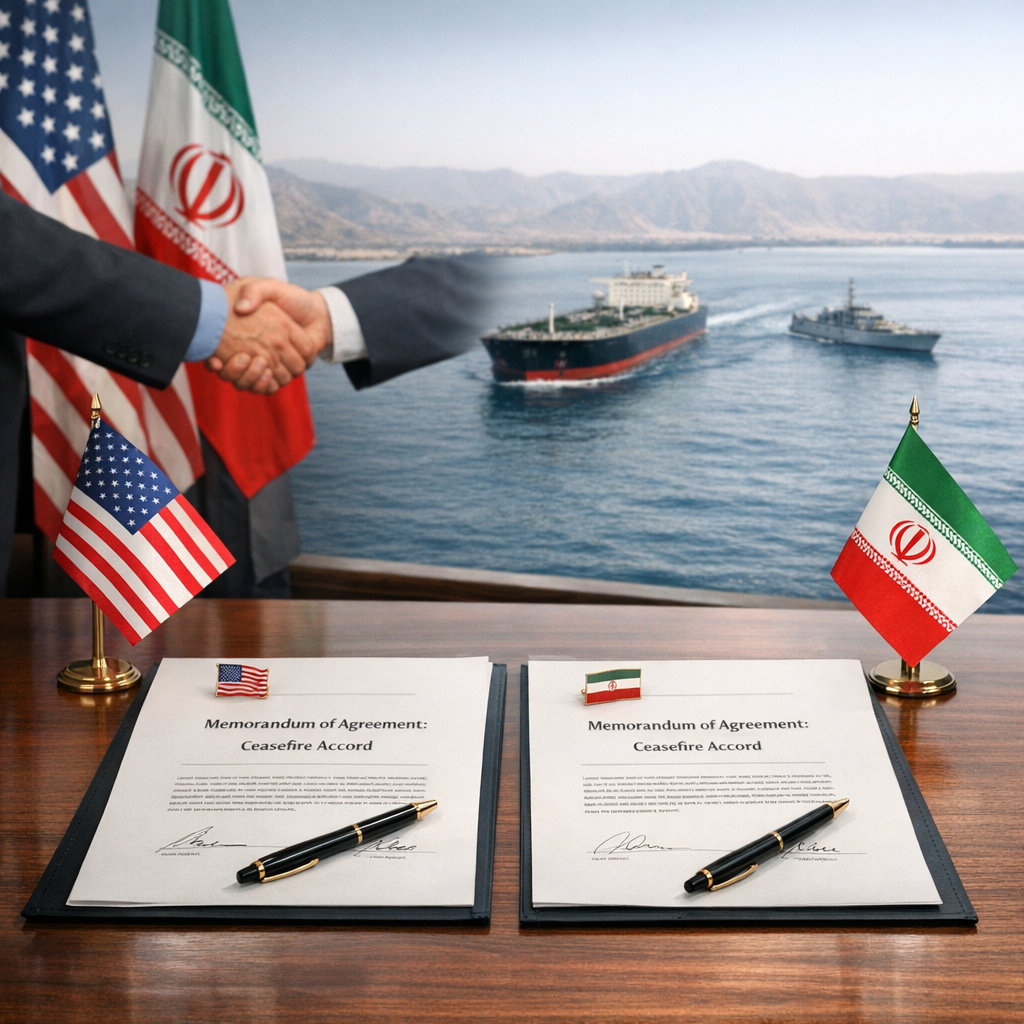
A memorandum of understanding between the United States and Iran that includes a ceasefire across multiple fronts and the lifting of a blockade on the Strait of Hormuz is emerging as a potential turning point in a rapidly evolving regional crisis, according to reporting by i24NEWS in its live blog titled “US-Iran MOU includes ceasefire on all fronts and lifting of Hormuz blockade.”
The reported agreement comes after days of heightened tensions that raised fears of a broader regional war, particularly given the strategic importance of the Strait of Hormuz, a vital corridor for global energy supplies. Any disruption in the waterway has immediate implications for international oil markets and global economic stability, amplifying the urgency behind diplomatic efforts to de-escalate.
According to the i24NEWS report, the memorandum outlines a comprehensive cessation of hostilities, extending beyond direct confrontation between U.S. and Iranian forces to include affiliated groups and proxy engagements across the region. This suggests an attempt to address not only immediate military risks but also the wider network of conflicts in which both countries are entangled, as examined by the International Crisis Group.
The inclusion of provisions to lift the blockade on the Strait of Hormuz is particularly significant. The waterway handles a substantial portion of the world’s oil shipments, as highlighted by the Reuters analysis on Hormuz, and even short-term disruptions can trigger price spikes and supply chain uncertainty. A reopening would likely ease pressure on global markets and signal a return to relative stability in maritime transit.
While details of the agreement’s enforcement mechanisms remain unclear, the breadth of its commitments raises questions about implementation and compliance. Past efforts to broker understandings between Washington and Tehran—such as the Joint Comprehensive Plan of Action (JCPOA)—have often been undermined by mutual distrust, shifting political calculations, and the involvement of third-party actors with their own strategic agendas.
Regional stakeholders are also likely to closely scrutinize the terms of the memorandum. For U.S. allies, particularly Israel and Gulf states, any perceived concessions to Iran could generate concern, especially if the agreement does not address broader issues such as Iran’s missile program or its support for armed groups. Analysis from the Council on Foreign Relations underscores how these factors continue to shape regional security dynamics. At the same time, a sustained ceasefire could reduce immediate security threats and create space for renewed diplomatic engagement.
The report by i24NEWS situates the memorandum within a fast-moving diplomatic context, suggesting that negotiations have been conducted under significant time pressure. This raises the possibility that the agreement is an interim measure designed to halt escalation rather than a comprehensive settlement of longstanding disputes.
If implemented, the MOU could mark a rare moment of coordinated de-escalation between two long-standing adversaries. However, its durability will depend on verification mechanisms, sustained political will, and the broader regional environment. In a landscape defined by overlapping conflicts and fragile alliances, even a temporary pause in hostilities would represent a notable, if uncertain, step toward stability.