Secret Recording Fuels Scrutiny of Marine Corps Leadership After Unit Suicide
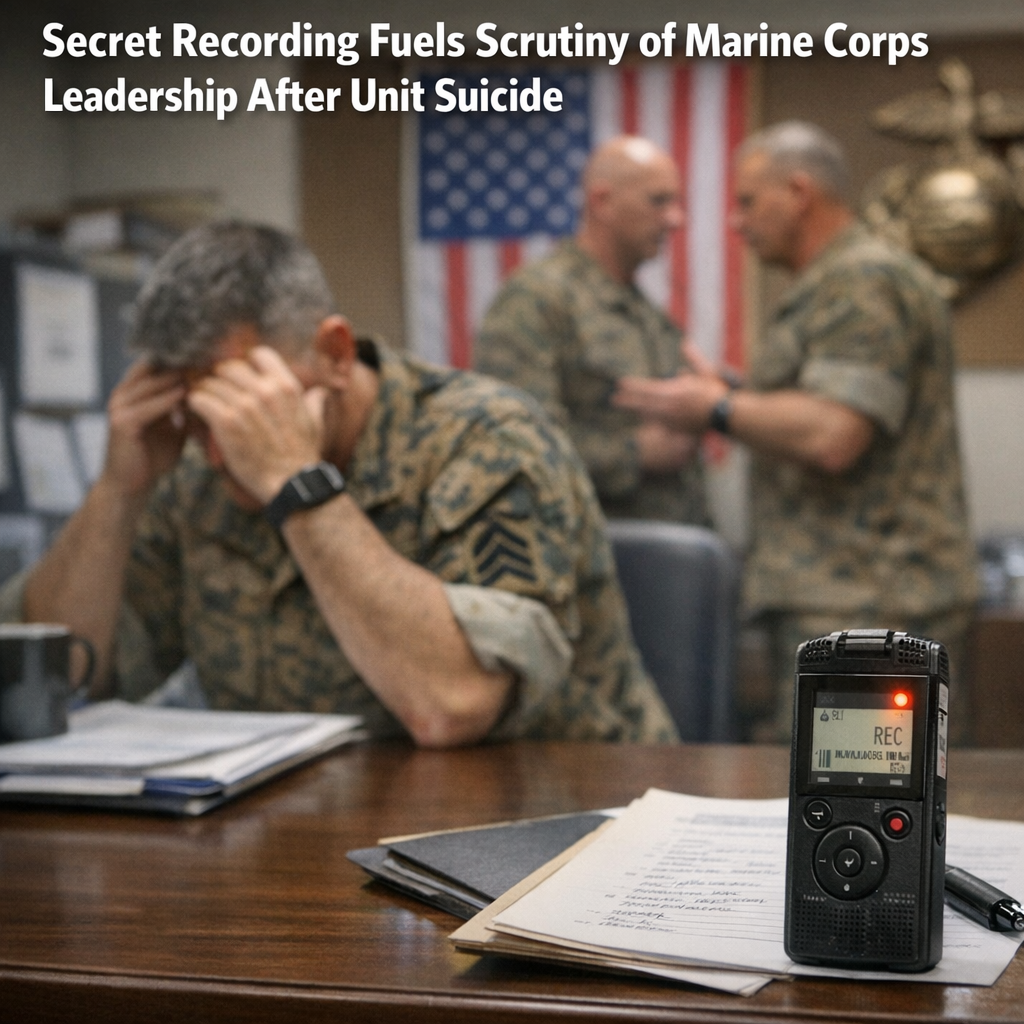
Allegations of toxic leadership and command dysfunction within a U.S. Marine Corps unit have come under renewed scrutiny following the emergence of a secret recording tied to the death of a Marine, according to reporting by Military Times in its article, “Sounds like a mutiny’: Secret recording exposes claims of toxic leadership after a Marine’s suicide.”
The recording, described by Military Times as capturing a candid and unusually blunt exchange among Marines, appears to document internal unrest and deep dissatisfaction with command leadership. Service members can reportedly be heard voicing concerns about toxic behavior, low morale, and a command climate they believed contributed to deteriorating mental health within the unit.
The controversy centers on the suicide of a Marine whose death has become a focal point for broader questions about leadership accountability and the adequacy of support structures within the Corps. While investigations into military suicides often consider a wide array of personal and professional factors, the newly surfaced audio has intensified scrutiny on command culture as a potential contributing element. According to resources from the Department of Defense Suicide Prevention Office, leadership climate is a recognized factor in service member well-being.
In the recording, Marines allegedly characterize their situation in stark terms, with one remark likening the atmosphere to a breakdown in order and trust. The language, as described in the Military Times account, underscores a perceived collapse of confidence in leadership rather than a routine airing of grievances. Such expressions are rare in a rigidly hierarchical institution where discipline and chain-of-command loyalty are foundational, as outlined by the U.S. Marine Corps itself.
The Marine Corps has long acknowledged the challenge of addressing suicide within its ranks, implementing prevention programs, expanding access to mental health services, and emphasizing leadership responsibility in fostering unit cohesion. However, critics argue that cultural barriers, including stigma around seeking help and fear of professional repercussions, remain deeply embedded. A RAND Corporation study on military suicide has similarly highlighted stigma and leadership dynamics as key concerns.
The allegations raised in the recording suggest that, at least in this instance, those barriers may have been compounded by what some Marines perceived as retaliatory or dismissive leadership practices. According to Military Times, individuals in the recording expressed frustration over how concerns were handled and whether warning signs had been taken seriously.
The emergence of the audio could carry significant implications for ongoing or future investigations. Recordings of internal discussions are uncommon and may provide rare insight into unfiltered sentiment within a unit. At the same time, they raise questions about how such material is obtained, circulated, and ultimately used in official inquiries. Oversight bodies such as the U.S. Government Accountability Office have previously reviewed military command climate and accountability issues.
Military leadership has not publicly detailed specific disciplinary or administrative actions related to the case, but the situation is likely to intensify demands for accountability. Lawmakers and military oversight bodies, including the House Armed Services Committee, have in recent years increased pressure on the armed services to address toxic leadership, particularly in cases linked to deaths, assaults, or severe morale issues.
Experts in military culture note that while isolated incidents of poor leadership are inevitable in any large organization, systemic failures—if substantiated—can have cascading effects, influencing not only individual well-being but also operational effectiveness. A command climate perceived as hostile or indifferent can erode trust, discourage reporting of problems, and weaken cohesion.
The attention drawn by the Military Times report reflects a broader shift in how such issues are discussed publicly. Greater transparency, fueled in part by media coverage and the willingness of service members to come forward, has begun to challenge longstanding norms of silence around internal dysfunction.
As investigations continue, the case is likely to remain a touchstone in the ongoing debate over leadership accountability in the military. The recording described by Military Times does not, on its own, establish causation in the Marine’s death. However, it adds a deeply human dimension to the institutional challenge of ensuring that command authority is exercised with responsibility, awareness, and care for the well-being of those who serve under it.