Boeing Exits Navy Trainer Jet Race as Competition Narrows for T-45 Replacement
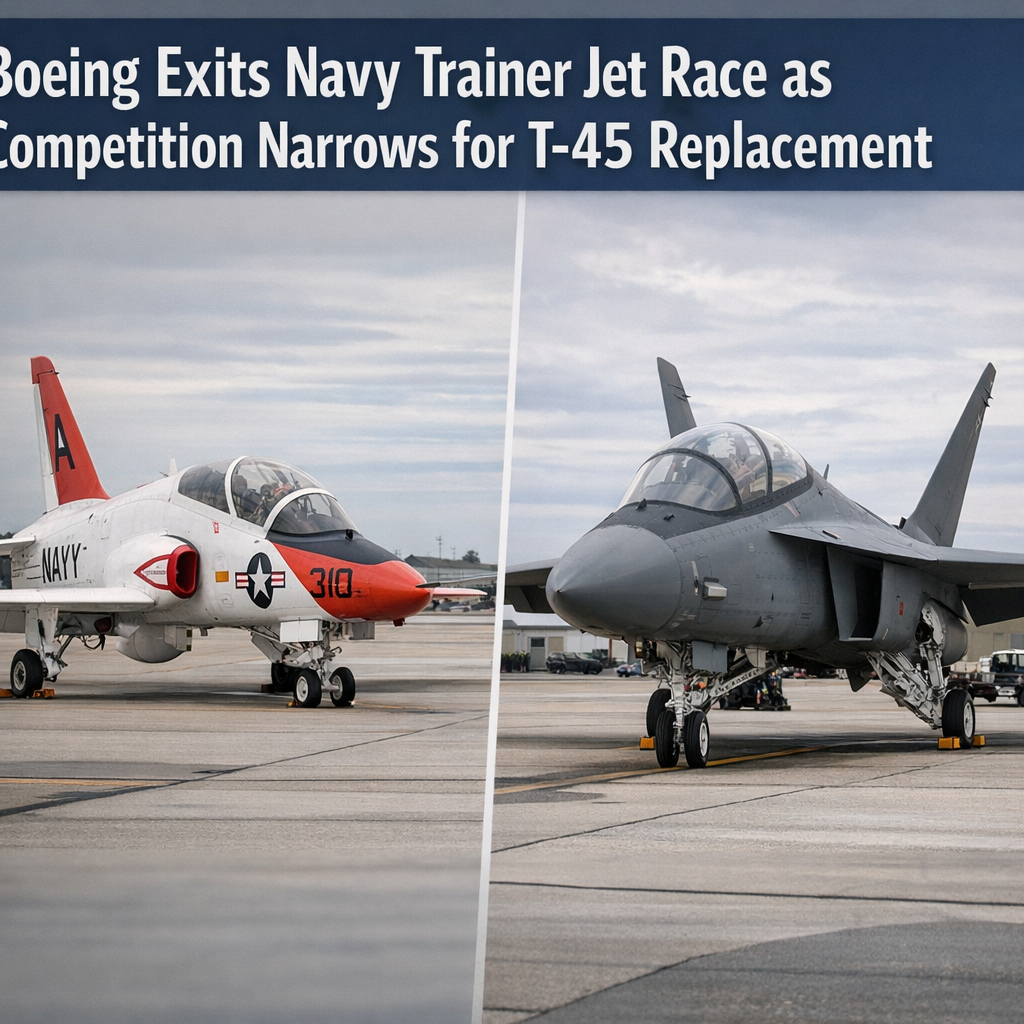
Boeing has withdrawn from the U.S. Navy’s competition to develop its next-generation training aircraft, a move that narrows the field in a program intended to prepare pilots for increasingly advanced carrier-based operations.
The decision was first reported by Breaking Defense in an article titled “Boeing bows out of Navy’s new trainer jet competition,” which cited company and industry sources confirming the aerospace giant will not pursue the contract. Boeing’s exit marks a notable shift in the competitive landscape for the Navy Undergraduate Jet Training System (UJTS), a program aimed at replacing the aging T-45 Goshawk fleet. The original report can be found here.
The Navy has been seeking a modern training platform capable of replicating the performance demands of fifth-generation aircraft and future carrier-based systems. With Boeing stepping aside, the competition is expected to center more heavily on remaining contenders offering modified existing aircraft or clean-sheet designs tailored to naval training requirements.
In statements surrounding the decision, Boeing indicated it would instead focus on other strategic priorities across its defense and commercial aviation portfolio. The company has faced mounting financial and operational pressures in recent years, prompting a tighter allocation of resources toward programs perceived as offering clearer returns or alignment with long-term growth plans.
Industry analysts suggest Boeing’s withdrawal may also reflect the technical and financial challenges associated with the Navy’s requirements. Developing or adapting a trainer capable of simulating the complexity of modern combat aircraft—while also meeting the rigors of carrier operations—poses significant engineering and cost hurdles. The T-45 replacement, in particular, must address longstanding concerns over safety, maintainability, and pilot readiness.
The Navy has not publicly signaled any change to its acquisition timeline following Boeing’s decision. However, the reduced number of competitors could influence both the pacing and cost structure of the program. Fewer bidders may streamline the evaluation process but could also limit competitive pressure on pricing and innovation.
Boeing’s exit comes amid broader shifts in the defense aviation market, where companies are increasingly selective about pursuing major development programs. With rising costs, evolving military requirements, and heightened scrutiny over execution risks, contractors are prioritizing bids that align closely with their technological strengths and financial capacity.
For the Navy, the stakes remain high. The service must ensure a smooth transition to a new training system that can adequately prepare aviators for the demands of next-generation air combat, including integration with unmanned systems and advanced sensor environments. Any delays or complications in the procurement process could have downstream effects on pilot training pipelines and operational readiness.
As the UJTS competition moves forward without Boeing, attention will focus on how remaining bidders position their offerings to meet the Navy’s needs, and whether the absence of a major aerospace player reshapes expectations for the program’s outcome.