Haredi draft protests bring Israel’s transport network to a standstill amid deepening conscription divide
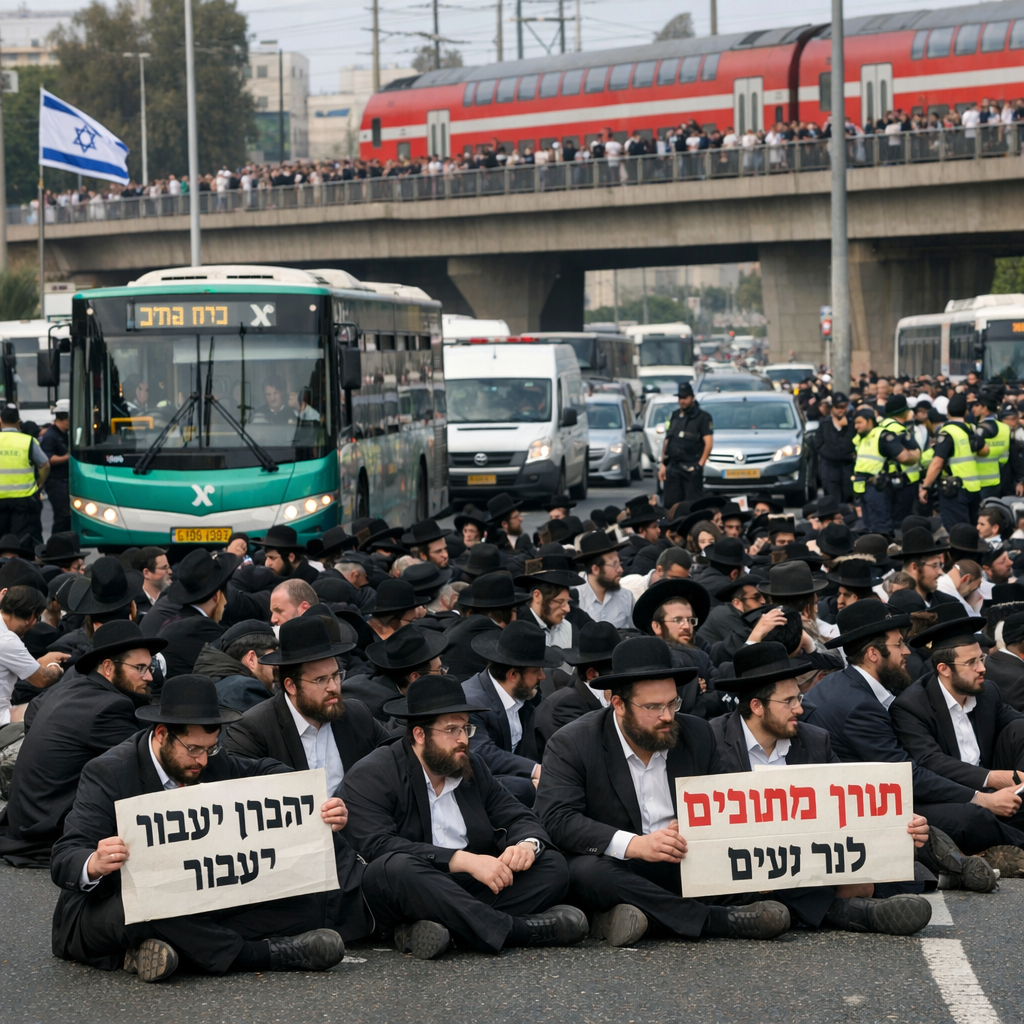
Widespread disruption spread across Israel’s transportation networks this week as demonstrations tied to ultra-Orthodox opposition to military conscription intensified, paralysing key highways and deepening an already fraught national debate over military service. The unrest, detailed in the i24NEWS report “Chaos on Israel’s roads as Haredi draft protests escalate nationwide”, reflects mounting tensions between religious communities and the state over proposed changes to long-standing draft exemptions.
According to the i24NEWS account, protesters blocked major arteries in Jerusalem, Bnei Brak, and along central highways, bringing traffic to a standstill and prompting a significant police response. Demonstrators, many from the Haredi community, rallied against efforts to enforce or expand compulsory military service among ultra-Orthodox men, a policy shift that has gained traction as Israel faces ongoing security pressures and manpower demands tied to the Israel Defense Forces.
Authorities reported multiple arrests as police moved to disperse crowds and reopen routes. Officers were deployed in large numbers, using crowd-control measures to clear intersections and prevent protesters from regrouping. Emergency services warned that the blockades hampered response times and posed risks to public safety, particularly in densely populated urban areas, echoing concerns raised in similar protest coverage by Reuters on Middle East unrest.
The demonstrations are the latest escalation in a long-running dispute over conscription. For decades, many ultra-Orthodox men have been granted exemptions to pursue full-time religious study, a policy originally intended for a small segment of the population but which has expanded significantly, as outlined in discussions of conscription in Israel. Critics argue the arrangement places an unequal burden on other Israelis, while Haredi leaders insist that Torah study is a foundational element of national identity and spiritual security.
The issue has taken on renewed urgency amid Israel’s ongoing military commitments, which have heightened calls for broader participation in national defense. Political leaders remain divided, with some coalition members pushing for stricter enforcement measures and others warning that abrupt changes could fracture delicate social and political balances, a tension frequently analyzed by outlets like BBC News Middle East.
Public frustration appears to be growing, particularly among secular and reservist communities who have borne repeated call-ups. At the same time, the protests underscore the depth of resistance within Haredi society, where military service is often viewed as incompatible with religious life.
As the standoff continues, there is little indication of an imminent resolution. The government faces the challenge of crafting a policy that addresses military needs while avoiding further societal polarization. Meanwhile, the scenes described by i24NEWS—of blocked highways, mass demonstrations, and mounting tensions—highlight how the conscription debate is no longer confined to political negotiations but is now playing out visibly and disruptively across Israel’s public spaces.