Marine Corps Introduces Private Barracks Bedrooms for Troops in Japan Amid Quality of Life Push
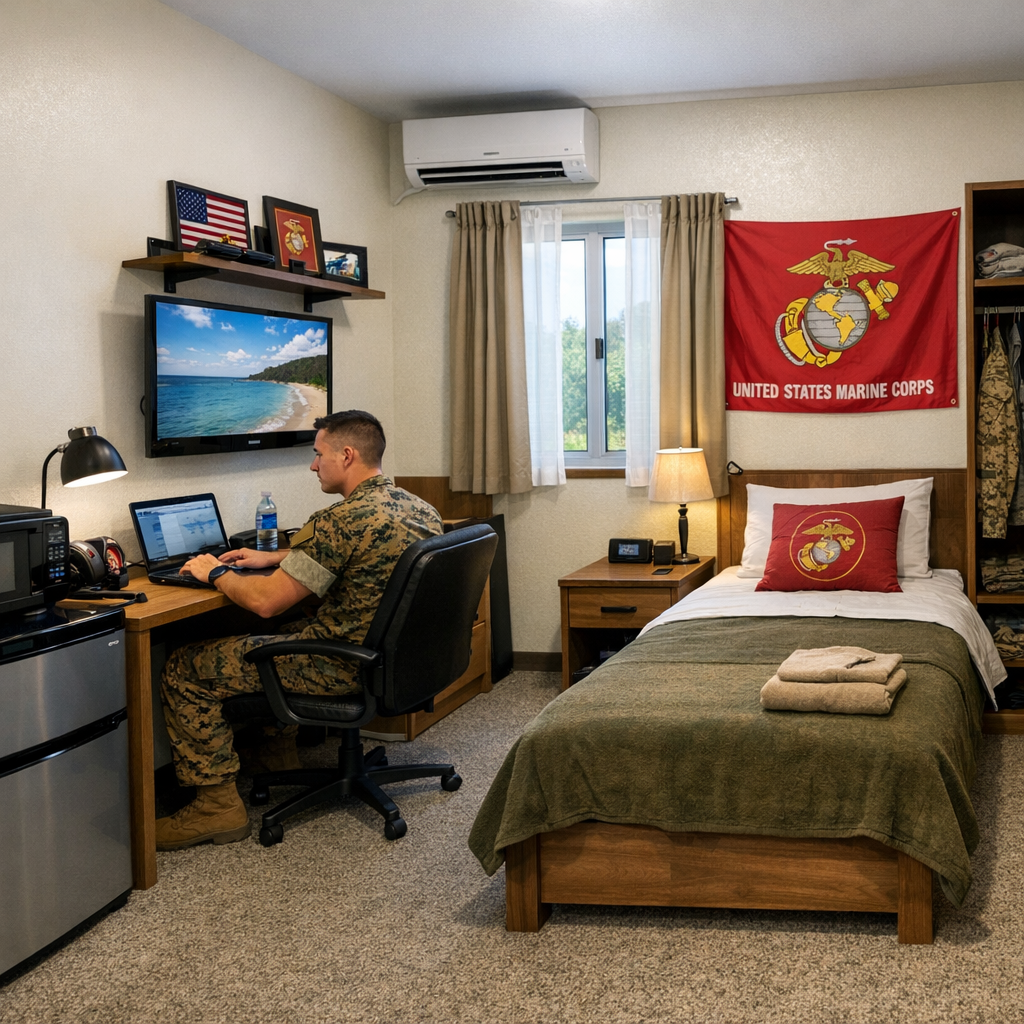
The U.S. Marine Corps is set to implement a significant change to living conditions for its enlisted personnel stationed in Japan, moving toward a model that provides individual bedrooms within shared barracks spaces, according to a recent report by Military Times titled “Marines to have their own barracks bedrooms at Japan base.”
The initiative marks a notable departure from traditional barracks configurations, where multiple service members often share a single room, and reflects a broader push across the Department of Defense to improve quality of life for junior troops. Under the updated arrangement, Marines will retain shared common areas such as kitchens and bathrooms, but will have private sleeping quarters—an approach officials believe will enhance privacy, morale, and overall well-being.
The change is being rolled out at installations on Okinawa, a strategically vital location that hosts a large concentration of U.S. forces in the Indo-Pacific. Marine Corps officials cited both retention concerns and evolving expectations among younger service members as key drivers behind the shift. Providing more personal space is increasingly viewed as essential to maintaining a competitive edge in recruiting and keeping experienced personnel in uniform.
The move aligns the Marine Corps more closely with housing standards already adopted, in varying degrees, by other branches of the U.S. military. Over the past several years, lawmakers and defense leaders have faced mounting scrutiny over substandard barracks conditions, including reports of overcrowding, mold, and inadequate maintenance, highlighted in reviews such as those from the Government Accountability Office. In response, Congress has directed additional funding toward barracks modernization—see, for example, recent congressional appropriations efforts—and emphasized accountability in how installations manage living quarters.
While the Japan-based initiative may serve as a model for future upgrades elsewhere, officials caution that broader implementation will depend on funding availability and infrastructure constraints. Retrofitting or replacing existing barracks to accommodate single-occupancy bedrooms can be costly and time-consuming, particularly on overseas bases where construction logistics are more complex.
Nevertheless, Marine Corps leadership has framed the effort as a necessary investment in force readiness. By improving day-to-day living conditions, officials argue, the service can reduce stressors that detract from performance and ensure that Marines remain focused on mission requirements, a priority consistent with the broader Indo-Pacific strategy.
The report by Military Times underscores a growing recognition within the military that quality of life is not a peripheral concern but a central factor in sustaining an effective, modern fighting force. As the Marine Corps continues to adapt to strategic demands in the Indo-Pacific, changes to barracks living may signal a broader cultural shift in how the service supports its personnel.