Canada Eyes HIMARS Upgrade With Long-Range Anti-Ship Missiles to Boost Maritime Deterrence
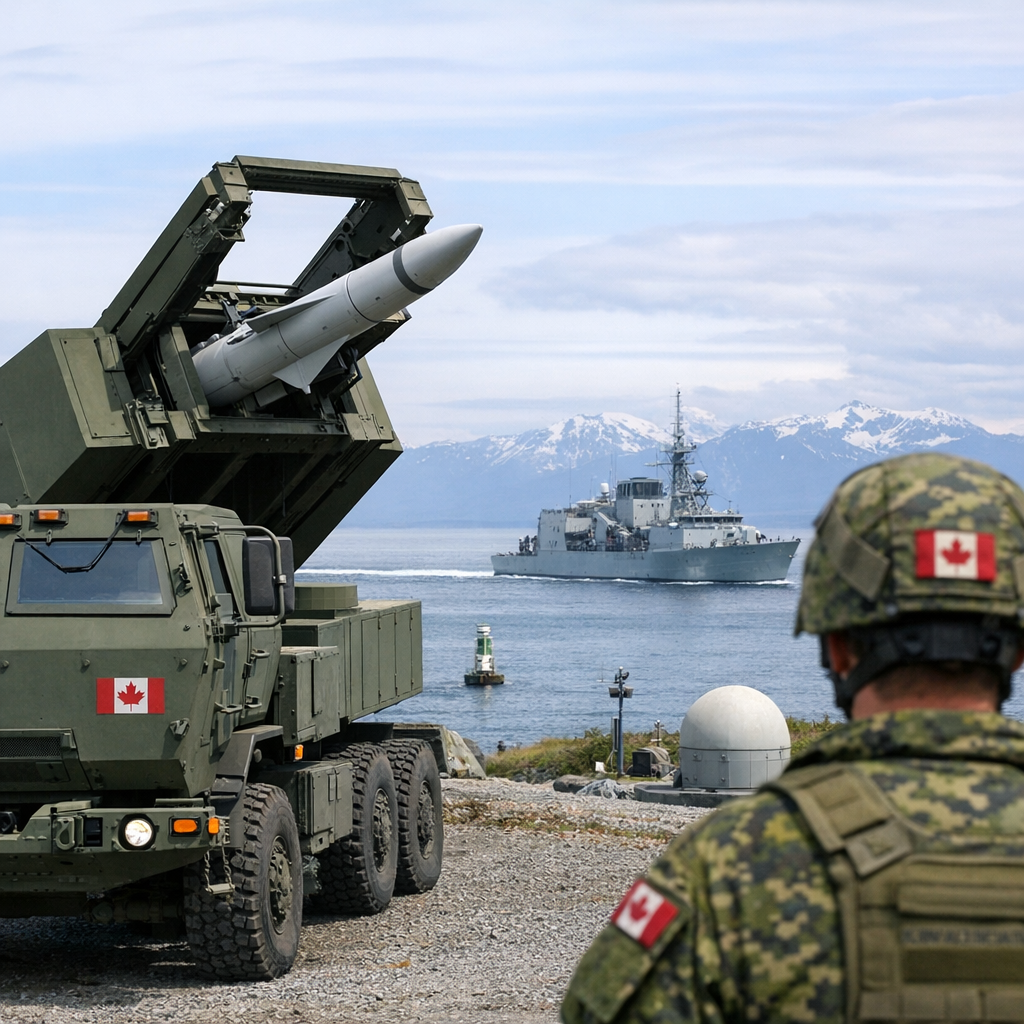
Canada is considering a significant expansion of its land-based strike capabilities, with plans to equip future High Mobility Artillery Rocket Systems (HIMARS) units with long-range anti-ship missiles, reflecting a broader shift in military priorities toward maritime deterrence and joint operations.
According to the article “Ottawa Wants Future Canadian Army HIMARS to Deploy Long-Range Anti-Ship Missiles”, published by USNI News, Canadian defense planners are exploring how the widely used HIMARS platform could be adapted to target naval threats at extended distances. The move would align Canada more closely with evolving NATO strategies that emphasize distributed, multi-domain capabilities capable of countering increasingly sophisticated maritime forces.
The HIMARS system, produced by Lockheed Martin, has gained global prominence in recent years due to its precision strike capabilities and mobility. While traditionally configured for land-attack missions, the system can be adapted to fire a range of munitions, including those designed for anti-ship roles. For Canada, integrating such capabilities would represent a notable evolution in how its army contributes to maritime defense, particularly in contested regions.
Canadian officials have not finalized procurement decisions, but the concept signals a growing recognition of the need to enhance coastal and expeditionary deterrence. Long-range anti-ship missiles deployed from land platforms would allow Canada to project power from dispersed positions, complicating adversary planning and providing flexible response options in crisis scenarios.
This potential capability comes as Canada reassesses its defense posture amid rising geopolitical tension, particularly in the Arctic and Indo-Pacific regions. The ability to hold enemy vessels at risk from land-based launchers could be especially relevant in the Arctic, where vast distances and limited infrastructure present operational challenges. Similarly, in coalition operations abroad, such systems could contribute to allied efforts to secure sea lanes and deter hostile naval activity.
The approach mirrors developments in other allied militaries. The United States and several NATO partners have invested in land-based anti-ship missile systems, recognizing their value in creating layered defenses and supporting naval forces. By pursuing similar capabilities, Canada would enhance interoperability with these partners while diversifying its own defense toolkit.
Budget considerations and system integration challenges remain key factors in determining whether the plan moves forward. Adapting HIMARS for anti-ship missions would require not only appropriate munitions but also targeting and sensor networks capable of tracking maritime threats at long range. This would likely involve closer coordination with air and naval assets, as well as investment in intelligence, surveillance, and reconnaissance (ISR) infrastructure.
Still, the proposal underscores a broader shift in military thinking, where traditionally distinct domains—land, sea, and air—are increasingly interconnected. As highlighted in the USNI News report, Canada’s interest in expanding HIMARS capabilities reflects an effort to ensure its forces remain relevant and effective in a rapidly changing strategic environment.