Underground Warfare Emerging as Next Battlefield
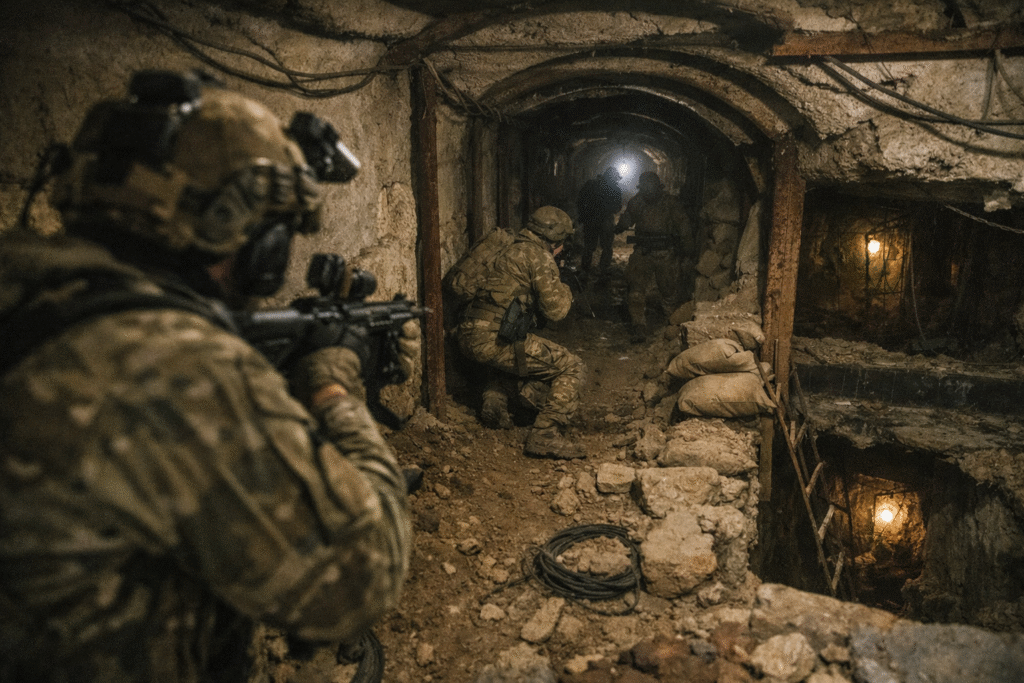
A growing body of military analysis suggests that the next decisive arena of conflict may lie not in the skies or cyberspace, but beneath the earth’s surface. In an article titled “The Next Domain of Warfare Lies Underground,” published on the Spencer Guard Substack, the author argues that subterranean environments are becoming an increasingly critical, and underappreciated, dimension of modern warfare.
The piece outlines how armed forces have historically used tunnels and underground infrastructure, from the Viet Cong’s extensive tunnel networks during the Vietnam War to more recent operations in Gaza and Ukraine. However, the article contends that the scale, sophistication, and strategic importance of underground warfare are expanding rapidly, driven by technological advances and the vulnerabilities of modern urban environments.
According to the analysis, dense urbanization across the globe has created vast subterranean systems, including transportation networks, utility corridors, and purpose-built bunkers. These environments offer concealment from surveillance systems that dominate contemporary battlefields, including satellites, drones, and precision-guided munitions. As a result, adversaries can use underground spaces to move personnel, store weapons, and stage attacks while avoiding detection.
The article emphasizes that many militaries remain inadequately prepared for these conditions. Fighting underground presents unique operational challenges, including limited visibility, restricted mobility, degraded communications, and heightened psychological stress. Traditional advantages such as air superiority and long-range precision strike capabilities are significantly diminished in such environments, forcing forces to rely on close-quarters combat skills and specialized training.
The Spencer Guard analysis also highlights the asymmetric advantages underground warfare can confer. Non-state actors and smaller forces can exploit tunnel networks to offset the technological superiority of larger militaries. This dynamic has already been observed in conflicts involving groups such as Hamas and Hezbollah, where underground infrastructure has been used to evade detection, launch surprise attacks, and complicate conventional military responses.
In addition to tactical considerations, the article points to broader strategic implications. Critical infrastructure, including energy systems and data networks, is increasingly routed underground, making it a potential target in future conflicts. Disrupting or controlling these systems could have profound effects on civilian populations and national economies, blurring the line between military and civilian targets.
The piece calls for greater investment in training, technology, and doctrine tailored to subterranean operations. This includes improved mapping and sensing technologies, specialized units trained for tunnel warfare, and new approaches to maintaining communication and situational awareness underground. Without such adaptations, the article warns, militaries risk being outmaneuvered in a domain that is becoming central to modern conflict.
As warfare continues to evolve, the argument presented in “The Next Domain of Warfare Lies Underground” underscores a broader shift toward contested environments where traditional advantages are neutralized. The subterranean battlefield, once a niche concern, is increasingly positioned as a critical front in future wars.