NATO, Pakistan Reaffirm Afghan Peace Cooperation
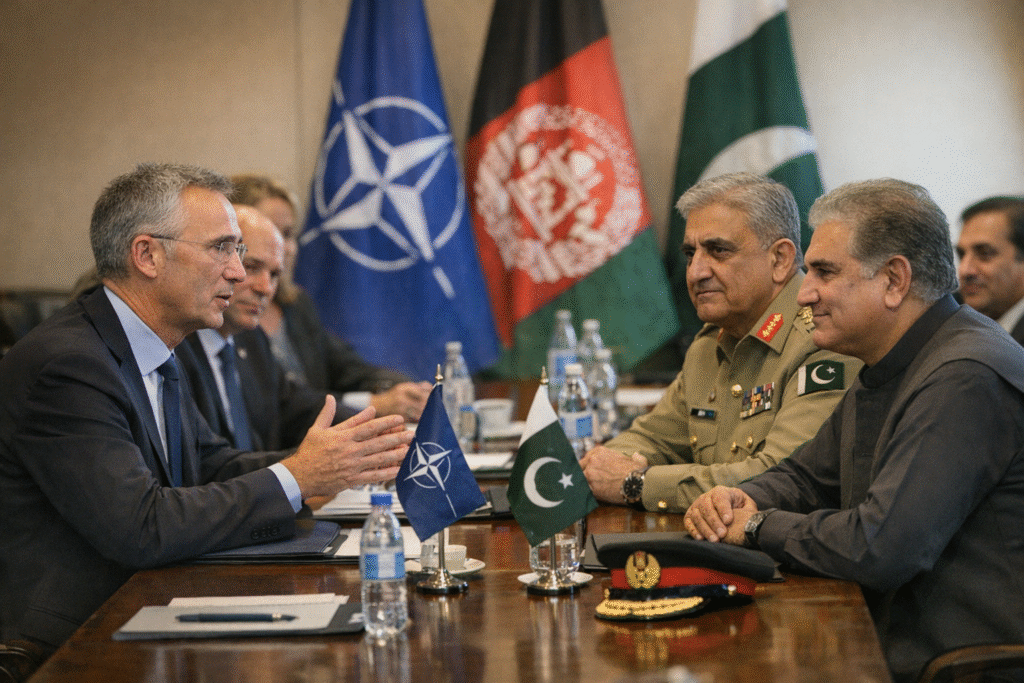
NATO Secretary General Jens Stoltenberg and Pakistan’s then-Foreign Minister Shah Mehmood Qureshi used a June 2019 meeting to reaffirm cooperation on regional stability, with particular attention to Afghanistan’s fragile peace process and the broader security landscape in South Asia.
According to the NATO website’s report, “NATO Secretary General and Pakistan’s Foreign Minister share views on NATO-Pakistan partnership, regional security and the peace process in Afghanistan,” the discussions reflected a mutual recognition of Pakistan’s strategic role in facilitating dialogue aimed at ending decades of conflict in Afghanistan. Stoltenberg acknowledged Pakistan’s efforts to support conditions conducive to negotiations between the Afghan government and the Taliban, emphasizing that a sustainable resolution must be both inclusive and Afghan-led.
The exchange highlighted NATO’s continued reliance on regional partnerships beyond its member states, especially in conflict zones where local actors exert considerable influence. Pakistan’s geographic position and longstanding ties within Afghanistan place it in a pivotal position, though its role has often been subject to scrutiny from Western policymakers concerned about uneven cooperation against militant groups.
Qureshi reiterated Pakistan’s commitment to a political settlement in Afghanistan, framing stability there as essential to Pakistan’s own security interests. He stressed that prolonged instability has imposed economic and humanitarian costs on neighboring countries, reinforcing the need for a negotiated solution rather than a purely military approach.
Stoltenberg underscored NATO’s ongoing support for Afghan security forces through training and funding, while reiterating that the alliance does not seek a permanent military presence. Instead, NATO’s position has been that conditions on the ground should dictate the pace of any withdrawal, a stance that at the time reflected caution amid ongoing negotiations between the United States and Taliban representatives.
The meeting also touched on broader counterterrorism cooperation, with both sides recognizing the persistent threat posed by extremist networks operating across borders. NATO has long maintained that regional coordination is essential to preventing Afghanistan from again becoming a safe haven for international terrorism.
The NATO website’s coverage of the meeting portrays it as part of an incremental diplomatic effort to align regional stakeholders behind a shared framework for peace. While such engagements often produce limited immediate outcomes, they signal ongoing communication channels at a time when geopolitical tensions and uncertainty continue to shape the region’s security dynamics.
Taken together, the discussions illustrated both the potential and the limitations of NATO’s partnership-based approach. While Pakistan’s cooperation is widely seen as indispensable to any lasting settlement in Afghanistan, differing expectations and historical mistrust remain underlying factors that complicate progress.