How War Footage Online Distorts Reality
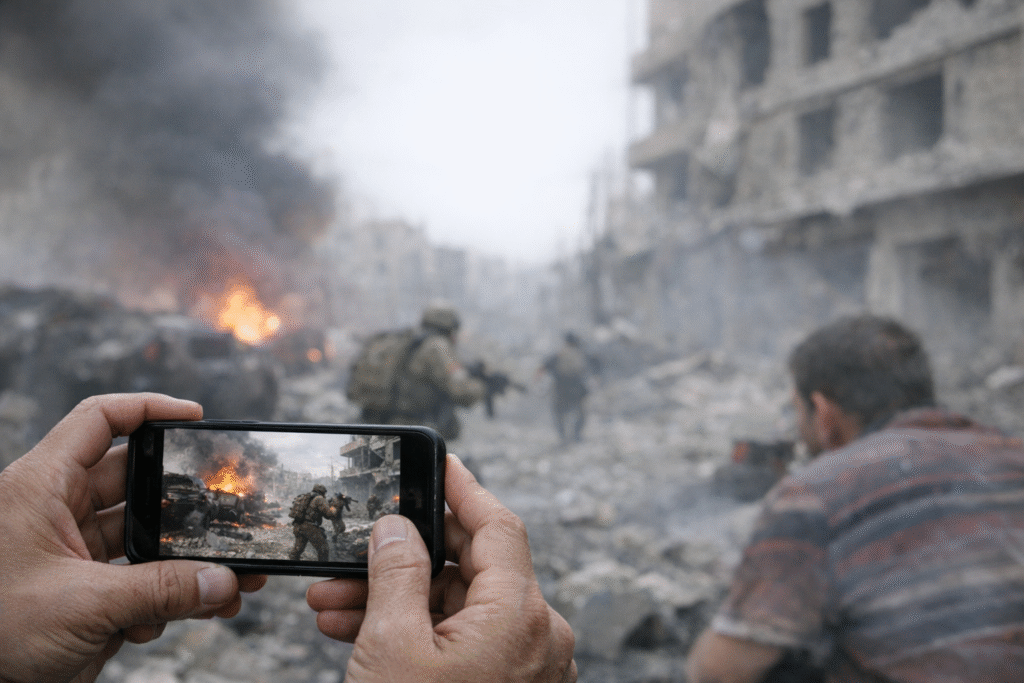
A recent essay titled “Most People Watching War Footage…” on the Substack platform has sparked renewed scrutiny of how modern audiences consume images of armed conflict. The piece argues that the proliferation of near-instant battlefield footage—shared across social media feeds, messaging apps, and video platforms—has reshaped public perception of war in ways that are often misleading, fragmentary, and emotionally distorting.
Drawing on examples from recent conflicts, the article contends that what viewers see is rarely representative of the broader reality on the ground. Instead, it is a curated stream of dramatic clips: drone strikes, ambushes, and explosions that compress complex operations into seconds of spectacle. According to the author, this creates a skewed understanding of warfare, emphasizing violence and novelty while obscuring the logistical, strategic, and human dimensions that define most military activity.
The essay highlights the role of algorithms and information ecosystems in amplifying this effect. Content that is visually striking or emotionally charged is more likely to be promoted and shared, regardless of its context or accuracy. As a result, viewers may come away with a heightened sense of constant intensity, even though much of warfare involves long periods of uncertainty, preparation, and limited engagement.
It also raises concerns about the erosion of traditional gatekeeping. Professional journalists and editors once filtered and contextualized images of conflict before they reached the public. Today, raw footage often circulates without verification, explanation, or ethical consideration. The Substack piece suggests that this shift places a greater burden on viewers, who are now expected to interpret complex and often ambiguous material on their own.
Another theme explored is the psychological impact of repeated exposure to violent imagery. The normalization of graphic footage, the author argues, risks desensitizing audiences while simultaneously fostering a form of detached spectatorship. War becomes something to scroll through rather than something to understand. This dynamic may also contribute to polarized narratives, as different sides weaponize imagery to reinforce competing interpretations of events.
At the same time, the article acknowledges that widespread access to footage can serve a public good. Visual evidence has played a crucial role in documenting war crimes, countering official narratives, and increasing transparency. The challenge, it suggests, lies in balancing the democratizing potential of open information with the need for context, verification, and ethical responsibility.
Ultimately, “Most People Watching War Footage…” calls for a more critical approach to consuming and sharing such material. It urges readers to question not only what they are seeing, but also what is absent from view. In an era where the front lines are broadcast in real time, understanding war requires more than witnessing its most dramatic moments.