Beating UAV Threats Requires Time and Smarter Radar
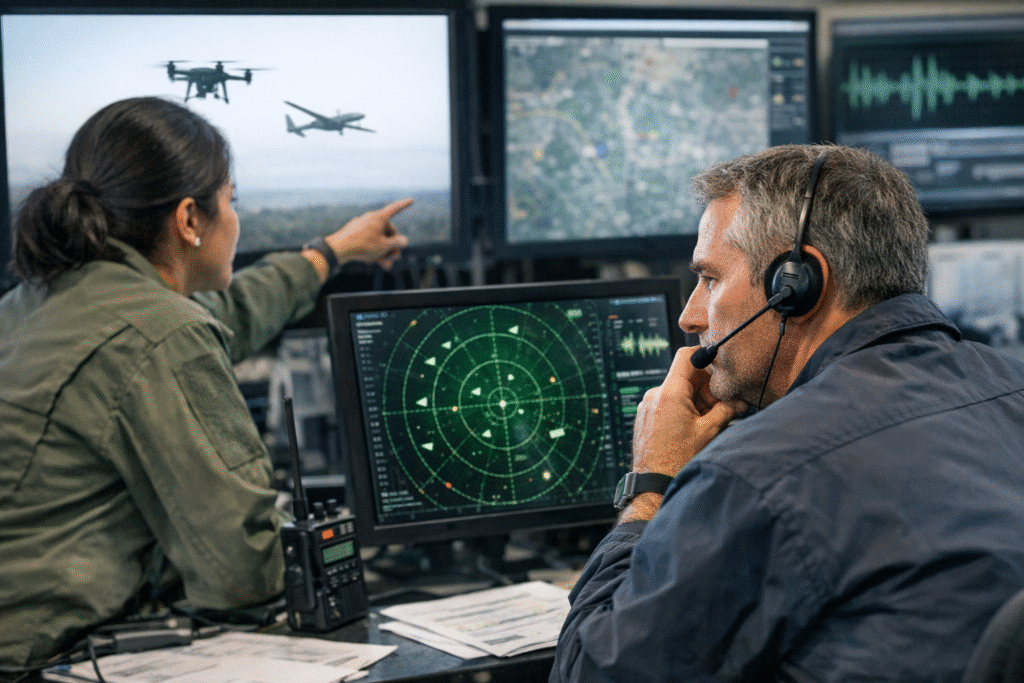
A recent Defense News video report titled “Beating UAV threats starts with time—and better radar” underscores a central challenge facing modern militaries: the rapid proliferation of small, inexpensive unmanned aerial vehicles has outpaced traditional air defense systems, forcing a rethinking of how threats are detected and defeated.
The report emphasizes that time is the decisive factor in countering UAVs. Cheap, widely उपलब्ध drones can appear with little warning, often flying low and slow to evade conventional radar coverage. This compresses response windows to seconds, not minutes, placing pressure on detection systems to identify threats earlier and track them more precisely. Without that early warning, even advanced interception systems struggle to respond effectively.
Improved radar capabilities are highlighted as a key part of the solution. Traditional systems optimized for fast-moving aircraft or ballistic threats can miss small UAVs with minimal radar signatures. The video points to the growing importance of next-generation sensors designed specifically to detect low-altitude, slow, and small targets. These include more sensitive radar arrays, as well as multi-sensor approaches that combine radar with optical, infrared, and electronic intelligence inputs.
The Defense News report also notes that technological adaptation must be paired with operational changes. Layered defense architectures—integrating detection, electronic warfare, and kinetic interception—are increasingly necessary to handle swarms or coordinated drone attacks. Electronic warfare tools, such as jamming or spoofing, can sometimes neutralize UAVs before they reach critical targets, buying additional time for follow-on responses.
Another emerging focus is automation. As drone threats multiply, human operators alone cannot keep pace with the volume of incoming data. The integration of artificial intelligence and machine learning into detection and targeting systems is intended to accelerate decision-making, reduce false alarms, and prioritize threats under tight timelines.
The report suggests that the balance of cost is also shifting. Adversaries can deploy large numbers of inexpensive drones, while defensive systems—particularly kinetic interceptors—remain comparatively costly. This asymmetry is driving interest in more scalable solutions, including directed energy systems and lower-cost countermeasures.
Ultimately, the Defense News analysis frames the UAV challenge as one of adaptation speed. Militaries that can extend detection timelines, integrate diverse sensing technologies, and respond quickly across multiple layers of defense are more likely to mitigate the growing threat. Those that cannot may find their most sophisticated systems vulnerable to some of the simplest aerial platforms ever deployed.