US Navy intercepts Iranian ship skirting blockade
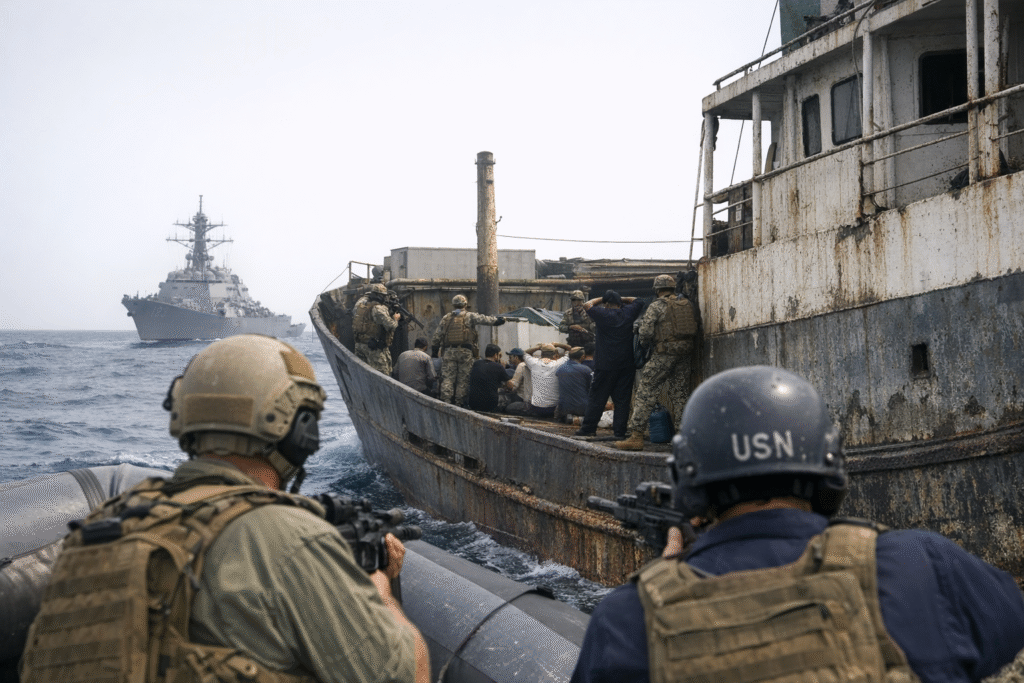
A U.S. Navy destroyer intercepted an Iranian-flagged vessel suspected of attempting to bypass an international maritime blockade, according to a report published by Military Times titled “US Navy destroyer intercepts Iranian-flagged vessel trying to skirt blockade.”
The encounter, which took place in a strategically sensitive waterway, underscores rising tensions in an already volatile region where naval forces are increasingly tasked with enforcing sanctions and maintaining freedom of navigation. U.S. officials indicated that the destroyer identified irregular routing behavior and moved to investigate after the vessel appeared to be attempting to evade established maritime controls.
According to the Military Times report, the Iranian-flagged ship was operating in a manner consistent with previous efforts to circumvent restrictions, including altered tracking signals and indirect transit patterns. U.S. naval personnel conducted a hail and subsequent interception to verify the vessel’s cargo and compliance with applicable regulations. While details regarding the cargo have not been fully disclosed, officials suggested the operation was part of a broader effort to uphold international sanctions frameworks.
The interception did not escalate into direct confrontation, and there were no immediate reports of injuries or damage. However, the incident reflects the ongoing friction between U.S. forces and Iranian-linked maritime activity, particularly in chokepoints where global energy supplies and commercial shipping routes converge.
Defense analysts note that such encounters have become more frequent as enforcement efforts intensify and as Iran continues to test the limits of maritime oversight. The U.S. Navy has maintained a consistent presence in the region, emphasizing both deterrence and rapid response capabilities.
The Military Times account highlights that U.S. officials view these operations as essential to maintaining stability and signaling resolve, even as diplomatic tensions remain unresolved. The situation is likely to draw continued scrutiny, especially if similar incidents persist or escalate in scope.