US Military Moves to Secure Strait of Hormuz
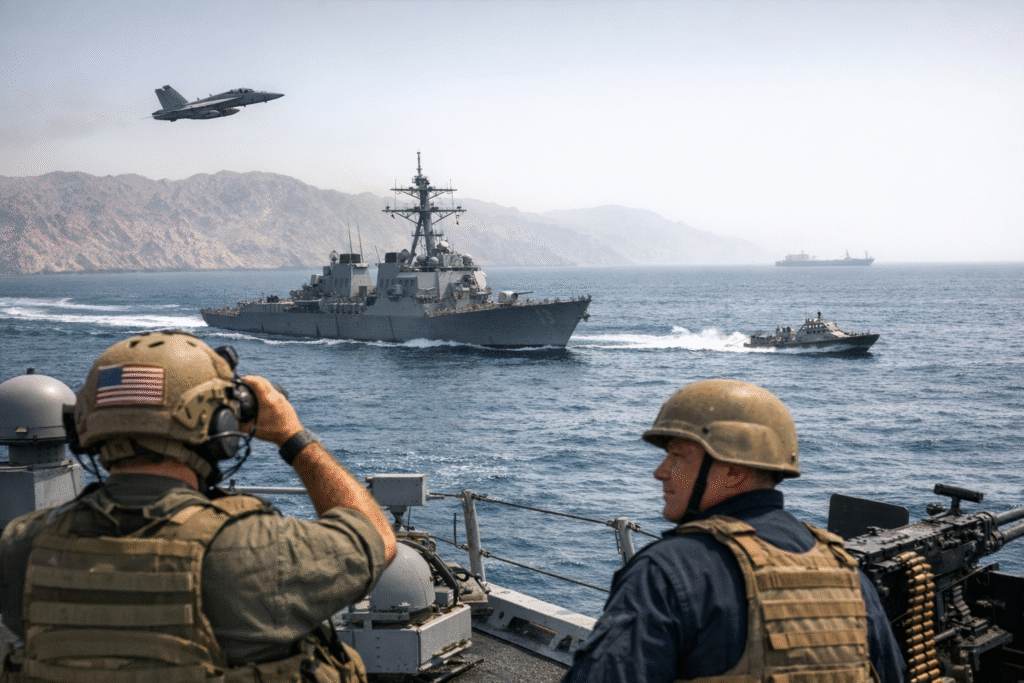
The U.S. military has begun operations to clear the Strait of Hormuz, a vital maritime chokepoint, according to reporting by Defense News in its article “US military begins clearing Strait of Hormuz, Trump says.” The move marks a significant escalation in efforts to secure one of the world’s most strategically important shipping lanes, through which a substantial portion of global oil supplies transit.
Speaking publicly, former President Donald Trump stated that U.S. forces were actively engaged in clearing the waterway, suggesting an urgent response to emerging threats in the region. While specific operational details remain limited, such missions typically involve mine-clearing vessels, surveillance assets, and coordinated naval protection to ensure safe passage for commercial shipping.
The Strait of Hormuz, bordered by Iran to the north and Oman and the United Arab Emirates to the south, has long been a focal point of geopolitical tension. Any disruption to traffic through the narrow corridor—roughly one-fifth of the world’s oil passes through it—can have immediate and far-reaching effects on global energy markets.
Defense officials have not fully outlined the scope or duration of the operation, but the involvement of U.S. forces underscores the seriousness of the perceived threat. Mine-clearing efforts are particularly complex and time-intensive, requiring specialized equipment and highly trained personnel to locate and neutralize underwater hazards.
The report by Defense News indicates that the operation comes amid heightened concerns about regional instability and the potential for deliberate interference with maritime traffic. While it remains unclear what specific incidents prompted the decision, U.S. military planners have long prepared for scenarios involving the obstruction of the strait.
International observers are likely to view the move as both a protective measure for global التجارة and a signal of U.S. willingness to project force in defense of critical economic infrastructure. However, such actions also carry the risk of further escalating tensions with regional actors, particularly Iran, which has historically contested foreign military presence in the area.
Commercial shipping companies and energy markets are expected to monitor developments closely. Even the perception of risk in the Strait of Hormuz can drive volatility in oil prices and insurance costs for vessels transiting the region.
As operations continue, attention will focus on whether the U.S. can swiftly secure the waterway without triggering broader conflict. The situation highlights the enduring strategic importance of the strait and the delicate balance between deterrence and escalation in one of the world’s most sensitive geopolitical environments.