Cleaning Out America’s Abandoned Storage Units
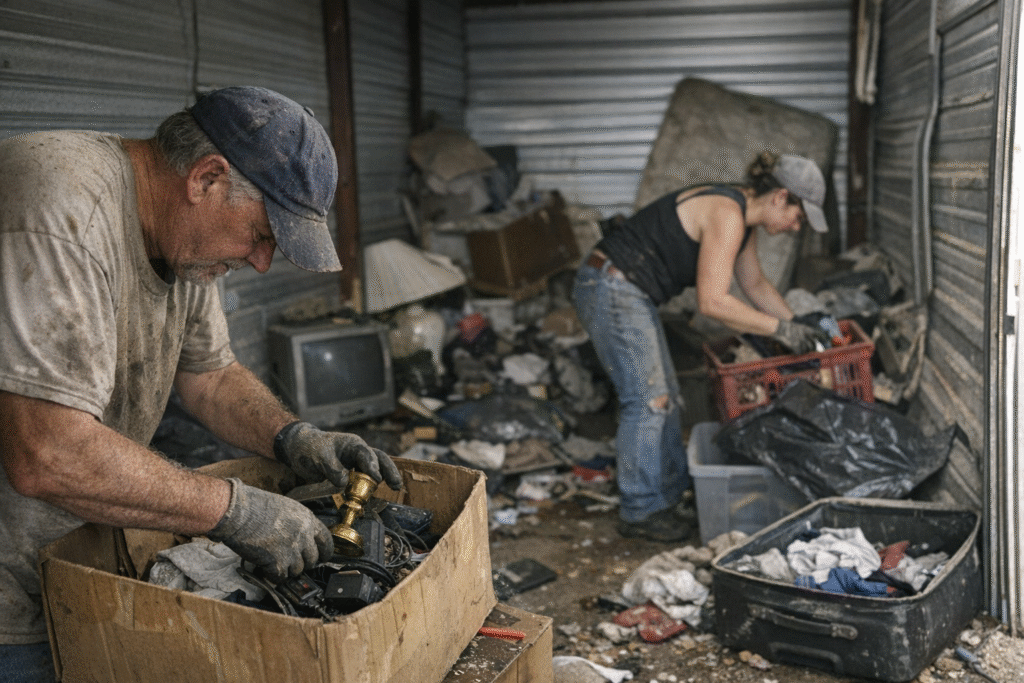
The contents of abandoned storage units—once hidden away behind steel doors and monthly rental agreements—are increasingly finding their way into the hands of a growing cohort of professional cleanout specialists. As detailed in the Wall Street Journal article “The Surprising Business of Cleaning Out Storage Units,” published by The Wall Street Journal, this niche industry blends logistics, appraisal, and occasional emotional reckoning into an unconventional but expanding line of work.
Across the United States, storage facilities report a steady flow of units left behind by renters who stop paying fees, move away, or die without heirs to claim their belongings. Operators typically auction off these units in bulk, often sight unseen, to buyers willing to gamble on their contents. What follows is where the cleanout professionals come in: sorting, valuing, discarding, and sometimes reselling what remains.
The appeal is partly economic. While many units contain little of resale value—boxes of outdated paperwork, damaged furniture, or discarded clothing—others yield items that can offset costs or generate profit. Vintage collectibles, tools, appliances, and even rare memorabilia occasionally emerge from the clutter. However, practitioners in the field emphasize that success depends less on luck than on efficiency and discipline. The business often involves hauling large volumes of waste, navigating disposal regulations, and managing tight margins.
Equally significant are the human dimensions embedded in these spaces. Formerly private lives are reduced to physical remnants: photo albums, letters, children’s artwork, and personal effects that tell partial stories of their owners. For many cleanout workers, this aspect of the job introduces ethical considerations. Some report setting aside clearly personal or sentimental items in the hope they might be returned, though in most cases former tenants cannot be located.
The industry also reflects broader economic patterns. Rising housing costs, transience in the workforce, and the proliferation of self-storage facilities have contributed to a steady supply of abandoned units. Analysts note that the United States has seen sustained growth in the self-storage sector over the past decade, with facilities now numbering in the tens of thousands nationwide. As more people rely on rented space to store excess belongings, the volume of unclaimed property inevitably increases.
At the same time, resale platforms have made it easier for cleanout operators to monetize salvaged goods. Online marketplaces allow for rapid pricing and distribution, turning what was once purely waste removal into a hybrid model that includes retail arbitrage. Still, the unpredictability of each unit remains a defining feature. Even experienced buyers accept that most acquisitions will yield modest returns, with occasional high-value finds balancing out frequent losses.
Environmental concerns also shape the work. Large quantities of items discarded from storage units ultimately end up in landfills. Some operators attempt to mitigate this by donating usable goods or recycling materials, though the sheer volume of debris often limits what can be diverted.
As portrayed in The Wall Street Journal’s reporting, the business of storage unit cleanouts sits at the intersection of commerce and consequence. It is driven by opportunity yet grounded in the realities of abandonment—an industry that profits from what others leave behind, while quietly cataloging the traces of lives disrupted, relocated, or concluded.