US Troop Surge Signals Rising Stakes with Iran
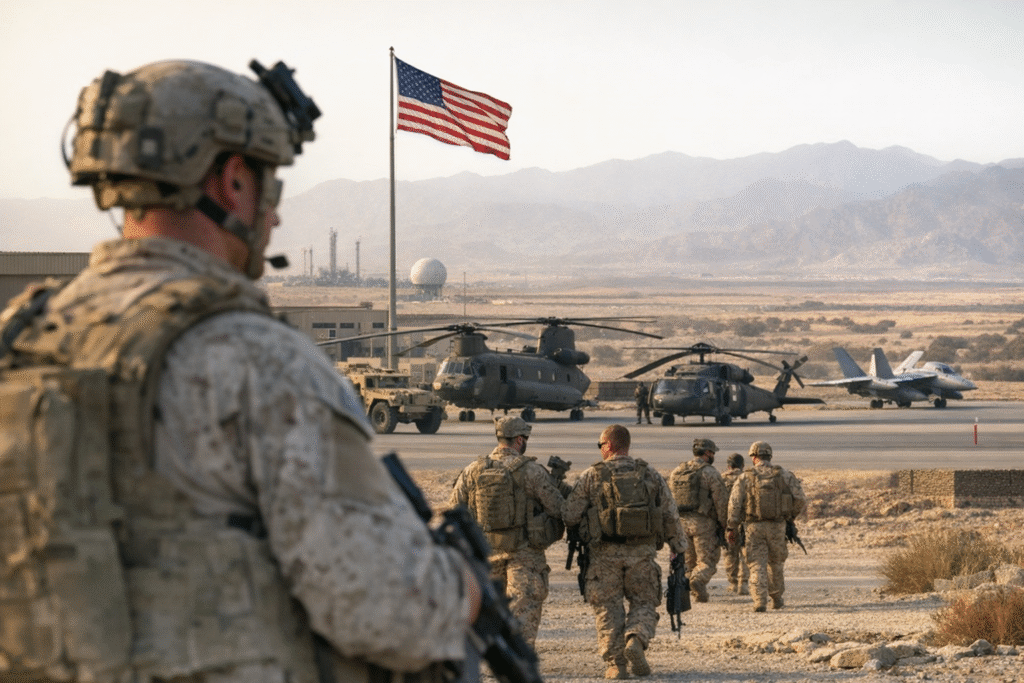
A recent report by The Wall Street Journal, titled “What an Influx of 17,000 U.S. Troops Could Mean for the Iran War,” has brought renewed attention to the strategic calculations underlying a potential escalation of U.S. military involvement in the Middle East. The deployment, described as a significant reinforcement of American capabilities in the region, underscores both the scale of contingency planning and the complexity of any prospective conflict with Iran.
According to the Wall Street Journal’s reporting, the introduction of approximately 17,000 additional troops would not signal an immediate shift to full-scale war, but rather reflect a layered approach to deterrence, force protection, and logistical preparedness. Such a deployment would likely include air defense units, naval support personnel, and troops tasked with safeguarding bases and supply lines across multiple countries, rather than frontline combat forces alone.
Military analysts note that this kind of buildup serves dual purposes. On one hand, it strengthens the United States’ ability to respond rapidly to threats against its personnel and allies in the region. On the other, it functions as a signal to Tehran, reinforcing the credibility of U.S. commitments while attempting to dissuade further escalation. The Journal’s article highlights how these deployments are as much about shaping perceptions as they are about preparing for active hostilities.
The potential implications of such a troop surge extend beyond military readiness. Regional allies, particularly those hosting U.S. forces, would face heightened security risks as tensions rise. Infrastructure, energy assets, and shipping routes—especially in the Persian Gulf—could become more vulnerable in the event of retaliatory actions by Iranian forces or affiliated groups. The presence of additional U.S. troops may bolster defensive capabilities, but it could also make American positions more prominent targets.
At the operational level, the logistics of sustaining a force of this size are substantial. Moving personnel, equipment, and supplies into theater requires coordination across air and sea transport networks, as well as the expansion of existing bases. The Wall Street Journal’s reporting suggests that much of the deployment would focus on ensuring that U.S. forces can operate effectively under conditions of heightened threat, including missile and drone attacks that have become increasingly central to regional conflicts.
There is also a broader strategic context to consider. U.S. policymakers must weigh the benefits of deterrence against the risks of miscalculation. A large-scale troop presence could help prevent immediate confrontation, but it may also narrow the margin for error if incidents occur. Encounters at sea, proxy engagements, or misinterpreted signals could rapidly escalate in an environment where forces are already surged and on high alert.
Domestically, the prospect of deploying tens of thousands of troops raises questions about political will and long-term objectives. While the article in The Wall Street Journal focuses primarily on military implications, it implicitly highlights the absence of a simple or clearly bounded path forward. Any sustained engagement with Iran would likely involve not only military considerations but also diplomatic efforts and economic pressures.
Ultimately, the arrival of 17,000 additional U.S. troops would represent a significant, though not definitive, step toward deeper involvement in a volatile region. As the Wall Street Journal’s analysis indicates, such a move is less about an immediate march toward war and more about positioning, preparedness, and signaling in a conflict landscape where the line between deterrence and escalation remains thin.