Ukraine Offers Drone Expertise for Patriot Missiles
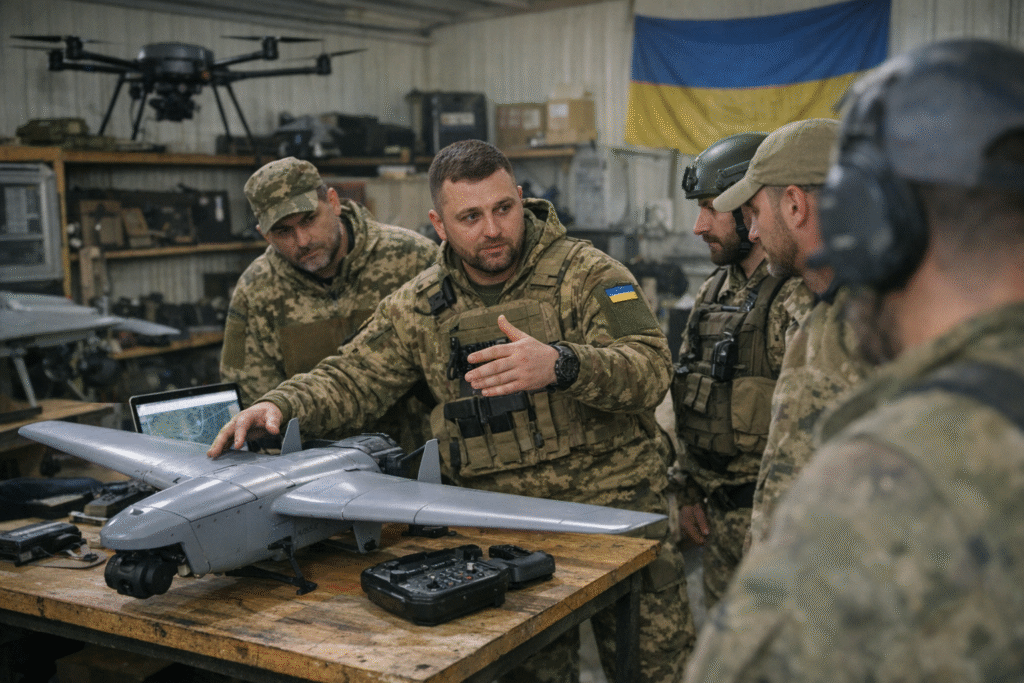
Ukraine is seeking to leverage its hard-won expertise in countering aerial threats as it pushes Gulf allies to part with scarce U.S.-made Patriot air defense missiles, according to a recent report by Defense News titled “Ukraine offers Gulf allies drone defense in bid for scarce Patriot missiles.”
Facing persistent Russian missile and drone strikes and an increasingly strained supply of interceptor missiles, Kyiv is turning to a form of strategic barter. Ukrainian officials have proposed sharing advanced battlefield knowledge and technologies developed during the war—particularly in countering drones—in exchange for additional Patriot interceptors held by Gulf states.
The proposal reflects both necessity and adaptation. Patriot systems remain among the few defenses capable of reliably intercepting high-end ballistic and hypersonic threats deployed by Russia, but global inventories are limited and demand has surged. Ukraine’s existing Patriot batteries have proven critical in protecting major cities and infrastructure, yet resupply remains uncertain amid competing international requirements.
Gulf nations, including Saudi Arabia and the United Arab Emirates, maintain significant Patriot stockpiles acquired over years of investment in air and missile defense. At the same time, these countries have faced their own challenges from drone and missile attacks, particularly from non-state actors. Ukrainian officials are betting that their experience countering large-scale drone swarms and adapting air defense networks under combat pressure could offer valuable lessons.
The exchange under discussion would not be a simple transfer of hardware but a broader defense cooperation arrangement. Ukraine has developed a layered approach to air defense that integrates Western systems with domestically modified solutions and electronic warfare tools. This has enabled it to mitigate waves of low-cost drones while preserving high-value interceptors for more sophisticated threats. Such operational knowledge is increasingly sought after by countries confronting similar asymmetric risks.
However, any transfer of Patriot missiles would require U.S. approval, adding a layer of political complexity. Washington has already committed significant Patriot support to Ukraine while balancing commitments to allies in Europe, the Middle East, and Asia. Encouraging third-party transfers could help alleviate shortages but risks creating gaps in regional defenses elsewhere.
The Ukrainian initiative underscores a broader shift in how Kyiv positions itself within global security networks. No longer solely a recipient of aid, Ukraine is attempting to act as a security provider where it can, exporting combat experience gained under extreme conditions. This approach also reflects a recognition that traditional supply lines for advanced munitions are increasingly constrained.
Whether the proposal will translate into concrete transfers remains unclear. Gulf states must weigh their own security requirements against the benefits of deeper cooperation with Ukraine, while U.S. policymakers will have to determine how such arrangements fit within broader strategic priorities.
Still, the outreach signals Ukraine’s growing confidence in the value of its battlefield innovations and its willingness to use them as diplomatic currency in a war increasingly defined not only by firepower, but by access to it.