Warnings Grow Over U.S. Strategy Toward Iran
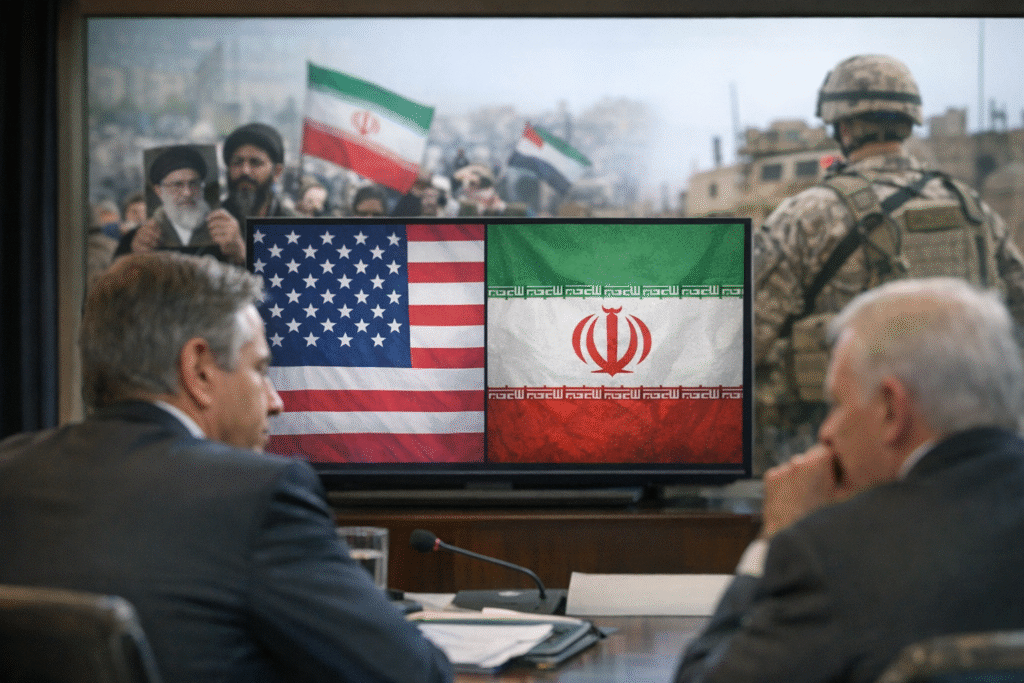
A recent commentary published on the Substack platform argues that U.S. policymakers are underestimating the risks and realities of a potential conflict with Iran, raising concerns about strategic clarity and public awareness at a moment of heightened regional tension.
In “Washington Is Drowning the Iran War,” analyst Andrew Fox contends that political discourse in the United States has failed to fully grapple with the scale and consequences of a possible military confrontation. The article suggests that while official rhetoric remains measured, underlying developments—ranging from military posturing to proxy engagements—indicate a far more precarious situation than is publicly acknowledged.
Fox’s central claim is that Washington’s approach reflects a disconnect between policy execution and public communication. He argues that incremental escalations, including deployments and retaliatory strikes, risk normalizing a state of low-level conflict without a broader strategic framework. This, he warns, could leave both policymakers and the public unprepared for a rapid deterioration into open hostilities.
The piece highlights the complexity of Iran’s regional network, emphasizing that any direct conflict would likely extend beyond bilateral engagement to involve allied militias and partner groups across the Middle East. Such dynamics, Fox notes, make the prospect of containment far more difficult, increasing the likelihood of a wider, prolonged confrontation.
Another theme explored in the article is the challenge of deterrence. Fox argues that mixed signals—combining assertive military actions with cautious political messaging—may undermine credibility. In his view, adversaries may interpret this ambiguity as either hesitation or inconsistency, potentially raising the risk of miscalculation.
The commentary also raises questions about domestic awareness and oversight. Fox suggests that the gradual nature of current U.S. involvement, often framed as defensive or limited in scope, has not prompted the level of public debate typically associated with the possibility of a larger war. This, he argues, could have implications for democratic accountability if the situation escalates.
While the article adopts a critical stance, it reflects broader concerns among analysts about the evolving U.S.-Iran relationship. Recent years have seen periodic flare-ups, including attacks on shipping, strikes on regional bases, and confrontations involving proxy forces. Each episode has tested the boundaries of escalation while stopping short of sustained conflict.
Fox’s piece ultimately calls for greater transparency and strategic coherence, arguing that clearer communication about objectives and risks would better prepare both policymakers and the public. Whether or not one agrees with his conclusions, the concerns he raises point to an enduring challenge in U.S. foreign policy: managing complex regional rivalries without sliding into unintended war.