Battle Over Stop-Start Tech Shapes Auto Policy
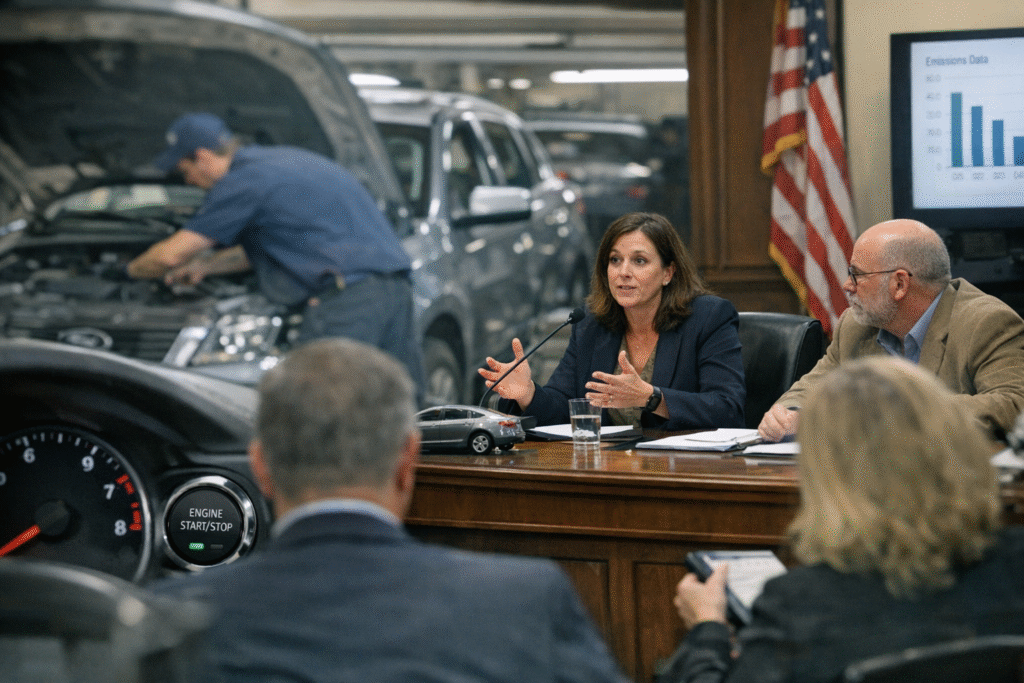
A renewed policy debate over automobile emissions and fuel-saving technologies is unfolding in Washington, with implications for both automakers and drivers. At the center of the discussion is the future of stop-start engine systems, a feature designed to reduce fuel consumption by automatically shutting off a vehicle’s engine when idling.
The Wall Street Journal, in its article titled “Cars, Autos, Stop-Start, EPA, Trump, Zeldin,” reports that political figures aligned with former President Donald Trump, including Environmental Protection Agency Administrator Lee Zeldin, are weighing changes that could roll back incentives encouraging the widespread use of such systems. The move reflects a broader shift in regulatory priorities that could alter how automakers approach efficiency standards in the coming years.
Stop-start technology has become increasingly common in modern vehicles, particularly as manufacturers seek relatively low-cost ways to meet federal fuel economy and emissions requirements. While the systems can deliver measurable reductions in fuel use—especially in urban driving—they have also drawn criticism from some drivers who find the frequent engine shutdowns disruptive or uncomfortable.
According to the Wall Street Journal, critics within the current policy debate argue that federal rules have effectively nudged automakers into adopting stop-start technology, even as consumer reception remains mixed. Some policymakers view the systems as emblematic of regulatory overreach, contending that market demand rather than federal standards should determine their adoption.
Supporters of existing regulations counter that stop-start systems represent a practical and incremental tool in reducing greenhouse gas emissions without requiring major changes in driver behavior or infrastructure. They note that eliminating incentives for such technologies could slow progress toward national emissions targets, particularly at a time when the transition to fully electric vehicles remains uneven.
Automakers are caught between these competing pressures. On one hand, they must comply with federal efficiency standards that have historically favored technologies like stop-start systems. On the other, they remain sensitive to consumer preferences and potential political shifts that could reshape the regulatory landscape.
The debate also highlights a broader tension in U.S. environmental policy: whether to prioritize incremental efficiency gains in conventional vehicles or accelerate a transition to zero-emission transportation. Stop-start systems, while modest in impact individually, play a role in aggregate emissions reductions that regulators have long considered significant.
Any policy changes could carry ripple effects across the automotive industry. If incentives tied to stop-start systems are reduced or eliminated, manufacturers may redirect engineering resources toward other compliance strategies, potentially affecting vehicle design, pricing, and performance.
As the discussion continues, the outcome remains uncertain. What is clear, however, is that decisions made in Washington will shape not only the technologies embedded in future vehicles but also the broader trajectory of U.S. efforts to balance consumer choice, industrial competitiveness, and environmental responsibility.