Republicans Urge Emergency Powers for TSA Pay
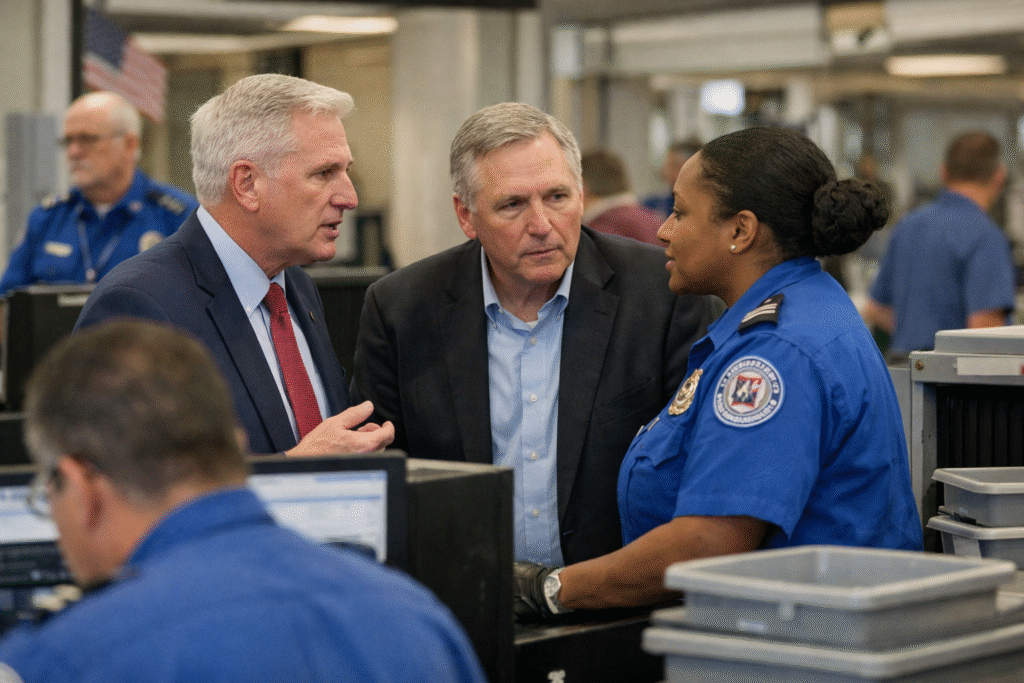
Republican lawmakers are urging the White House to consider invoking emergency powers to ensure Transportation Security Administration employees continue to receive pay during a potential government funding lapse, according to reporting by The Wall Street Journal in its article “Republicans Push White House to Declare National Emergency to Pay TSA Agents.”
The proposal reflects mounting concern among some members of Congress about the operational and security implications of unpaid federal workers in critical roles. TSA officers, who are classified as essential personnel, are required to continue working during government shutdowns but can face delayed compensation until funding is restored. Past shutdowns have seen increased absenteeism and financial strain among these workers, raising questions about the sustainability of prolonged funding gaps.
Republicans pressing the idea argue that aviation security is too vital to be jeopardized by political stalemate. By declaring a national emergency, the administration could potentially unlock authority to redirect funds or take other executive actions to maintain regular pay for TSA staff. Supporters frame the move as a targeted intervention to protect national infrastructure rather than a broader workaround to congressional gridlock.
However, the suggestion carries legal and political complexities. Emergency declarations are typically reserved for acute crises, and expanding their use to address budgetary disputes could prompt challenges over executive overreach. Critics are likely to argue that such a step would set a precedent for bypassing Congress’s power of the purse, a core legislative function.
The debate underscores the broader tensions surrounding federal funding negotiations, where repeated brinkmanship has heightened uncertainty for federal agencies and employees alike. While lawmakers have periodically introduced legislation to guarantee pay for essential workers during shutdowns, no permanent solution has been enacted.
As discussions continue, the administration has not indicated whether it is seriously evaluating the emergency option. The episode highlights the increasing willingness of some policymakers to consider unconventional mechanisms to mitigate the consequences of recurring fiscal standoffs, even as the constitutional and practical implications remain unresolved.