Pentagon Centralizes Drone Strategy with New Office to Accelerate Future Warfare Capabilities
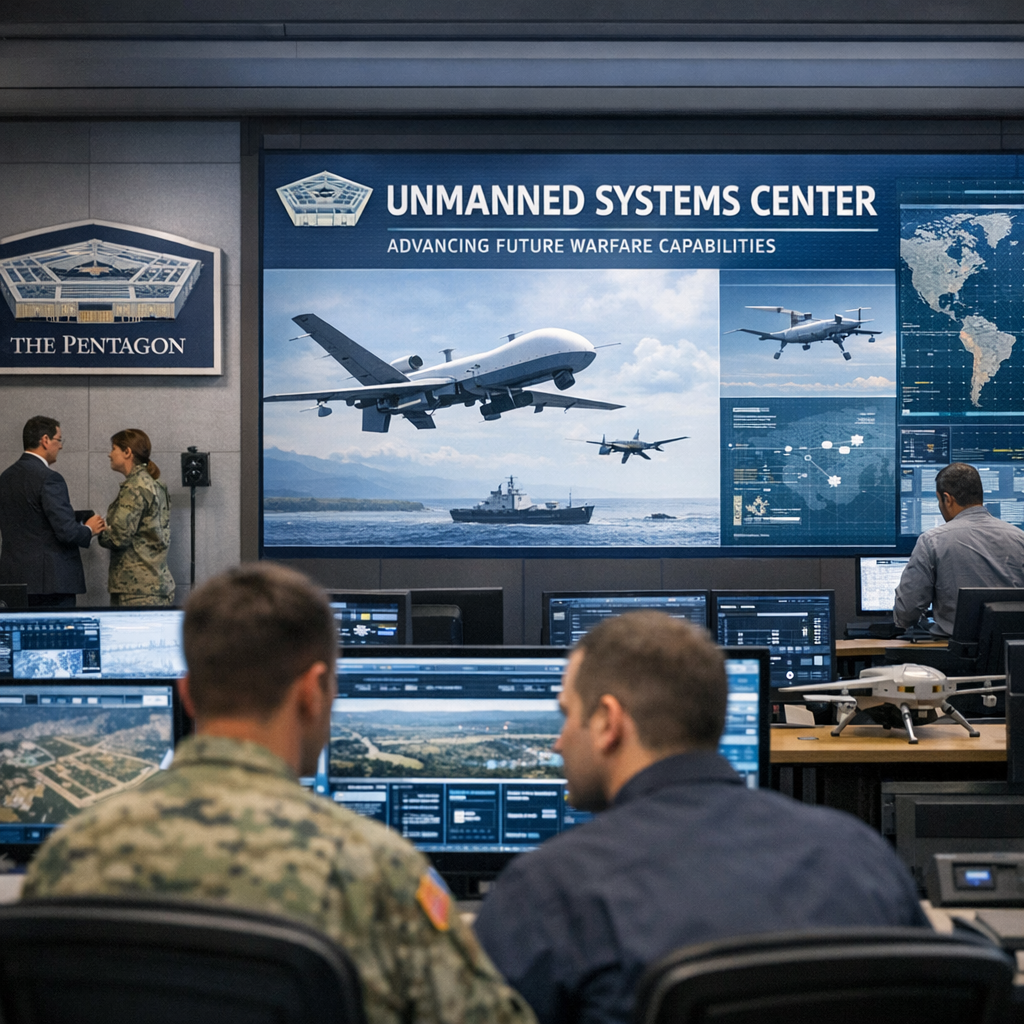
A new Pentagon initiative to centralize the development and deployment of unmanned systems is signaling a significant shift in how the U.S. military approaches drone warfare, consolidating authority that has long been distributed among the individual services.
According to the article “Hegseth creates powerful new drone office, pulling authority from the military services”, published by Military Times, Defense Secretary Pete Hegseth has directed the establishment of a high-level drone office designed to streamline decision-making and accelerate the integration of unmanned technologies across the armed forces. The move reflects growing concern within the Pentagon that fragmented oversight has slowed innovation at a time when near-peer adversaries are rapidly advancing their own drone capabilities.
The newly created office is expected to wield broad influence over procurement, strategy, and operational standards for unmanned systems, areas that have historically been managed separately by the Army, Navy, Air Force, and Marine Corps. By consolidating these responsibilities, Pentagon leadership appears to be aiming for greater efficiency and interoperability, particularly in anticipation of future conflicts that are expected to rely heavily on autonomous and remotely piloted platforms, as outlined in DARPA’s unmanned systems research initiatives.
Officials have argued that the current decentralized approach has led to duplication of effort and uneven progress, with each service pursuing its own priorities and technical standards. The result, critics say, has been a patchwork of capabilities that complicates joint operations and slows the adoption of emerging technologies. Analysis from organizations like the Center for Strategic and International Studies (CSIS) has similarly highlighted inefficiencies in defense acquisition and integration. The new office is intended to address these shortcomings by enforcing unified requirements and reducing bureaucratic friction.
At the same time, the shift is likely to meet resistance from within the services, which have traditionally guarded their autonomy over weapons development and acquisition. Centralizing authority at the Pentagon level could reshape internal power dynamics, potentially limiting the ability of individual branches to tailor drone programs to their specific operational needs. Reporting by Defense News has frequently noted such inter-service tensions in modernization efforts. How those tensions are managed may determine the effectiveness of the new structure.
The decision comes amid intensified global competition in unmanned systems, particularly as adversaries demonstrate increasing sophistication in both offensive drone use and counter-drone defenses, a trend documented in International Institute for Strategic and International Studies (IISS) assessments. U.S. military planners have emphasized the need to adapt more quickly, warning that slower procurement timelines and institutional inertia could erode the country’s technological edge.
By establishing a dedicated drone office with sweeping authority, the Pentagon is making a clear statement about the strategic importance of unmanned systems in future warfare. Whether this reorganization delivers the intended improvements in speed, coordination, and capability will depend on its execution, as well as the willingness of the services to operate within a more centralized framework.