NATO Reaffirms Support for Georgia’s Defense Reforms and Black Sea Security Role During Tbilisi Visit
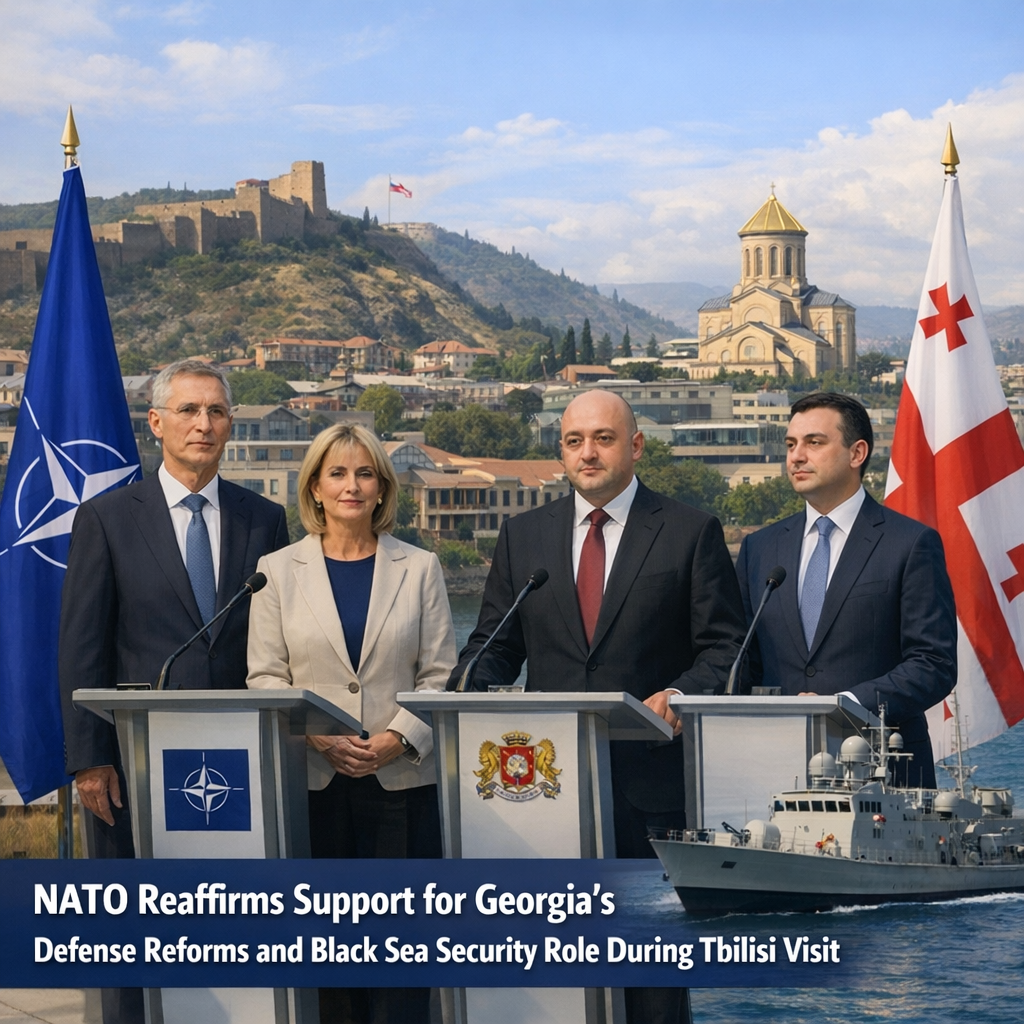
NATO signaled continued political and practical support for Georgia’s defense reforms and Euro-Atlantic ambitions during a high-level visit to Tbilisi this week, underscoring the alliance’s ongoing engagement in the Black Sea region amid heightened security concerns.
According to the article “Director General of the International Military Staff visits Georgia”, published on NATO’s official website, nato.int, the Director General met with senior Georgian civilian and military leaders to review progress in defense modernization, interoperability, and cooperation under existing partnership frameworks. The visit formed part of NATO’s broader effort to deepen ties with close partners facing complex regional pressures.
Talks in Tbilisi focused on the implementation of the Substantial NATO-Georgia Package (SNGP), a key vehicle for strengthening Georgia’s defense capacity, as well as ongoing participation in joint training and exercises designed to align Georgian forces with NATO standards. Officials also discussed lessons drawn from recent conflicts in the wider region and the need for resilience against hybrid and conventional threats.
Georgian authorities reiterated their commitment to eventual NATO membership, while alliance representatives emphasized continued political backing without offering a timetable for accession. NATO’s longstanding position—that each nation has the right to choose its own security arrangements—was restated alongside calls for reforms in areas such as democratic governance, defense institution building, and civilian oversight of the military.
Regional security dynamics featured prominently in the discussions, particularly the strategic importance of the Black Sea region and the implications of ongoing conflict involving Russia. NATO officials reaffirmed support for Georgia’s sovereignty and territorial integrity within its internationally recognized borders, including the areas of Abkhazia and South Ossetia, which remain under Russian control.
The visit reflects a calibrated approach by NATO: expanding practical cooperation and political signaling without crossing thresholds that could further escalate tensions with Moscow. For Georgia, the engagement offers both reassurance and a reminder that deeper integration depends as much on internal reform as on geopolitical alignment.
As outlined by nato.int, the meetings concluded with both sides pledging to sustain a steady pace of cooperation. The visit, while largely routine in diplomatic terms, highlights the enduring strategic relevance of Georgia in NATO’s partnership network and the alliance’s continued interest in stability along its eastern flank.