NATO Airlift Delivers PPE to Czech Republic
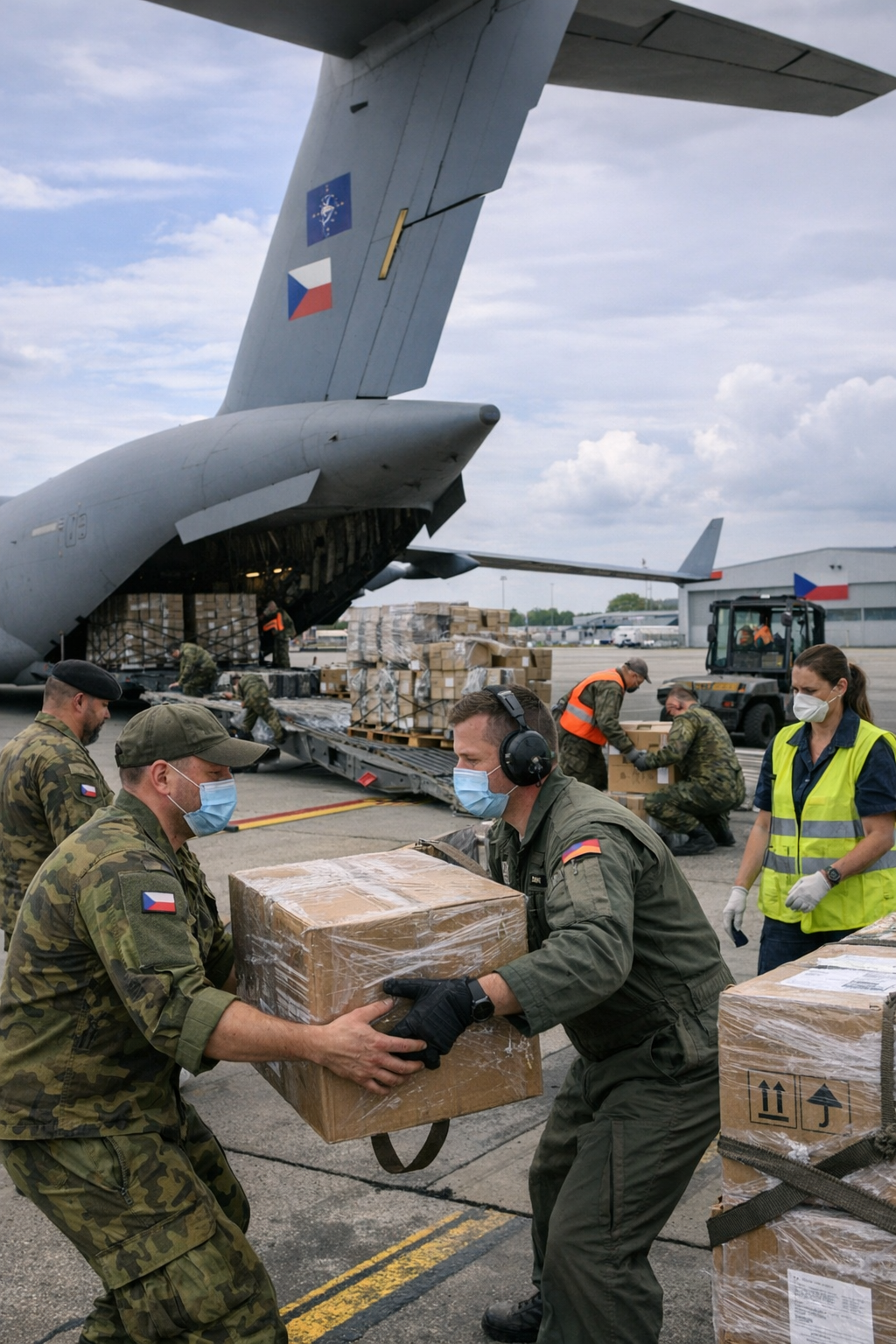
An early-pandemic airlift organized with NATO support underscored the alliance’s logistical role in responding to the COVID-19 crisis, as described in the article “Coronavirus response: airlift brings urgent medical supplies to the Czech Republic,” published on NATO’s official website. The operation, conducted in April 2020, delivered critical medical equipment to Prague at a moment when European health systems were under mounting strain and global supply chains were severely disrupted.
According to NATO, the airlift transported a large shipment of personal protective equipment from China to the Czech Republic, helping to address acute shortages facing frontline medical workers. The effort was coordinated through NATO’s Euro-Atlantic Disaster Response Coordination Centre, which serves as a clearinghouse for requests and offers of assistance among member and partner countries. By facilitating the rapid movement of supplies across continents, the alliance demonstrated an often underappreciated dimension of its capabilities: crisis response beyond traditional military operations.
The Czech Republic, like many countries in the early stages of the pandemic, faced an urgent need for protective gear as infections spread and hospitals braced for surging caseloads. The delivery included masks, respirators, and other essential items intended to protect healthcare personnel and slow the transmission of the virus. Czech officials characterized the airlift as a crucial intervention that helped stabilize supplies during a volatile period.
NATO’s role in the mission was primarily logistical, coordinating air transport assets and streamlining the process among multiple actors. While individual nations procured the medical goods, the alliance’s infrastructure enabled faster and more efficient delivery at a time when commercial routes were constrained. The operation was part of a series of similar efforts across Europe, reflecting a broader mobilization of military and civilian resources to confront the pandemic.
The initiative also highlighted how NATO adapted its existing frameworks to meet nontraditional security challenges. Traditionally focused on collective defense, the alliance leveraged its planning, coordination, and transport capabilities to support civilian authorities, reinforcing the concept that security threats can extend beyond armed conflict.
In the context of early 2020, when uncertainty over the virus and competition for medical supplies were both intense, such coordinated airlifts played a stabilizing role. They provided tangible support to national health systems while reinforcing cooperation among allies during a period of global strain.
As outlined in NATO’s coverage of the mission, the Czech airlift exemplified how multinational coordination can mitigate logistical bottlenecks in emergencies. It also offered a preview of how military alliances might continue to evolve, integrating humanitarian and crisis-management functions alongside their core defense responsibilities.